Thursday, December 14, 2023

Librairie 7L

If the walls within Karl Lagerfeld's photographic haven on Rue de Lille in Paris could parle, their multilingual dialogue might yield enough captivating tales to fill numerous tomes, adding to the 33,000 volumes that already grace the perimeter, floor to rafters. Situated discreetly behind the cherished 7L bookstore, this was where the late German maestro passionately toiled into the late hours, several times each week. It was the birthplace of countless Chanel campaigns and press kits, and the backdrop for a renowned coffee-table book featuring portraits of global luminaries adorned in iconic little black jackets.

When not immersed behind the lens capturing editorials or experimenting artistically with Polaroid transfers, daguerreotypes, platinotypes, resinotypes, or digital prints, Lagerfeld would swiftly transition to an adjacent meeting space. There, he would engage in media interviews or collaborate with architects, filmmakers, playwrights, authors, publishers, musicians, and actors. The poignant silence that followed Lagerfeld's passing in February 2019 draped this iconic space. However, 7L is now experiencing a renaissance in a manner the designer would have wholeheartedly embraced. The venue is now pulsating with cultural events, dance performances, musical showcases, exhibitions, book signings, readings, lectures, bespoke services, and chic merchandise.


Emphasising that 7L is not a mere museum, Laurence Delamare, the recently appointed director since Chanel's acquisition in 2021, envisions the space as a hub for contemporary artists. "To continue a project that Karl created is an honor; it's exceptional and such an exhilarating mission," she enthuses. Over the past two years, Delamare and her team, coincidentally numbering seven, have been working behind the scenes on various fronts. They've crafted a rich cultural program, now available through subscription, initiated an Instagram presence, overhauled 7L's website and recommenced online sales, and revived 7L's role as a publisher.

¨In the vibrant rebirth of 7L, Karl Lagerfeld's creative legacy is honoured by the transformation of his iconic photo studio into a now dynamic space for contemporary artists. It's not just a cultural revival; it's a living testament to Lagerfeld's eclectic spirit and an invitation for artists, authors, and book lovers to unite in this avant-garde journey of inspiration and exceptional creativity.¨ - Charles Daniel McDonald

Guided by Lagerfeld's vision, who founded 7L in 1999, the venue specialises in displaying photo books like artworks, paying homage to its former life as an art gallery. Delamare, in her first interview, stresses her commitment to restoring creativity to this space. "It won't be a fashion photo studio anymore, but a place for contemporary artists," she declares. Lagerfeld's vast collection of 33,000 books, covering photography, visual arts, literature, music, and dance, dictates the thematic framework for 7L's activities. Even live performances draw inspiration directly from the library's eclectic selection.


Delamare, who spent 15 years at Lagerfeld's side as Chanel's global head of fashion public relations, acknowledges the challenge of upholding Lagerfeld's high creative standards. She affirms that all of 7L's cultural events must be live and exceptional, a sentiment mirrored in the commissioned press release penned by poet Claire Marin. Running 7L as a business, not philanthropy, Delamare has developed plans for the bookstore, publishing house, and cultural space. Revamping the website, restarting e-commerce, and introducing bespoke library services for clients' homes are part of the strategic initiatives. The curated book selection, reflecting Lagerfeld's taste, remains a cornerstone of 7L's appeal.

In addition to regular book signings, 7L now offers "book boxes" for holiday gifting, featuring a trio of books on a specific subject, stationery items, and a numbered artwork. Merchandise includes tote bags, sketch pads, pencils, and co-branded items like a Smythson slogan notebook with Karl Lagerfeld's maxim: "Books Should Be an Everyday Affair." Upcoming book signings include fashion illustrator Jean-Philippe Delhomme and fashion editor Carine Roitfeld. A Friends of 7L membership, offering admission for two to live events and a monthly Reading Room program, is also available.


With Lagerfeld having published numerous books under the 7L imprint during his lifetime, Delamare plans a different approach for Éditions 7L. Collaborating with various publishers, the imprint's first release was a reedition with Editions Seghers and Villa Noailles. Delamare anticipates the release of half a dozen books in 2024 and 2025. In concluding her vision for 7L, Delamare expresses a desire for the space to remain a source of inspiration for artists, creative minds, authors, and publishing houses—an avant-garde haven that is not nostalgic but vibrantly forward-looking, hosting events with artists of today and tomorrow.

Monday, December 11, 2023

London’s Fashion Talents Are Taking Arts Education Into Their Own Hands

Earlier this year, the education secretary Gillian Keegan called for a ban on mobile phones in schools, in an attempt to improve academic performance. It was at least the third time the Tories had tried to introduce this guidance, aimed at tackling distraction, classroom disruption and cyberbullying. And it will no doubt help, which is why school heads have implemented these kinds of rules for years. Fewer measures, however, have been taken to address underfunding, the challenge of teacher recruitment, and the dearth of SEN support. Perhaps if a child’s screen time was to decrease, it might also fill in the gaps caused by an accretion of immiserating cuts made to welfare and community services, which have contributed to more than a quarter of all UK pupils being categorised as persistent absentees.

All this is to say: it is perhaps more difficult than ever for state-educated children from lower socio-economic backgrounds to realise their talents, and to become curious. “When I was young, I attended youth clubs and it was there I first discovered an interest in the creative world,” says the London designer Saul Nash. “Inspiration can be found in all places, and it’s important to give back.” But Nash is now 29 years old and the past decade has seen England’s youth services cut by more than £660m. “I think sometimes we do not understand how much of an impact even a conversation can have on people, particularly at the start of their careers,” he says. “I think it’s essential to grow and build our community. And I think it’s valuable to share our experiences and perspectives.”

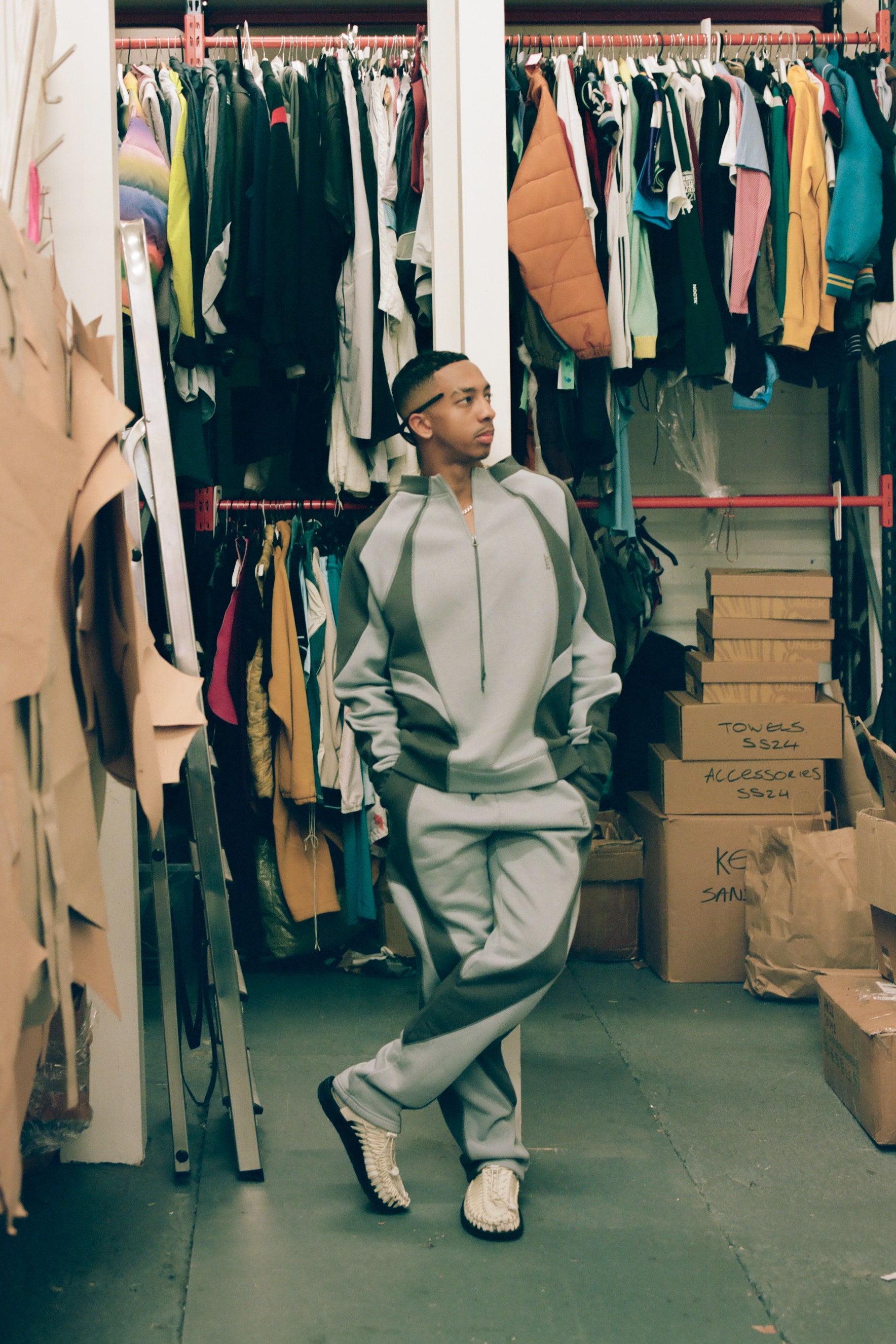
And so Nash – alongside Casablanca’s creative director Charaf Tajer, Fashion East’s Lulu Kennedy, stylist Elgar Johnson, designer Priya Ahluwalia, Mission Statement’s The Flag Twins and musician Hasani Offspring – has spent the past six months coaching a group of 16 to 25 year olds as part of Bisoye Babalola BEM’s Holiday Club. “It’s a testament to the fact that, sometimes, all it takes is a great idea. It’s important to give back in whatever capacity possible. After all, each and every mentor I’ve had has shaped how I view the world,” he says. Established in 2022, the Holiday Club is a free-to-attend summer school designed to provide an on-ramp – specifically for those at risk of social exclusion and crime – into the creative industries, with the scheme culminating in an annual zine.


From photography and set design, to writing and grooming, the publication’s second issue – titled The Origins – was edited entirely by this year’s Holiday Club cohort, featuring in-depth interviews with Nash, Ahluwalia and Tajer. (Which is a level of access that even established journalists struggle to score). “They were incredibly switched on,” says Tajer. “The questions they asked were so relevant, and they used film to shoot! It’s so rare for people to still use film. This culture of design and fashion is elitist, but the barriers are disintegrating. No more gatekeepers!” It should come as little surprise, then, that Babalola BEM managed to connect a number of these kids with real-life freelance gigs – because emotional investment is one thing, but economic change is just as, if not more, important for creatives to thrive. “It’s about access,” says Nat Bury, Holiday Club’s head of arts and culture. “These people have talent, so it’s about putting them in a space for that to be recognised.”

The club’s motto – “for us, by us” – is a guiding principle that has seen the Rubrik Initiative, Samuel Ross’s Black British Artists Grant programme, and The Wall Group’s incubator scheme also come to fruition over recent years. But – given that the proportion of working-class creatives has shrunk by half since the ’70s as a result of widespread defunding – it might also be read as: “If you don’t do it, nobody else will”. “Holiday club was a life-changing experience,” says student Vanda Szijj. “Not only did it boost my confidence, but it also provided me with multiple opportunities that I didn’t know were out there. And it didn’t end after summer school. I was given a mentor who constantly supports me, pushes me out of my comfort zone and keeps me grounded. I’m forever grateful for the opportunity.”

Sunday, December 10, 2023

Moncler x Sacai Is The Collaboration Of The Season

There are fashion collaborations and then there's Moncler x Sacai. The luxury outdoor brand and hybrid style star have joined forces on a tight edit of pieces speaking to our desire for functionality and longevity. Think: layered, multipurpose looks comprising hoods, belts, zips and gilets that offer myriad styling possibilities. Read: cool rather than normcore. It’s quiet luxury with a distinct purpose.


The four concise unisex looks – one in black and the others in off-white and ecru – came about after Moncler chairman and CEO Remo Ruffini enlisted Sacai founder Chitose Abe, who he previously collaborated with in 2010, to help him celebrate the Italian brand’s 70th birthday. But rather than reflect on the past, Abe looked forward, imagining what Moncler might look like in some seven decades’ time. Her answer? A sense of adventure will still be at the heart of the house, but there’s boundary-pushing techniques underscoring every move.


If the first Moncler x Sacai collection honed in on the down jacket – something that Abe had not yet introduced at Sacai and thus a valuable lesson to learn from the master in the field – round two centres on modular looks that fit together like an exquisite puzzle. Jackets, for example, can morph into boilersuits when attached to trousers, capes are suddenly conceived when the sleeves of a puffer are unzipped and a down jacket transforms into a backpack thanks to some nifty internal straps. The small but mighty offering projects a sense that its wearers will be ready for anything, while looking totally unflustered in the process.


While Ruffini has brought a community spirit to a house famed for its snowsuits that transcend the mountain ranges and reach urbanites, Abe’s work stands out among the other names jostling for attention on Moncler’s collaborative line-up (Rick Owens, Pierpaolo Piccioli and Giambattista Valli were also invited to put their stamp on the brand’s Maya 70 jacket for Moncler’s birthday). Abe’s unique pattern-cutting techniques and innovative use of materials are infused with the Japanese phrase kachikan – roughly equating to the importance of one’s personal values – which is not a common occurrence in a fashion industry known for peddling newness. It’s rare for a collaboration to benefit both parties equally, but you get the feeling there is much the two leaders in their respective fields are learning from the union.


Which pieces did team our snap up? Moncler x Sacai has made the decision simple by offering the pieces as full looks only at retail. It’s got to be the polymorphous muted parachute dress, which projects a can-do attitude, for us. Its wearer, for example, looks like she might scale a mountain and then nip into somewhere fabulous for high tea – or, indeed, something stronger if the descent was gusty. The Moncler x Sacai woman has stories to tell and don’t we all want to be her? Moncler x Sacai is available in select Moncler boutiques from 27 November. Discover more Moncler collections at Moncler.com

Friday, December 8, 2023

Chanel Métiers D’Art Manchester 2023-24

Chanel's venture into the urban streets of Manchester, a post-industrial metropolis standing proud 160 miles north of London, sparked a delightful stir. Virginie Viard, the visionary at the helm, unfurled the tapestry of her personal narrative, unveiling the intricacies that drew her to champion the audaciously layered working-class culture of this English town.


In a lyrical revelation, Viard intertwined her familial roots with the rich history of the French luxury house. "I like small towns," she proclaimed, distancing herself from the overwhelming grandeur of London, deeming it too reminiscent of Paris. With a nod to her grandfather and grand-uncle's football management legacy in Lyons, her provincial hometown, and their involvement in fabric production, she wove an intricate connection between her origins and Chanel's haute couture heritage.


The enchanting allure of Manchester, however, transcends familial ties. Viard, delving into the city's vibrant past, drew parallels to Coco Chanel's affinity for English-made tweeds during her liaison with the Duke of Westminster, spent amidst the picturesque Eaton Hall estate near Manchester. Viard's own generational love affair with the gritty arts scene and the music of bands like Joy Division further solidified her connection to this Northern rival to London.


The immersion into Northern culture began with a unique Chanel invitation to a Manchester United vs. Chelsea football match—an emblematic North-South showdown. Guests were adorned with personalized No. 5 (a nod to Chanel No. 5) Man U red football jerseys, fostering a spirited atmosphere that culminated in a victorious Man U with a score of 2-1.

"In the rain-soaked streets of Manchester, Chanel's Métiers d’Art show unfolds, a poetic dance between the timeless elegance of haute couture and the rebellious spirit of a city that champions style even in the face of adversity. Virginie Viard's designs pay homage to familial roots, football legacies, and the vibrant pop culture of the North, creating a tapestry where Chanel meets the proud resilience of Manchester." - Charles Daniel McDonald

As Manchester's renowned rain made a timely appearance, the Métiers d’Art show unfolded against a backdrop of L.S. Lowry's paintings, capturing the resilience of mill workers facing the elements. International guests, armed with umbrellas, occupied pub-style outdoor seats along the charming Thomas Street, Chanel-ified for the night.


Viard's interpretation of the Northern girl exuded a playful homage to working-class pop culture from the '60s to the '80s, featuring side-flicked fringes and defiantly bare legs, a characteristic trait of Manchester's resilient inhabitants. Channeling her penchant for infusing Chanel with a sense of reality and youthfulness, Viard showcased variations of tweed suits, knee-length A-line minis, cycle shorts under coats, Beatle caps, and chain belts. The New Wave club girls took center stage, adorned in black patent leather or baby-doll dresses with double-C safety-pin or vinyl-record jet embroidery.


Métiers d’Art, a tradition initiated by Karl Lagerfeld, spotlighted the craftsmanship of Chanel-owned couture supply houses—Lesage for embroidery, Goossens for jewelry, Le Marie for feather work, and Barrie for Scottish cashmere knits. Viard's playful touch extended to souvenir slogan-sweaters, beanies, and scarves inspired by football terraces and club flyer graphics.


While undeniably Chanel and inherently Parisian, Viard paid homage to the smartness standards of Manchester women. Even in times of financial constraint, the city's women, including factory workers, have consistently embraced the ethos of dressing impeccably to venture out. In myriad ways, the show showcased a profound and proud ode to the city of Manchester.

Thursday, December 7, 2023

Carolina Herrera Opens Boutique On Palm Beach’s Worth Avenue

Carolina Herrera has landed in South Florida. The New York-based house has opened its third freestanding store in Palm Beach, located on the Esplanade complex of stores on Worth Avenue. The brand has two other locations in the U.S. — the flagship store on Madison Avenue in Manhattan and another unit in Dallas.

“Since the company was founded in 1981, Herrera has always had amazing clientele in Palm Beach. But this is our first time having our own store here, and it’s super exciting. For me there were a lot of great options in Palm Beach but Worth Avenue was it, and I just felt that was really important that we were on Worth; there’s something so romantic about strolling down the avenue and the stores,” said Wes Gordon, creative director of Carolina Herrera.

The new outpost consists of a 2,200-square-foot corner location that will offer the brand’s luxury women’s ready-to-wear collection, as well as beauty and accessories including handbags, shoes and jewelry.

The store takes cues from Gordon’s renovated flagship on Madison Avenue, such as pink subtle blush Venetian plaster walls and rounded shapes and curved edges on everything from seating to fixtures and wall transitions, reinforced by bold columns finished in a textured limestone with a bit more grit to give it a beach feeling. The store was designed and developed in partnership with architect Mao Hughes and interior designer David Lucido.


The open-floor format is both subtle and visual, as shoppers entering are greeted by two expansive windows that hug the entrance, adorned with the signature graphic black-and-white limestone hexagonal floor inspired by the Roman apartment of artist Cy Twombly; plaster rope columns that are handmade as display pedestals; the addition of rope trims to pink couches that are located in the center of the store, and little touches, such as the whitewashed woods with rattan detailing to add an element of Florida. Vintage pieces from the main store chandelier and Crespi lamps on the store marble tables enrich the feeling of a younger generation.

“To me, what’s so special about each location are our customers that we have, such amazing women and friends at each location and to me it really feels like a gathering point for a group of friends in the city. And I’m excited to kind of see how this store evolves, and the women who gravitate here and spend their days hanging out in here. And, you know, it’s our latest store, so I always, for me, it’s like the newest iteration of our ideas and concepts,” Gordon added.

Other elements include dramatic archways framing dark brushed bronze hanging rails, the signature Herrera red facade detail with scalloped panels, a makeup and fragrance corner, customized soft seating for the spacious fitting rooms, marble furniture pieces and rug work with twisted rope details as a nod to the proximity to the ocean, which is just steps away from the location.

The Gucci Christmas Tree Is Not A Tree

Gucci has a new take on Christmas trees. This was clear as the Italian luxury house on Monday evening unveiled its own tree, which is only shaped like one, and placed it at the center of Milan’s iconic Galleria Vittorio Emanuele II. Succeeding Swarovski — which sponsored the Christmas tree for the city since 2013 — the Kering-owned fashion house opted for an installation made up of 78 gift boxes sealed with Gucci’s signature Horsebit buckle.

Coming in white and silver shades and topped with the brand’s logo, the boxes were lit up during a ceremony Monday evening, along with the LED illuminations that cover the domed ceiling of the Milanese landmark spot. Open to the public, the lighting ceremony was hosted by Milan’s Mayor Giuseppe Sala, Gucci president and chief executive officer Jean-François Palus, Italian actress and godmother of the event Margherita Buy as well as Anna Dello Russo, who faced the freezing cold in a black double-breasted blazer jacket, mini shorts and flatform loafers hailing from Sabato de Sarno’s first collection for the brand.

“The place where we’re standing is recognized around the world as a symbol of the beauty of this city. With the Gucci tree with which we’re decorating the Galleria, we want to spread a message of joy and beauty with all of you and the entire city of Milan,” said Palus during the ceremony.


The gift boxes will be a recurring motif for the holidays at the brand, as they also will adorn the Gucci store windows and embellish the interiors of selected units worldwide. Some of the materials that make up the gift boxes will be donated to ForMattArt, a cultural association for social advancement that promotes activities geared toward social solidarity and education.

Gucci’s sponsorship of Milan’s Christmas tree is part of an expansive project aimed at promoting beauty and enhancing semi-peripheral areas of the city. For example, in collaboration with ForMattArt, the brand pledged to light up parts of the Corvetto neighborhood — in Milan’s southern area — and embellish the entrances to three of the main schools in the district, in an initiative unveiled on the occasion of World Children’s Day on Nov. 20. Children were also involved in artistic workshops to create decorations for their schools around the topic of children’s and adolescents’ rights.

In his speech, Palus thanked Sala and the municipality of Milan “for giving us the opportunity to contribute in making Christmas special for the Milanese not only here in Galleria but also in the Corvetto district. May this Christmas be a reason for all of us to understand the importance of giving back to the community.”

“Our beloved Galleria is the expression of the city: when it’s full and buzzy, it means that the city is doing well,” said Sala. “We’ve sometimes received criticism about only big companies finding place here…but we ask them to do something for the city, in addition to promoting their brands….Because at the end of the day we’re privileged in living in this part of the world and in this city but, as per the Milanese spirit, without solidarity and attention to the others we don’t live well, it’s unacceptable for us. So every occasion of festivity…must be also an opportunity to think about the others,” concluded the mayor.

A Pinnacle Of Feminine Opulence: Unraveling The Tapestry Of 'Women Dressing Women'

In the forthcoming spectacle gracing the hallowed halls of the Costume Institute, an enchanting narrative unfolds in the exhibition entitled "Women Dressing Women." While the thematic undercurrents nod gracefully to gender identity, the true triumph of this exposition lies in its seamless unity—a harmonic convergence of diverse designers throughout history intricately interwoven with The Met's own sartorial treasures. Astonishingly, nearly half the exhibited artifacts—each a masterpiece in its own right—have yet to grace the public eye, adding an aura of clandestine allure. Mellissa Huber, the discerning associate curator at the Costume Institute, alongside the accomplished Karen Van Godtsenhoven, an alumna of CI, orchestrated this symphony of style that transcends temporal boundaries. As the doors swing open to this couture haven, visitors are beckoned by the whispers of Germaine Émilie Krebs (Madame Grès) and Rei Kawakubo—a white silk pleated goddess dress and a distressed wool sweater with a cotton-and-batting skirt—a ballet of contrasts resonating through the stairwell.


Descending further, one encounters the illustrious triumvirate of Madeleine Vionnet, Elsa Schiaparelli, and Gabrielle "Coco" Chanel, akin to fashion's celestial muses. In a mirrored display case, their creations, viewed from every angle, evoke a sense of reverence. Chanel's modernist vision, Vionnet's intricate bias cutting, Grès's artful draping, Schiaparelli's fusion of art and fashion, and Kawakubo's mastery of "ma" redefine the very essence of femininity. This curated journey refuses to bow to essentialism, as Chanel's streamlined elegance coexists with Vionnet's meticulous craftsmanship and Schiaparelli's artistic ingenuity. Kawakubo, standing as a disruptor, shapes space around the body, challenging conventional norms.


The exhibition's core theme, the lineage across history, pulsates through each meticulously arranged section. Even before entering the galleries, the notion of anonymity takes centre stage, transporting patrons to the era spanning 1675 to 1900. A nod to the genesis of the first guild of female dressmakers, this section unveils the transition from collaborative creation to the emergence of solitary geniuses, exemplified by Charles Frederick Worth. Moving forward to the period from 1900 to 1968, the exhibition delves into the concept of visibility. An entire room pays homage to the interwar period, highlighting an era when Paris witnessed a surplus of female creative directors. Chanel, Callot Soeurs, and Lucile become protagonists in this historical tableau, illustrating a feminine ethos radiating from within.


The theme of agency emerges as the narrative unfurls from 1968 to the present, capturing the evolution from the "boutique generation" to the modern era of individualized self-presentation. Here, the exhibition emphasises the symbiosis of business and creation, embodying a dialogue between designer and client. Amidst this fashion odyssey, the exhibition addresses societal realities and lived experiences that often evade the limelight. An entire section within the Agency theme explores how dress serves as a canvas for political and bodily expression, spotlighting the work of contemporary designers like No Sesso, Collina Strada, and Customiety.

¨In this subterranean sanctuary of style, the brilliance of women in fashion not only shines but radiates through the collective brilliance of their creations—a testament to the enduring, ever-evolving tapestry of feminine design. The constellation of talent celebrated in this exhibition beckons patrons to ponder the intricate threads that weave through time, creating a legacy that extends far beyond the confines of a gallery.¨ - Charles Daniel McDonald

The final thematic strand, absence/omission, positions garments in the heart of the gallery—a deliberate choice symbolising a lack of attribution or intentional obfuscation. Ester Manas's dress becomes a poignant commentary on the historical absence of body diversity in the industry. "Women Dressing Women" emerges not merely as a showcase of exquisite garments but as a celebration, an acknowledgment of the multifaceted roles women have played in fashion. The exhibition, like a constellation of talent, invites patrons to traverse the labyrinth of time and explore the evolving tapestry of feminine design. In this subterranean sartorial sanctuary, the brilliance of women in fashion radiates through the collective brilliance of their creations.


As visitors descend the grand staircase into this immersive experience, the irony of the exhibition's underground locale beckons contemplation. The subterranean setting, historically associated with the perceived second-class status of fashion in museums, adds a layer of significance to the narrative—echoing the resilience and determination embedded in the evolution of women's roles within the industry. What unfolds within the dimly lit galleries is not merely a chronological presentation of garments but a nuanced exploration of the complexities inherent in women's engagement with fashion across time. The curators, with meticulous attention to detail, have emphasized the collective nature of clothing creation, transcending the notion of the lone genius.


Huber and Van Godtsenhoven's focus on tracing a lineage of female fashion design becomes a celebration, an ode to the constellation of talent that has graced the industry throughout history. The exhibition offers a multi-layered lens through which patrons can contemplate not only the evolution of fashion but also broader movements, societal changes, and the dynamic roles of individual women. The exhibition's thematic richness extends beyond the exquisite garments on display, delving into the intricacies of museum practices, collecting biases, and historical time periods. The acknowledgment and celebration of women's contributions become a gateway to explore not only biographical narratives but also the larger tapestry of shifting societal norms and women's changing roles.


As the narrative unfolds through the meticulously curated sections, each defined by custom headpieces by Caitlin Keogh, the gallery becomes a temporal portal, allowing patrons to traverse the rich tapestry of feminine design. The detailed genealogy of women designers from the early 20th century, presented in a U-shaped room, provides a comprehensive panorama of interconnected creativity—an intricate dance of influences and inspirations. The exhibition's fourth theme, absence/omission, transforms the gallery into an immersive experience. Garments standing defiantly in the middle of the floor become symbolic pairings, speaking to the lack of attribution or deliberate obfuscation. The deliberate placement challenges patrons to confront not only the aesthetic allure of fashion but also the obscured narratives and overlooked aspects within the industry.


Ester Manas's dress, representing the absence of body diversity, becomes a poignant reflection on the historical limitations within the fashion realm. The curators' intention, as Huber articulates, was not driven solely by politics but rooted in the profound idea of acknowledgment and celebration. The exhibition becomes a nuanced exploration, a visual symphony celebrating the strengths and recognising the areas that demand improvement. "Women Dressing Women" is a complex masterpiece that unfolds its layers like a carefully crafted gown. The multilayered narrative invites patrons to delve into the interconnected realms of museum practices, historical time periods, and individual women's lives. It's an invitation to transcend the mere admiration of garments and engage in a reflective journey through the shifting landscapes of fashion and feminism. And long may it continue.