Tuesday, April 26, 2022

Seven Ways Fashion Is At The Center Of Everything

Fashion is not life entire.

But as a pastime, an idea, a job and a love, fashion and retail sit at or near the center of so many important trends and transformative moments that it can serve as proxy for many things much larger than the business of making and selling apparel.

From the global sustainability push to senior prom, fashion is there at the core of it all, offering a kind of kaleidoscopic lens on who we are, who we want to be and where we’re all headed.

The shorthand take is that fashion — along with society — is trying to get better.

It’s a frustrating process with fits and starts. The hot button topics — from workers’ rights to race and in between — are all worthy of a dissertation of their own (and no doubt there are graduate students somewhere digging deep into how the industry is, or ought to be, changing right now).

But even a quick look at everything on fashion’s plate shows just how much change the industry is facing.

As insiders gather — in person — for another season of pandemic-era runway shows in New York, London, Milan and Paris and the world logs in from afar to see the latest looks, WWD explores just how the industry sits front and center (or at least the second or third row back) for the big trends shaping the world today.

Workers’ Rights

One-in-four American jobs are supported by the retail sector, according to the National Retail Federation.

That works out to 52 million jobs and $3.9 trillion in GDP. Thirty-two million people are on the sector’s own payrolls and the balance is in support functions, such as the supply chain.

Staff at Walmart, Target and many other retailers were deemed essential workers, staying on the job during the worst of the coronavirus lockdowns — putting store associates in cultural crossfire over mask mandates and at risk of getting COVID-19 themselves.

But retail workers were also on the front lines of the push to raise minimum wage, to bolster unions and worker rights globally, especially after the Rana Plaza factory collapse in Bangladesh killed more than 1,130 garment workers in 2013, shining a spotlight on the still dangerous real-world business of making apparel.

Trade


The business of making and selling apparel globally — sending billions of dollars and boatloads of goods across international borders — has put fashion into the center of politics, like it or not.

Apparel producers were among the hardest hit in former President Donald Trump’s trade war with China, paying higher duties and playing political football as Washington and Beijing postured.

President Joe Biden has kept the tariffs high as he picks up the dance with China.

While economists tend to shudder at the practice of using taxes at the border to push for political advantage, duties are one of the few tools political leaders have to pressure other countries.

Fashion is also used as a more overt tool to send political messages, even if those messages get garbled sometimes, from former First Lady Melania Trump’s “I Really Don’t Care, Do U?” jacket to Carrie Symonds’ spotlight on fashion rental as the wife of British Prime Minister Boris Johnson.

The industry itself is also increasingly coming under the scrutiny of regulators.
 
The Environment

For years, fashion seemed to get something of a pass on the environment, flying below the radar as the oil and auto industries took the heat for global warming.

Those days are gone now and fashion is front and center in the environmental conversation — from sustainability to shipping. The industry is changing its perspective and being pushed to go further.

The latest nudge — really more of a shove — is working its way through the New York State legislature in the form of the Fashion Sustainability and Social Accountability Act. If approved, the Fashion Act would compel companies with more than $100 million in global revenues to map 50 percent of their supply chain and disclose their greenhouse gas emissions and more.

Fashion accounts for an estimated 4 percent to 8.6 percent of global greenhouse gas emissions.

France is already a step ahead with a new anti-waste and circular economy law that prohibits the destruction of new, unsold nonfood, requires signage revealing the environmental impact of products and more.


Race

When the 2020 murder of George Floyd at the hands of Minneapolis police pushed the Black Lives Matter movement to the fore, like much of the rest of society, fashion was forced to acknowledge the continuing problem of systemic racism.

There is still a big difference between acknowledging a problem and effectively addressing it, however. And fashion still has work to do to improve its representation across all levels of the business.

Race is an ongoing part of the conversation in fashion, where brands are aiming to cast more diverse models and companies are starting to disclose the demographics of their workforces on the principle that what is measured can be improved.

Fashion is not perfection — and never will be — but at the white-hot center of culture, it will always be pushed to be better, perhaps justifiably.

Gender

If fashion has long been comfortable with sex, it’s been slower to dive into gender and, until recently, has been structured along very traditional binary lines with men’s departments and women’s departments and not too much space between.

But as those lines start to break down across the culture, fashion is now chiming in on the conversation.

Myriad designers worldwide now create gender-fluid collections. And even Victoria’s Secret, still working to rehab its image, recently linked up with TikTok beauty queen ​​Emira D’Spain, who said she was “honored to be the first Black trans girl working with” the brand.

Fashion has been criticized in some quarters for a kind of rainbow capitalism that has it marketing to the LGBTQ community during Pride Month and then moving on until the next year.

That is certainly true of some brands, but there are many more companies moving toward greater inclusivity — or at least talking up the topic, and therefore acknowledging its importance.

Technology

As technology has taken over the world, it’s been Google and Facebook and the rest leading the way.

But for all the wonder — and horror — of the digital connections big tech has built, it’s useful to remember that those are connections between people. And people speak with fashion.

That’s why there’s been a kind of dance between Seventh Avenue and Silicon Valley, with the tech types trying to link with fashion to forge stronger connections with their “users” and designers seeing that same group of people as “consumers.”

So Google cofounder Sergey Brin teamed with Diane von Furstenberg to introduce the ill-fated Glass by Google on the runway, Amazon founder Jeff Bezos rubbed elbows at the Met Gala, Instagram helped create the influencer ecosystem and style is taking root early in the metaverse thanks to the likes of Balenciaga, Ralph Lauren and more.

Fashion’s own influence was apparent from the beginning. When Jennifer Lopez wore her plunging green Versace dress to the 2000 Grammy Awards, Google’s word-heavy search engine was not up to the task.

Eric Schmidt, former Google chief executive officer, said years later that the dress “was the most popular search query we had ever seen, but we had no surefire way of getting users exactly what they wanted: J.Lo wearing that dress. Google Image Search was born.”
 
Sex

When Google was flooded with queries to see J.Lo’s Grammy jungle-print look, it learned what fashion has always known — sex sells.
 
And while fashion is the most visible projection of self out to the world, displaying a range of attributes — from buttoned-up competence to wild-child crazy — it can also communicate much more intimately.

While the industry has been careful to present a much more representative range of body types and skin tones, largely led by Rihanna’s Savage x Fenty, many brands are still in the business of packaging and framing sex in the interest of sales.

The above are seven ways fashion is at the core of it all. One could list many more. What’s clear is that, while not the only driver, fashion helps the world turn — and it still has a long way to go to make sure it isn’t veering off course.

Monday, April 25, 2022

The Relationship Between Fashion Film And Animation/Fantasy

My own initiation into fashion film was a hesitant one, uncertain as to whether fashion films could ever be situated on the same spectrum as traditional film. The role that fashion film plays within cinema is still relatively undiscovered. Films dissected by Stella Bruzzi (1999) have often explored both fashion and film as two separate entities, which combine in challenging identity and metaphorical gestures, as well as aesthetics; whilst an auteur of the early fashion film, Guy Bourdin, created voyeuristic moving images which have only in recent years, begun to emerge to a wider audience.


Despite some of cinema, photography and art’s most notable visionaries, directors and writers turning their hand at the craft to create compelling, sometimes thought-provoking moving images, the area is still misunderstood. And thus, the medium has created its own parameters within cinema. I decided to look specifically at the relationship of fashion film to both animation and fantasy. There is perhaps a surprisingly strong link and, though there are an array of fashion films from many genres and those that are both narrative and conceptual, animation and fantasy have given fashion films a new dimension. I wanted to look at where fantasy and animation meets fashion, and what that creates in relation to a wider dialogue, selecting a few films from both animation and fantasy in order to illustrate how fashion has explored them.

Fashion Films are often short films, sometimes video art or other forms of moving image which aim to experiment within filmmaking to advertise or market a brand through visual experience. In many cases, a fashion film is created to enhance and epitomise brand identity through film. It is the idea that the multifaceted concept of ‘luxury’ must embody its own world, and fashion films have become a way that such companies can sell the world they want you buy into. Prada is one of the most iconic brands to blend the elements from fashion as clothing, to literature, film, artefact and culture/heritage. Like advertising where traditional filmmakers could be seen to create work within a commercial context, Prada grasped the idea that the elements making up the commercial side, such as obvious product placement, static shots of products or garments, or films acting as moving catalogue pages, did not have to be the case. Instead, they worked on stories that would influence an audience to look deeper within the brand, and later fall in love with the ideas, and of course products sold by said brand.


Wes Anderson, David O. Russell, Roman Polanski and James Lima are but four filmmakers to work on films for Prada; whilst Lima’s animated short for Prada, Fallen Shadows (2016), epitomises why cinema should be more inclusive of the fashion industry’s films. As the Prada website detailed: “Prada's engagement with experimental work in film, animation, architecture, art and sound design. The animation - undertaken together with director James Lima - experiments with cutting-edge technology. Computer Motion Capture and Cyber-Scanning - in which an entire body is scanned and recorded, rendering a completely animated character - have been employed here for the first time.”

For the Alexander McQueen 2014 Spring/Summer campaign, alongside a matching set of editorials for the pages of glossy magazines, a film was also created. Kate Moss, draped in yards of organza, is transfigured into an ethereal holographic stereogram by artist Chris Levine, modernising a nineteenth-century optical illusion for British luxury fashion house in McQueen. The futuristic film directed by photographer Steven Klein in East London was inspired by Michael Powell’s 1960’s British thriller Peeping Tom, and follows a similar premise in just over four minutes. The haunting short film noir, that begins with a glowing pixie-cut brightening up this voyeuristic dingy thriller, sees a mini-moss tossed in the trash of uninhabited London streets, before the tantalisingly sexy Moss is watched undressing, illuminated in a set of unaffiliated images by Dominick Sheldon’s cinematography. The film works in the fantasy genre between supernatural and magical elements which follow a narrative structure, and is a strong example of how fashion film can sit within the parameters of cinema beyond the idea of advertising.


In a similar exploration of fantasy, Jon Jacobsen’s Die Verwandlung (see right) is a multifaceted project that forms part of a residency at SHOWstudio - the home of fashion film, alongside the British Council Chile and King Kong Magazine. Die Verwandlung is a fashion film that incorporates an editorial, and explores metamorphosis and motion, informed by Jacobsen's interest in the dichotomy between digital and organic states. It is both a grotesque and ethereal conceptual project that feels a lot like performance art, and allows fashion to explore imagination, speculation and the Kafka-esque. It therefore roots itself to metaphysical concepts, like the McQueen campaign, falling under a supernatural branch.

Another interesting look at fantasy elements in fashion film comes in the form of a group of short films from actress and director Asia Argento. Don’t Bother To Knock were short films scheduled for public release at specific intervals of October 2006, and were shot in promotion for the feature film Marie Antionette (Sofia Coppola, 2006) starring Argento who played Comtesse du Barry in the film. The film's blend reality with fantasy and are part-scripted by author Emma Forrest. Fiction therefore forms a part of the project as a whole. An element of the films that play with the idea of fantasy and the mind, is the narrative of Twenty-three words beginning with ‘F’. Monologues are developed from the words, as Argento discusses what may or may not be spoken truths. In addition to the film, the monologues were first presented as entries on the SHOWstudio blog, with comments made by SHOWstudio users displayed alongside the films. This is a somewhat unique film that also takes a form of audience participation into action. Through vignettes interspersed with 'video diary' aesthetic elements, Don’t Bother To Knock feels more detached from fashion as we often suspect.

These short films use fantasy as a way to explore the genre in the same way that narrative film does; through science fiction, the supernatural, fantasy worlds and other such themes that fall within the genre. It allows the same escapist and extraordinary qualities to arise and like short film as its own genre, creates a platform for filmmakers to challenge large and wild stories in limited time, and with a motive - to sell. But within a larger filmmaking context, fantasy in fashion film creates a fine balance between whether a fashion film can be considered cinema in its own right, as well as standing for a metaphor for the idea that it tries to sell.


Like fantasy, animation has become more prevalent amongst fashion film. At its most basic, a simple animation was used in a collaborative project between SHOWstudio and Japanese streetwear brand Cav Empt (C.E). The SHOWstudio x C.E film is a two-and-a-half minute animation by Chloe Feinberg (titled Love Soldiers [2017]), and a bespoke graphic by Brooklyn-based musician Oneohtrix Point Never (OPN). The film was created to coincide with the release of a capsule collection that included t-shirts and jumpers designed by C.E – the young Japanese label from SK8THING and Toby Feltwell. Graphic-centred designs from the clothing form that in the film - only this time, they move in a world of their own. The animation is simply hand drawn and comes to life for a few minutes in a film that feels more like an abstract advertisement, and thus becomes something of a fantasy film whereby an animated world comes alive, objects appear and ambiguity works to leave questions on the film open-ended.


In a more exploitive digitally animated film, There’s Something About Mary (not to be confused with Bobby and Peter Farrelly’s nineties comedy romance) an electric, high-octane film for the Mary Katrantzou brand comes together (Fig. 2). The 3D animation by Younji Ku - digital art director, filmmaker and sound designer - features digital graphics to match the designer’s aesthetic of digital printed clothing. It becomes a fun visual medium showing the fine details and craftsmanship of the designer’s iconic collections within this abstract film. The lack of narrative does nothing but enhance her brand’s strong identity with the use of strong female protagonists, cascading florals and dancing shards of various shapes in this technologically-fuelled film. This film encapsulates the very strong, iconic and signature digital features of all her collections and what her brand is all about. In a similarly digitally-charged way, department store Lane Crawford challenges the use of technology as scans of a model wearing a variety of luxury designer pieces are brought to life. The 3D animated film uses 3D body renders, pushing the boundaries of realism, or at least what appears to be realism.

Fashion films account for a broad range of cinematic experiences. Some tell us stories through strong plots and compelling characters, others bridge the gap between art and advertisement, whilst others play on the notion of ‘art for arts sake’. Even so, what we can see is that the fashion industry is using fantasy and animation to form a variety of still and moving works that encapsulate an entire brand. Animation can therefore be seen to work in its own sphere to illustrate ideas as an art form, as well as to express fantasy. CGI, stop motion, 2D-based vectors, motion graphics and traditional animation are often seen to be a way in which the fantasy elements in fashion films are depicted.

Fashion In An Animated World

The fashion industry is becoming more prevalent in the world of animation through film and video games.

In today’s world, the fashion industry becomes interconnected with just about every commercial sector, which includes the digital industry. With developments in technology, especially CGI and other animated software, companies like Disney and online gaming brands such as The Sims are in hot pursuit of fashion illustrators and animators.

In the 1950s, animated films such as Cinderella had characters and their clothing sketched out by hand. Now, Disney animators use technology such as computer programs like Marvelous Designer to create characters’ garments. This innovative technology can produce details as intricate as seams or woven materials. While viewers may overlook some of these details, they are an integral part of making animated films come to life. Brittney Lee, an animator for Disney’s Frozen, told Vox, “Something that is meant to be a velvet shouldn’t be moving as if it was tulle or if it was cotton. We run a whole bunch of tests until we can get it moving in a way that is believable and that is also hopefully true to the fabric that we’re trying to represent.”

The innovation of fashion technology in animation has garnered numerous jobs between the sectors. Amelia Giller an illustrator and animator told Toon Boom, “There are more spaces than ever for those of us wanting to work in both animation and fashion. Companies and publications are beginning to want branded content with animation front and center!”

Giller also mentioned that the internet is to thank for the marriage of fashion and animation. Video games such as The Sims 4, Fortnite and League of Legends, have paved the way for virtual designers. Amateurs and professionals alike have been creating trendy items for the digital world. This digital merchandise has been often labeled as “skins” which have been used to customize the outward appearance of avatars.


Sites like The Sims Resource and LOL Skin Shop are major platforms for designers to upload their work and where game players can buy or download new items for free.

According to an article on PLM, there has been an increase in designer brands investing in digital fashion throughout the past few years. During the summer of 2019, Moschino partnered with Electronic Arts and produced a line of digital clothing for the Sims 4.

Other brands such as Louis Vuitton have partnered with League of Legends, allowing gamers to dress in luxury in the digital world as well as real life. The luxury brand released a collection of skins for avatars along with clothing and accessories for the gamers themselves.

With the rise of e-sports, virtual reality and animated films, the fashion industry is destined to continue to thrive both on and off the screen.

Norse Projects Looks To High Summer With "Sommerhus" Editorial

Danish label Norse Projects has unveiled the second installment of its OFF-GRID campaign, this time heading to the “Sommerhus.” The collection is inspired on the Danish tradition of leaving the city and spending the summer months at the country’s coast.


While the campaign imagery tells the story of a group of friends on holiday on the Odsherred peninsula, the collection incorporates references to summer through bright colors, lightweight knits and relaxed shirting. The collection also uses a range of materials — ranging from Tencel to Cotton Linen and Organic Twill — to create an all-encompassing wardrobe for the summer months.

Take a look through the “Sommerhus” campaign in the gallery above. The collection is available now from the Norse Projects web store.

Take A First Look At The RIMOWA x Adidas NMD S1

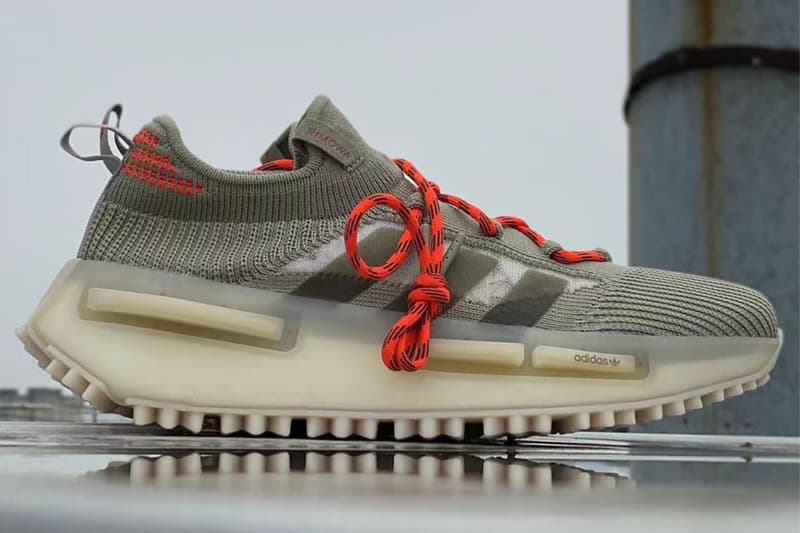
Following a bulky rework courtesy of Pharrell, adidas (XETRA:ADS.DE -1.86%) now taps luxury luggage manufacturer RIMOWA for another take on the NMD S1 sneaker. The futuristic silhouette was first introduced in late 2021, featuring a PrimeKnit upper construction, a distinct semi-translucent midsole incorporating thin thin block molds, and an array of Trefoil logos serving as traction outsole grips.


The upcoming RIMOWA x adidas NMD S1 opts for an under-the-radar look with gray tonal uppers, orange accents across the chord laces and heel, and subtle RIMOWA branding printed on the offset tongue tab and heel tabs. A “Made in Germany” panel is waxed onto the orange insoles, and additional 50° text is teased on the medial midsole block.

Take a first look at the upcoming RIMOWA x adidas NMD S1 above, and stay tuned for release updates to arrive in the coming weeks.

The New Rules Of Influencer Marketing

Earlier this year, The Economist forecast that the global total of spending on influencers by brands would reach $16 billion this year. Spending on influencer marketing in the US alone is expected to top $4 billion in 2022, according to eMarketer. However, arguably, fashion and beauty brands are just beginning to understand how best to use creators to sell their products.

Indeed, the explosive growth of this market was not without its growing pains, which included ever higher investment rates and consistently moving goalposts. As the space has matured, the relationship between social platforms and businesses has changed dramatically, especially with the onset of shoppable content and direct checkouts. Meanwhile, changes to privacy regulation and norms will impact marketers’ ability to track consumer behaviour and engagement.

Conor Begley is co-founder of influencer marketing platform Tribe Dynamics and chief strategy officer of CreatorIQ, the software solution platform which has over 20 million creators in its database and works with the likes of Gucci, L’Oréal Paris and Gymshark.

Changing Dynamics: Platforms, Creators, Consumers

CB: Video content has become the dominant focus. For most of these platforms, privacy changes [have] accelerated momentum in the influencer industry because it’s not subject to restrictions from the iOS ecosystem. The changes that [this new ecosystem] has made have significantly reduced visibility for brands, which they would previously invest into advertising dollars for their traditional paid social advertising ecosystem. So, reduced visibility and reduced advocacy — it’s just not working as well.

A lot of brands that we are talking to are seeing significant declines in conversion rates and the efficiency with which they are spending money there, so they have then shifted dollars towards the creator ecosystem.

[Another element] is that the social networks are now starting to invest in native tools that brands can use to interact with the creators, as well as in resources that increase their attractiveness to the creator community. You have seen this heat turn up — Facebook and Instagram launched their billion-dollar fund in mid-2021. That was centred as a creator fund.

Instagram has started beta testing a native affiliate programme with brands that had not existed previously; TikTok launched their creator marketplace and search tools; YouTube launched a $100 million shorts fund specifically to compete with Facebook reels. [So,] social networks have realised how impactful these people are to their core goal, which is more users.


Strategies for Success for Emerging Businesses

CB: If you were to look at the origin of working with creators, the reason emerging businesses started doing it in the first place was because they didn’t have the budget to run TV ads, print ads or to do large retailer rollouts. What they did have was time and relationships. As a brand, whether you are big or small, that is your biggest tool. Where we see it becoming a bigger problem is with bigger brands because the size of the team does not grow at the same rate that their influencer community grows.

As a small brand, [it’s important to] try to identify who the influencers are that are talking about that category. Once you have identified who those people are, reach out to them directly in a very personal and customised way. “I love what you’ve been creating, I noticed you really liked this brand. I would love to get your feedback on this new product that I’m releasing.” Again, remember their motivation is to help their fans discover new brands, products and categories. That is part of their goal. You’ll get a response rate somewhere in the 30 to 50 percent range when you do that outreach. From there, you then send them the product.

From a consumer perspective, authenticity is going to continue to be a thing. Human trust is a critical element when it comes to making purchasing decisions.

What you’ll find is a fairly high percentage of those people will proactively talk about [the product] because they have to create content every single day. If they’re not creating, this gives them the opportunity to create content out of something new. Maybe they say something positive, maybe they say something negative. Either way, they’re both good for you. From there, you start building deep relationships with those people over time. Now, what you want to do is invest in those people and then once that progresses and you have a really good relationship with them, [you can suggest] engaging in a paid partnership or an ambassadorship.

Future Innovation: AI and Live Shopping

CB: When it comes to synthetic media, deepfakes and fake influencers, I don’t think we have crossed that uncanny valley — where you look at it and actually think it’s a real person. If you look at the community that surrounds those fake influencers, it’s typically more technologically savvy people that are interested in the technology rather than what those fake influencers’ opinions are [on a certain product].

When I think about the influencer landscape, I don’t expect humans to connect with non-humans in the short-term — short-term being in the next 10, 20 years. What happens after that point is so hard to predict that I don’t foresee [it] occurring. From a consumer perspective, authenticity is going to continue to be a thing. You can pay influencers to talk about things and that will work to a certain degree. But ultimately, human trust is a critical element when it comes to making purchasing decisions.

I’ve been asked some version of that question for almost 10 years. Maybe the technology is just not there yet, and that is why it hasn’t emerged. But I think it has more to do with consumer behaviour. Culture matters. In the US, there is this veil of authenticity and trust, where it’s like, “Hey, I want you to only talk about the things that you really like.” In China, everybody gets paid for everything. That’s part of the reason that live shopping works — because they know they’re making money, so it is what it is. I also wonder if the impacts of things like [television networks] HSN infomercials to QVC created a perception that live shopping just isn’t cool.

Human Hair, Glass And Crystals — Are These The Future Makings Of A Handbag?

Strange fashion is having a moment. Take Schiaparelli’s golden, sci-fi spring couture collection, or Emma Corrin’s latest red carpet moment in a nipple-imitating balloon bra as just two recent examples. Clearly, designers have a new penchant for futurisic kookiness, and surrealist handbags are the fad’s final frontier.

If you need any proof, just look to the stars, who are choosing to wear clutches constructed of unusual materials. Exhibit A: Doja Cat, Kylie Jenner and Tinashe have all been seen with Paris label Coperni’s bag made entirely of handblown glass.

On the red carpet, the likes of Paris Hilton and Julia Fox have accessorized with unconventional handbags. Hilton wore a Swarovski crystal martini purse to the 2022 Grammys, while Fox paired her avant-garde Oscars ensemble with a clutch made of human hair.

Seeing celebrities in such impractical designs and materials has given plenty of fodder to fashion lovers on social media. And, in turn, ushered in a new appreciation for sculptural accessories — of which there are many.

Designer Clio Peppiatt recently introduced a collection of colourful chunky crystal bags; fluorescent cream-coloured pearls are the inspiration behind handbags from labels like London’s Simone Rocha and Los Angeles-based Cult Gaia.


But it’s not all playful confections, as some designers are taking inspiration from more Gothic sources. Take Julia Fox’s neck-gripping Oscars dress, which was created by labels Han Kjøbenhavn and Naomi Gilon. The latter has a knack for including nightmarish, stretched-out hands into their coveted ceramic bags. Designer Saurieng Hatlep takes a similarly eerie approach. Their spiky Knuckles Punch Bag features sharp blades that shoot out at nearly every angle.

This use of unorthodox materials has other benefits, like sustainability and circularity. Clio Peppiatt’s collection, for instance, uses recycled acrylic beads to create the look of hardened sugar. When Julia Fox wore her aforementioned hair-covered purse, French hairstylist Charlie Le Mindu, who designed the piece, wrote on Instagram, “This is how I upcycle human hair.” That’s what I call innovative!

Although the virality of the Coperni glass bag has led to a new fascination for futuristic accessories, surrealist handbags themselves have been around for years. Berlin-based brand Ottolinger has been crafting bags from ceramics and melted-down plastic for some time. But the trend’s growth speaks to fashion’s appetite for individualism and avant-garde dressing.

Are surrealist handbags the future of design? Being able to repurpose everyday materials makes them a strong candidate. Plus, who wouldn’t want an accessory that leaves everyone around you wondering if it’s a weapon, a dessert or a piece of art?