Thursday, November 9, 2017

CFDA / Vogue Fashion Fund Names Winners

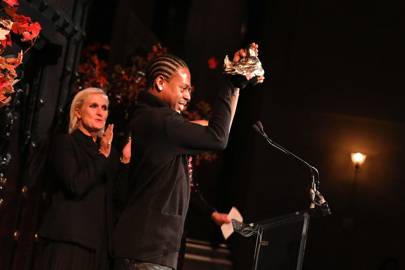
American fashion brand Telfar has been named the winner of this year's CFDA / Vogue Fashion Fund award.

Announced at a star-studded gala dinner held at Brooklyn’s The Weylin following a conversation between Hamish Bowles and Dior’s Maria Grazia Chiuri, Telfar Clemens’ label shared the limelight with two runner-ups: Becca McCharen-Tran’s Chromat, founded in 2010, and Ahlem Manai-Platt’s Ahlem, founded in 2014.

Telfar took home the top prize of $400,000, while Chromat and Ahlem’s award amounted to $150,000 each. As well as the prize money, the winners also receive mentoring from an industry figure of their choosing.


Telfar’s androgynous designs, Chromat’s architectural swimwear and Ahlem’s sleek eyewear were crowned winners by a panel of judges which this year included Nicole Phelps, director of Vogue Runway; Eva Chen, head of fashion partnerships at Instagram; 2011 CFDA/Vogue Fashion Fund winner Joseph Altuzarra and Saks Fifth Avenue senior vice president and fashion director Roopal Patel. Returning judges included Steven Kolb, Diane von Furstenberg, Mark Holgate, Jeffrey Kalinsky and Andrew Rosen. This is the first year since the design competition's inception in 2003 that Anna Wintour has been absent from the committee

The celebrity line-up on the night remains strong, with the likes of Arizona Muse, Hilary Rhoda and Karlie Kloss leading the way on the red carpet. Preceding the awards themselves, this year’s Chateau Marmont designer showcase was equally starry, with Kaia Gerber, Zendaya and Millie Bobby Brown in attendance.

This year's finalists included Christopher Bevans of Dyne, Victor Glemaud, Jordan Askill, Matthew Harris of Mateo New York, Eli Azran of RtA, Sandy Liang and Vaquera’s Patric DiCaprio, Bryn Taubensee, David Moses and Claire Sully.

Dolce & Gabbana Take Out Harrods’ Food Halls For British Millennial Christmas Spree

The invitation arrived little more than a week ago: "Sun in a London Night," an impromptu one-off show by Dolce & Gabbana at Harrods. The designers were coming to London to inaugurate their Sicilian Christmas market at the British shopping institution – a corner of the fourth floor filled with specially made merchandise and Italian holiday treats – and decided to spruce it up with a capsule collection presented in the store’s hallowed food halls. Because, well, why not?

“When you enjoy it, it’s easy. We are so lucky because it’s not work to us. It’s a pleasure,” Domenico Dolce shrugged in a preview of the collection, which will retail exclusively at Harrods. Coinciding with the release of the duo’s new picture book, Millennials, they called upon 100 of their favourite young influencers to walk for them; no small endeavour for a spontaneous fashion show. “I never liked a short show. If I invite you for dinner or lunch, I’m not going to just make you an appetiser,” Dolce said, with a comparison appropriate for the food hall show space where seats were set against coolers of fragrant meat and fish.

“I’m Italian! I love the aperitivo, the antipasto, the first course, the second course... I never liked a short show!” And so, the Sicilian Christmas spirit filled the room in an exuberant collection, which quirkily integrated British trademarks into the red-blooded Italian glamour embodied by Dolce & Gabbana. Amongst their dramatic flounce gowns and lace dresses adorned in flowers and fruits, heart-shaped Union Jacks, royal guard motifs and other traditional nods to the kingdom – such as “QUEEN” spelled out on a dress and a belt – paid homage to the British heritage culture the designers love and admire. “England is the country in the world with the greatest taste,” Stefano Gabbana asserted. “Extravaganza is British. We take a lot of inspiration from here, from the beginning. You are unique in the world.” Their current favourite British export? Our aristocratic millennials: the offspring of old British families such as Lady Kitty Spencer, Lady Tatiana Mountbatten and Lady Alice Manners, who walked the show, tiara-clad, alongside stage kids including Rafferty Law, Tom Brady, Pixie Lott and her boyfriend Olivier Cheshire.


You’d have to be a talent scout, or at least a scout, to put faces, names and parents to all 100 of them, but for Dolce & Gabbana it wasn’t necessarily about the surnames. It was about the generation. “I love millennials,” Dolce said. “People talk about them like they’re the worst generation. No! This generation represents a new time. It’s not like, ‘Oh, we discovered millennials’. You need to talk to these people and understand them, and why they’re changing the world. They’re honest.” What Dolce & Gabbana see in this generation, he explained, is the invaluable sense of character so key to the movements going on in the world right now, where the millennial generations are breaking with the conformity and uniformity of the old world, and calling for freedom of identity. “When you’re working with a model, you’re working with someone who’s modelling. When you’re working with characters, you need to discover the character and find the right clothes for these characters. It’s more exciting, because you can’t just do what you want. You need to understand the character of every girl,” he said.

“This is experience. It’s not fake. Today there’s too much fake: fake news, fake this, fake that. Many people talk… talk about what? Talk about things they don’t know about.” In their #DGMillennials, as Dolce & Gabbana style their famous brood on Instagram, the designers have found a way of infusing their collections and shows with the personality they’ve long been calling for in fashion. Above all, Dolce & Gabbana is about family, about culture, and life. “If you want to speak to your audience, you need to talk about life and experiences. You can’t just make 25-35 outfits,” Dolce argued. “I’m an old chicken in fashion. I want to talk about my life. If you’re honest as a designer, you talk about your life. You don’t talk about 25 outfits put together by a stylist. You live for it, like life, because your clothes absolutely reflect your life.”

Saturday, November 4, 2017

Dsquared2 Launches The "Be Cool Be Nice" Collection In Support Of Anti-Bullying

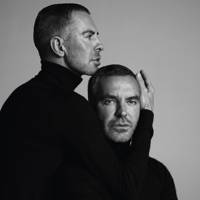
For designers Dean and Dan Caten, bullying is an issue that has long been close to their hearts. They speak to Vogue about why their own experiences compelled them to get involved in a major new anti-bullying campaign.

November is anti-bullying month and last night, at the House of Lords, royalty, celebrity and fashion came together to highlight a growing problem. Bullying has always existed, but the proliferation of online communications has made it all too easy for young people to be targeted. "Be Cool Be Nice" is a charitable foundation set up to tackle online bullying and support victims. Alongside Princess Beatrice, who hosted the event, DSquared2 designers Dean and Dan Caten also attended.

The Canadian twins' exuberant designs and large-scale fashion shows have built a thriving €200m business, but life wasn't always comfortable for Dean and Dan Caten. Born in Toronto in 1964, the identical twin brothers, the youngest of eight siblings, were targeted for being different. "As twin boys and being from an immigrant family growing up in a suburb outside of Toronto, we were bullied," they say. "When we were in school we weren’t the typical adolescent boys and had different interests and were bullied for that."

Unlike many victims, who go through it alone, the pair could turn to each other for support. "Having one another has always been a blessing, our bond has always been our strongest weapon," they say. Even today they are inseparable, sharing a large house in London and building a hugely successful international fashion business together.


Fashion, where difference is often celebrated as an asset, offered them a safe place. "Fashion has always been an outlet for our self-expression. We used it as a tool to create a material artifact of our feelings and ideas. It truly gave us a voice and helped us in finding a sense of belonging. Fashion has always reassured us and made us feel protected. Doing what you love gives you more self-confidence."

They've designed a "Be Cool Be Nice" fashion range to raise money and awareness and encourage people to think, before they comment online. "'Be Cool Be Nice' is a cause everyone can stand behind. If we did, it could change the world. It’s a matter of approaching everyone with the right attitude." But whilst clothes can help give confidence they can't do it all, explain the designers. "The most important thing is the confidence you have in yourself and the courage to be yourself."

To anyone who is experiencing bullying they say, "You are not alone! You are perfect the way you are. It is important to disengage and ignore bullies. Being strong and brave to be who you are is your biggest asset."

Maria Grazia Chiuri: "Dior Has To Be About Female Empowerment"

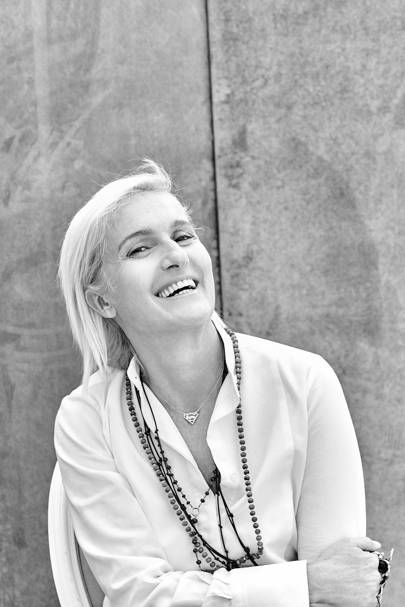
Maria Grazia Chiuri has been artistic director of Dior for just over a year. It’s a role she never dreamed she would have. “And why is that?” she asks. “Because there was never a woman in that position [before].” We’re seated in a spacious reception room in Dior’s Paris headquarters. Gilt mirrors line the walls. A pair of crystal-tipped chandeliers hang overhead. The rest has been cast in Dior’s signature pale grey: ceiling, walls, sofa, a pair of oval-backed Louis XVI chairs. Chiuri, 52, is all in black. Black trousers, black blouse, black heels and sooty black eyeliner. Her cropped, bleached hair is parted severely on one side. Like Gucci’s Alessandro Michele, her fingers are dressed in heavy rings – one a skull from Codognato, another of her own design.

It’s only been nine months since the former Valentino co-creative director made her debut at the Musée Rodin during Paris Couture Week, and her impact on the 70-year-old house has been nothing short of transformational. Under Chiuri, the catwalk has become a platform for an ongoing conversation about feminism and the arts. This season, she paid tribute to two powerful women, constructing a showspace in the style of artist and former Dior model Niki de Saint Phalle’s Tarot Garden in Tuscany, and sending Breton-striped shirts stamped with the title of art historian Linda Nochlin’s 1971 essay, “Why have there been no great women artists?” down the catwalk. (They’ve gotten more than just the fashion world talking.) Her efforts haven’t stopped there: She has proposed a new vision of the modern-day Dior woman, one that may still don a ball gown and stiletto on an occasional evening, but for day prefers long-sleeved shirts, boyfriend jeans and a pair of easy walking flats, a cross-body bag slung across one shoulder. Chiuri expands upon that vision below.


You have been described as an activist designer. How do you feel about that label?

I don’t think that I’m an activist. Dior is about femininity. When I arrived here, everybody told me that. Okay, I said, we have to speak about femininity, but what does that mean today? I try to speak about women now, and for the future. Dior has to be about female empowerment. Only with flowers? It’s not enough. I know that there are a lot of nostalgic people that want a world that references the past and [Dior in] the 1950s, and I think the references of the past are beautiful, and I really appreciate our heritage. But if I’m a modern woman who wants a vintage dress I go to Didier Ludot and I buy an authentic Dior dress. If I go to the [Dior] store, I want something that speaks about the heritage, but in a modern way, for contemporary life. I know there are other points of view, and I respect those, but that’s my point of view.

Marc Bohan was the head designer of Dior longer than anyone, but his influence is often overlooked in the archives. Have you been particularly inspired by his work?

Yes. If you look at [Yves] Saint Laurent, [his designs] are more similar to Mr. Dior’s. When Marc Bohan arrived, he completely changed the line. The shapes are Sixties, they are clean, short. And why? Because there was a revolution in women, a big change in women’s attitudes. It was not the designer who changed the line, but the woman changed and the designer understood that the woman was different. The designer has to understand the women. Sometimes we have this message that the designer was a revolutionary. No, sorry. It was the woman that changed, and the designer understood and changed the line. Now, we have to understand this new generation, and it’s not easy. The new generation are completely different to the past. They ask for more information, they are more personal in their point of view. My son looks to see if the T-shirt is cotton, where the cotton is from. There is a completely different audience with different values and ideas about what is good and not good. Now, they can buy fashion everywhere, also they can do the same look in a very cheap way. A luxury house has to maintain the value, the brand, the quality, the craftsmanship, but at the same time has to start a new dialogue with these guys. The new dialogue [has to be] about value. Not only about dress.

Your latest collection references the work of Niki de Saint Phalle. How did you discover her?

When I arrived at the company, I started immediately to work on the exhibition at Les Arts Décoratifs, which [immersed me] in the history of Dior. Dior has a huge story, with different creative directors who have maintained the values for such a long time. During this research I also found the images of Niki de Saint Phalle in Dior and a letter she wrote to Marc Bohan [asking for a dress]. So I started to read more about her. And step by step I tried to translate in the collection these different ideas about a woman who started as a model for Dior in the Fifties, who was really beautiful and [whom] everybody would ask to be an actress, and she decided to work in art in a moment that was not too easy to work in art for women.#SuzyPFW: Dior’s Modern Muse, Artist Niki de Saint Phalle

On the runway, you sent out T-shirts with the title of Linda Nochlin’s 1971 essay, "Why have there been no great women artists?" Why do you feel that question still needs to be posed today?

If you are not lucky, if you do not have the opportunity to go to a good school or to be born into a family that can support you, and if the society doesn’t help and support, I think it’s very difficult not only in art but also in other jobs. And I think that sometimes this idea is inside of women, that they know that it is very difficult and so they don’t try to make what they really like. Very often people ask me, ‘Have you ever imagined that you can arrive in Dior’s house?’ No. ‘But why?’ Because there was never a woman in that position. I believed that it could be possible to work in the fashion system, and honestly I was very lucky because I started at Fendi, where there were unbelievable women that supported me. But why did I have this kind of mentality inside me? Because this was in my DNA in some way, so the problem is not only outside, but also inside. You can’t believe that you can do something when your patriarchal idea is that women can’t do that. I don’t think there is a young girl that today believes that she can become Michelangelo. Probably she says, oh no it’s too difficult, it’s impossible. It’s inside us, we are a limit for ourselves.

You’re known for having a pragmatic approach to your role – you visit factories, you’re involved in the business side of things. Why is that important to you?

As a designer, creativity is the first part of our job, but I don’t think that creativity only has use on the runway. It’s very important that the message you have in the show you also have in the [store] window, also in the merchandise inside the store. I have a huge team around me that supports me, but if you only do the show you lose the message. Now fashion is another story, it’s not like in the past. Fashion [used to be] a big show to sell other products – if we speak about the Eighties, Nineties, there were the licences, you’d have a big show but after you sell other products. I want to sell it all – clothes, bags, shoes. We have to be honest. If we don’t speak about fashion as a system, in a real way, it’s a trick. We have to be honest with our consumer. We want to give very good quality, good creativity, but which you can also find in the store.

Cara And Matt Team Up For Burberry

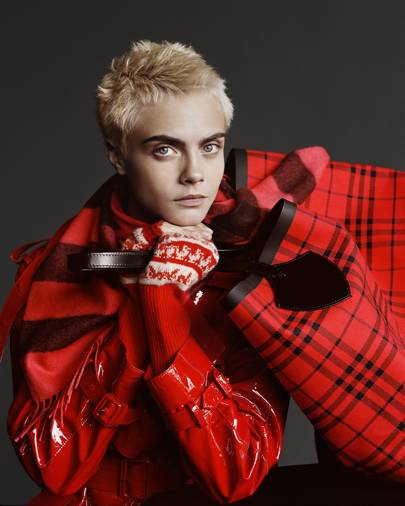
Following  the news that Christopher Bailey will leave Burberry at the end of 2018, the great British brand has released a collection of seasonal pieces, and a blockbuster campaign starring Cara Delevingne and Matt Smith to accompany it.


Captured by Alasdair McLellan, the portraits and accompanying 30-second video, feature Burberry veteran Delevingne and newcomer Smith larking about in laminated trench coats, Fair Isle knitwear and ornate jewellery – all to the soundtrack of "Always On My Mind" by Pet Shop Boys.


Of his campaign debut, the former Doctor Who star said: “Burberry has always been a brand that I have admired, from the football stands to the macs on the runway. Delevingne, whom Smith dubs a “fashion heavyweight”, thanked “the creative genius and my dear friend Christopher Bailey for involving me in this and all the incredible projects over the years.”

Lais Ribeiro To Wear Victoria's Secret Fantasy Bra

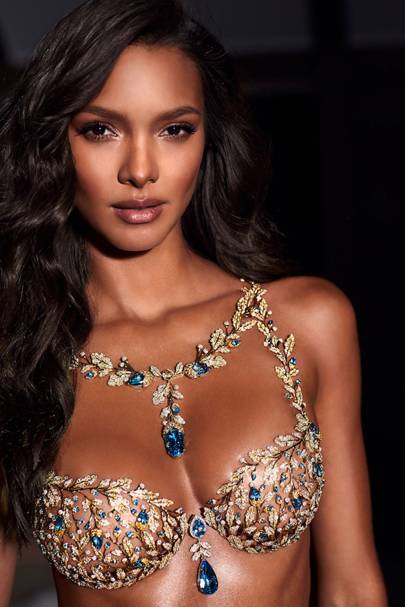
To be chosen as the model of the Fantasy Bra, which is seen as the show’s centerpiece, is a prestigious accolade among the Angels. Ribeiro follows in the glamorous footsteps of Jasmin Tookes, who wore an 18-carat gold piece worth $3 million last year, and Gisele Bündchen, Tyra Banks, Alessandra Ambrosio, Lily Aldridge, Adriana Lima and Candice Swanepoel before her.

“You just feel so powerful wearing it, like all the hard work has paid off,” the Brazilian beauty said of her appointment. The lingerie brand told Ribeiro that she would be wearing the $2 million Mouwad design, which is handset with diamonds, yellow sapphires and blue topaz in 18-karat gold, during fittings for the show: “I had no idea that [the fitting] was for the bra,” she shared. “I came in and when I tried it I cried, it was unbelievable.”


Ribeiro began her Victoria’s Secret career after giving birth to her son, Alexandre, in 2010, and has walked in every show except 2012, when she sprained her ankle during rehearsals. Her brother and father will be in the Shanghai audience to watch her wear the bra, which took almost 350 hours to make, come November 20-

The catwalk spectacular will air on CBS on November 28 at 10pm EST, and will include pink-carpet interviews, model profiles and a behind-the-scenes look at the making of the show. Tune in for a closer look at Ribeiro wearing the Fantasy Bra.

The Secret Behind Erdem x H&M's Success

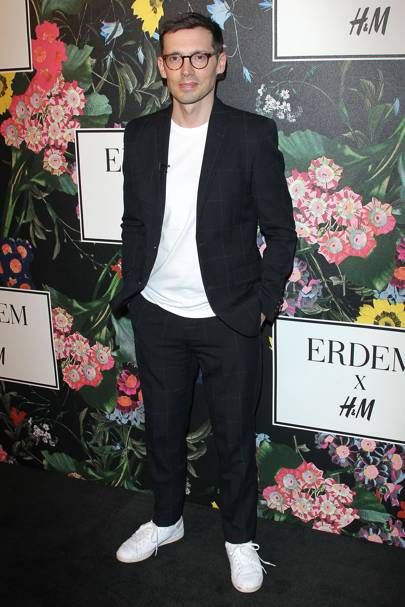
Erdem Moralıoğlu's highly anticipated collection lands in H&M this week - November 2, at selected stores and online; read everything you need to know about the Erdem x H&M launchhere - but what is the secret behind the success of the collaboration? Why do we all want it so much and how did Erdem and H&M make it so? Voguecaught up with the designer in Los Angeles ahead of the star-studded launch party to find out.

"I think the moment you get too caught up in thinking about how a collection will be perceived - there's no point; you really have to approach it as a new body of work," he said referring to the weight of expectation that accompanies a collaboration of such international stature.

A new body of work then, but destined for the the high street - and at a very different price point to his usual stock. Did that change his approach? "Erdem was very involved with everything from day one," said Ann-Sofie Johansson, H&M’s creative advisor. "He knows what he wants and is very engaged with the process. He also introduced us to a number of new producers; smaller Scottish mills and Italian mills he regularly works with," she explained, signalling a very different approach from the get-go.

"To me, this collection was not about taking archive pieces and making them more accessible at all," explained Erdem. "It was about creating the opposite of fast fashion; it was about creating these pieces that you want and desire because they are beautiful."

That, in a nutshell, is what has made this, H&M's 17th designer collaboration, such a hit. At its very core, it is a subversive collection that need not be radical to create change, nor indeed pushed to the point of parody to make a statement. Instead, it effortlessly celebrates the principles it was built upon: beauty, elegance, fluidity and strength.


"Growing up with a twin - with someone who was the same as me, but of the opposite sex - I never, ever, equated something that was feminine as something that was weak; it was always equal, or the same," Erdem said reflecting on his childhood and sister Sara, who wears his designs often and always provides honest feedback.

That idea of firsthand experience with a garment fed into his first menswear designs, where the designer turned model to understand what "felt right" and what didn't. "Once I figured out where he [the menswear collection] was going, I would take the blazer and put on the female fit model and allowed that silhouette to affect where the design would go. One very much affected the other."

That in-built fluidity between men's and women's means that rather than having a dedicated menswear collection, and separate womenswear collection, which drawing from similar codes, we the consumer have so much more to choose from. Expect to see the boys borrow from the girls and vice versa, as Kirsten Dunst did on the launch night when she wore the brown floral men's pyjama suit for her front-row appearance. (Expect that to be among the first pieces to sell out fast.)

If breaking down the dichotomies of fast fashion versus enduring style and masculine versus feminine isn't enough, there is one other boundary Erdem has readily revelled in: the mix of formal and informal. It is the unabashed combination of the high and low: the ballgown and the hoodie; the T-shirt and the tux. "Like the Pet Shop Boys video directed by Bruce Weber in the Nineties, I found that meeting of opposites really interesting to work with."

"To me, it just feels very British," reflects Erdem of the whole collection. And in times like these, we can't help but feel like we could all use a dose of his optimism and elegance too.