Wednesday, September 13, 2023

How To Work In Sustainability At A Fashion Brand

As the fashion industry becomes more and more implicated in the climate crisis, brands and retailers are beginning to take more and more responsibility for their roles in it.

"Responsibility" takes many forms, of course: There's true accountability and transparency, and then there's greenwashing, in which companies of all makes and models invest more in marketing themselves as being sustainable than in tangibly tackling their environmental impact. It's no surprise that the former is easier — and, often, more appealing — than the latter. That's because in fashion, the climate crisis is an issue of systemic proportions. But a growing number of businesses are making key C-suite hires to rebuild those systems from the inside.

Enter the chief sustainability officer, a role tasked with addressing an organization's approach to climate responsibility and, theoretically, minimizing the company's environmental impact. And the job description is being written in real time.

"One of the toughest challenges in my career was creating a job for myself that hadn't existed before," says Reformation's Chief Sustainability Officer and VP of Operations Kathleen Talbot, who first joined the brand in 2014. "Sustainability was a brand-new field. When I reached out to Reformation, I had no background in fashion or business, but I was committed to learning and passionate about helping define what sustainability would look like at Reformation in the long term."

Now a decade in, Talbot has worked to define Reformation's environmental practices, from investing in green building infrastructure to publishing the brand's quarterly Sustainability Report. But every retailer is venturing into this work from its own unique starting block, which makes this position a particularly challenging one.

Ahead, we spoke with folks at companies like Everlane and Depop about what a chief sustainability officer (or an equivalent title) actually does, why their job matters and how to break into the field for yourself.

Full-time roles in the intersection of fashion and sustainability are few and far between, which means that the people who currently hold them are at the top of their proverbial game — and have the experience to show for it.

While this often takes the form of a stacked resume, those in the field have an innate fascination with and appreciation of this planet, as well as knowledge of how to do better by it.

"I joke that I fulfill every stereotype you may have of a Seattleite," says Reformation's Talbot. "I've been interested in sustainability my whole life and have been aware from an early age that our future is dependent on changing our relationship with the environment."

Talbot began her career in academia, having gotten a master's degree in sustainability before looking to find ways to bridge the concepts she was teaching with action. Consumer products presented a new challenge: "There's such an enormous opportunity to make things differently."
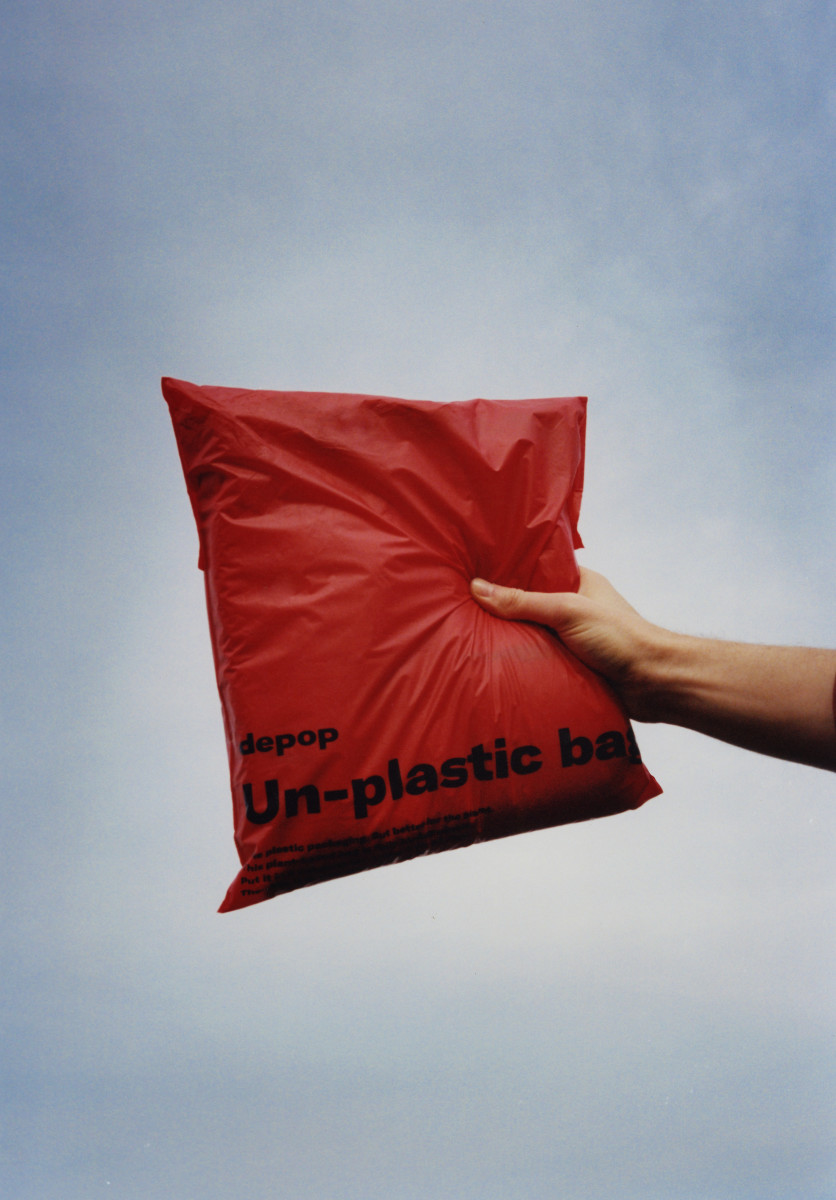

Shoppers can order Depop's "un-plastic bags," which are 100% biodegradable and as sturdy as your normal plastic mailer.

Like Talbot, Kirsten Blackburn entered the apparel space from the outside, having previously worked in the policymaking and nonprofit sectors. While building out the advocacy program at The Conservation Alliance, which funds and partners with grassroots organizations working to protect wild places across North America, she began to explore the ways in which consumer structures, like fashion brands, can most efficiently move policy.

"When businesses pool resources and advocate for causes they care about, it makes a difference, more so than other actors in the policymaking space," says Blackburn, director of Keen's environmental and social justice program, Keen Effect. "Brands — particularly privately-held, family-run brands like Keen — have a really huge opportunity to affect change."

Justine Porterie, Depop's director of sustainability and DEI, entered sustainability from the corporate side, supporting large investors and fast-moving consumer-goods companies, like Unilever and PwC, with their responsible investment and sustainability strategies. After nearly a decade, Porterie joined a social incubator that investigated business opportunities to turn waste into resources.

"I stumbled upon fashion and was shocked by how wasteful the industry is," she says. "One truckload of clothes ending up in the landfill every second — that's mad, and what triggered the idea for my own company."

Called Outstand, Porterie's business specialized in curating secondhand fashion as an answer to curbing apparel's waste crisis. She connected with Maria Raga, Depop's former CEO, not long after, and began consulting with the peer-to-peer social e-commerce platform to help create its first sustainability strategy. Porterie officially joined the team in February 2020, and the rest, as they say, is history.

At the highest level, a director of sustainability is responsible for identifying new ways to incorporate a climate focus across a brand's operations. It's a broad and seemingly ambitious set of obligations, but experts explain that typically, their job descriptions can be broken down into various subsets, including (but not limited to) supply chain management, political advocacy and PR and marketing.

To execute this position effectively, these folks need to touch every part of the business. At Reformation, for example, Talbot leads a team of six sustainability professionals to rally the brand's 1,000-person employee base around a high-level vision.


"I consider us to be catalysts," she says. "How do you actually adopt material innovations and key transitions? Identify and build relationships with strategic suppliers for decarbonization programs? Reduce transportation emissions? This work happens through daily decisions and doing 'business per usual' in a different way, so we're constantly facilitating and pushing the team forward."

In 2018, Everlane made an environmental commitment to eliminate all virgin plastic from its supply chain. For Earth Month in 2023, the brand celebrated its progress with a limited-edition collection of "ReTrack" styles.

The role extends beyond internal communications, of course: To functionally move the needle, those actually consuming the product need to "buy in" to the mission, too. This is where annual "sustainability reports" come in: They have different names from brand to brand, but serve a similar purpose of outlining goals and, more crucially, holding themselves — and their progress — accountable as they work toward those goals.

Everlane's Impact Report, for example, outlines a short- and long-term strategy around its sustainability objectives by establishing three pillars: 1) Keep Earth clean, 2) Keep Earth cool and 3) Do right by people. Katina Boutis, the brand's director of sustainability, isn't only responsible for defining these intentions —she's also tasked with bringing them to life.

"Our success hinges on our customers being brought along this journey with us," says Boutis. "A really big part of what we're doing is translating the work we do behind the scenes, not just to our own internal teams, but also to our broader community that we're trying to foster."

There are a number of opportunities in sustainable fashion, and Depop's Porterie finds they all require a slightly different skillset. Working in the sustainability team at a fashion company is different than in, say, business development at a circular fashion company, or in the field at a regenerative cotton farm. But all three positions contribute to advancing the sustainability agenda in the industry. For the wider team at Depop, stakeholder management is particularly essential — after all, Porterie says, their aim is to make their agenda everyone's agenda, so influence is critical.

"I always recommend that people keen to break into sustainable fashion start by interrogating what they're good at and what excites them first," she says. "Is it data, reporting, policy, technology, agriculture, marketing, design?"

Beyond individual interests, these positions also require a profound and technical understanding of sustainability and the wider fashion industry. For Kenneth Loo, co-founder and CEO of communications agency Chapter 2, this includes knowledge of the reengineering of production processes, recycling, certifications and various sustainable materials and chemicals.

"The narrative has shifted," says Loo, whose Sustainability division at Chapter 2 supports clients in the clean-fashion spaces. "We no longer discuss mere factories, but technology platforms striving for innovation and 'future-proofing' that seek recognition from industry leaders."


Keen's products are made without PFAS, or toxic "forever" chemicals that resist grease, oil, water and heat. In March 2021, the brand took out a full-page ad in the New York Times to invite others to join them.

Finally, experts recommend a quality slightly less quantifiable, and that's work ethic, fueled by an unrelenting growth mindset. At Keen, Blackburn describes this as a "fail-fast and fail-forward mentality," to take the challenging, largely systemic problems you've been handed and come up with creative solutions to fix them.

"How can you take learnings from something that didn't go well and celebrate it? Every day we're uncovering something we don't know, and that's not unique to KEEN — that's sustainability and climate writ large," says Blackburn. "We're hoping that we're collectively doing more of the right things so that we'll collectively make an impact in the future."

"Sustainability is now non-negotiable in fashion, thankfully," says Reformation's Talbot. "Given our industry's outsized environmental impact, there's more customer demand to integrate sustainability into brand and product than ever. It follows that we're seeing more career opportunities in the field open up, even compared to just five years ago."

In short: We're at a tipping point because people — and regulators — are no longer having it. Depop research shows that 60% of the platform's users would rather buy from a company with environmental and social standards, and they're not afraid to walk away or even publicly boycott those who do not meet their standards.

"Navigating increasing stakeholder expectations and changing legislative landscapes alongside business priorities is not an easy task," says Porterie. "Until sustainability is entirely embedded in the DNA and ways of working of fashion companies, there will be space for sustainability professionals to keep on driving the agenda from within."

These professionals have their work cut out for them, to be sure, but progress is afoot: Just last month, EU parliament voted to support a set of anti-fast-fashion recommendations that force the fashion industry to operate more sustainably. Then there's New York's Fashion Act, which aims to hold major clothing labels (i.e., those with over $100 million in global revenue) accountable for their environmental and social impacts.

"These policies are not something that I think anyone would've necessarily thought would be possible," says Everlane's Boutis. "Sustainability professionals are critical at any level in any organization, but I think there's a special place in certain industries, like fashion, that have this ability to cut through cultural movements and spaces in that way."

The 10 Best Quiet Luxury Brands Are Beyond Any Trend

It's only our cultural reference points—like certain items Shiv Roy wears on Succession or the TikTok fashion taxonomy complex—that make quiet luxury brands seem like a recent phenomenon. Style experts say this perspective isn't quite correct. "Whether referred to as 'quiet luxury,' 'stealth wealth,' or "old money aesthetic," the concept and allure of timeless, minimalistic design has remained consistent throughout the decades," says Elizabeth Layne, chief marketing officer of Rebag.

Quiet luxury has maintained the same aesthetic signatures for years before it had a picked-over moniker. From new brands and heritage luxury designers, the underlying ethos has always prioritized craftsmanship, quality, and elegance. "Styles tend to exude a sense of refinement and sophistication through subtle details and a minimalist aesthetic, rather than relying on overt branding," Layne explains. In handbags, she continues, the genre is defined by "clean lines, muted colors like brown, beige, or black, and either minimal hardware, or none at all. Subtle details such as tonal stitching and discreet branding add to a 'quiet luxury' bag’s sophisticated appeal."

For some designers, quiet luxury boils down to a philosophy or a state of mind. "I do not think of it as a trend—I see it as a way of life," Danielle Corona, creative director of the accessories label Hunting Season, says."Most of our community appreciates the value in timeless design [and] they are not usually influenced by trends."

Ahead, find ten quiet luxury brands that defined the look before the fashion zeitgeist caught on—and that we'll all wear for years afterward.


The Row

Founded by Mary Kate and Ashley Olsen in 2011, The Row is a relative newcomer in the long arc of designer fashion history. Still, Layne considers its "sleek, sophisticated designs" some of the defining examples of quiet luxury on the market.

The Row's approach to basic clothing like solid-colored knitwear and wool trousers never feels basic. In the summer of 2021, it managed to make a khaki linen pant a must-have item by virtue of its expert pleating alone. (A street style endorsement from Kendall Jenner also helped.) At the same time, The Row's runway lines often include experimentally-draped sheath dresses and gorgeous coats that become grails for a devoted subset of fashion collectors. Whichever route within the brand speaks to you, it's more than worth the investment.

Objets Daso

Objets Daso, a brand-new line whose first "volume" includes the three handbags shown above, arrived on the luxury accessories scene with perfect timing. "It's interesting to observe how the concept of 'quiet luxury' has gained momentum recently," co-founder Pratik Vyas muses, "as [Catharine Whang, Objets Daso creative director and co-founder] and I have been discussing the exact same thing."

The label's three styles are united by geometric shapes, sharp lines, and underlying inspiration from leading women in history: Na Hye-Seok, Vivian Maier, and Josephine Baker). The range, Whang tells BAZAAR, has a sense of timelessness that comes from its elegant simplicity. But even new brands seek to find design signatures, even subtle ones. Objets Dasos' is its Bauhaus-inspired lock. "Countless sketches and prototypes went into creating a lock that is instantly recognizable and embodies our brand's essence of minimal sophistication," Whang elaborates.

Ultimately, "our objets are designed to become an essential part of our customers' daily routines, an extension of their unique personalities and styles, and a reflection of their character," Vyas says, "And that inherently creates a deeper emotional connection than any trend could."

Fear Of God

Fear of God approaches the versatile neutrals and insignia-free silhouettes of quiet luxury from a refreshing perspective. “It's this indoor/outdoor, California lifestyle that really informs so much of what we do,” creative director Jerry Lorenzo previously told BAZAAR. Relaxed, oversized knitwear and slide-on shoes are among the offerings ideal for padding around a beachfront home in Malibu. But the brand’s suiting is also impeccable for evening events, as Zendaya demonstrated while doing press in a gray Fear of God set last spring.

Toteme

Toteme's scarf jacket may have been its first piece to go viral on fashion TikTok, but it certainly won't be the last. The Stockholm-based label says it seeks to create a "dress code and a wardrobe" in and of itself, but its pieces never feel like a cut-and-paste from someone else's closet. Whether it's an olive green satin top, a cotton trench coat, or a coat that objectively many people have, there's a refined anonymity that leaves the door open for endless styling opportunities.

Hunting Season

Hunting Season creative director Danielle Corona takes longevity seriously. "We feel a responsibility when we put things out into the world as a brand, and we believe that our shoppers feel the same way about purchasing or acquiring things into their lives," she tells BAZAAR. "The idea for us is to create a piece a person is proud to own and can imagine handing down to future generations to use and appreciate."

Corona says the value from each of her label's pieces comes from its story. "Who made it? How was it made and where?" she asks. For Hunting Season, the answers involve a blend of centuries-old artisanal techniques and new flourishes to update (but never over do) a raffia tote or a leather bucket bag.

"I love the connection to the past and I value that some things do not need to change," the designer summarizes.

Max Mara

Max Mara has long been the destination for power dressers who convey their confidence through their sheer presence. Every collection rises above the noise of other runways with precise tailoring, high-quality materials, and a sense that one can conquer whatever life throws her way while wearing the line. It's armor that looks anything but. Start with the status outerwear (Max Mara perfected the double-face cashmere coat decades ago), then watch as your entire work wardrobe is slowly taken over by the brand.

Savette

From BAZAAR's fashion editors to Net-a-Porter market director Libby Page, selective shoppers consider Savette a newcomer brand with heirloom potential. "For a luxury bag brand to break into what is a very competitive market, it's not an easy thing to do," Page told us. Savette made it happen with a lineup of elegant, semi-vintage shapes and distinctive clasp hardware.

Loro Piana

True luxury begins at the materials level. This is evident to anyone who's slipped on a merino wool sweater or sueded sandal from Loro Piana, widely revered for its careful attention to sourcing and its resultantly indulgent fabrics. "We always want to put fabric and material first," Francesco Pergamo, who heads Loro Piana’s interiors division, told BAZAAR upon the opening of its Aspen interiors pop-up. "We are a company of touch, we’re a company of the knowledge on how to make things in the best way."

There's fresh evidence backing Pergamo's mission statement. This year, Loro Piana has enhanced traceability throughout its supply chain, so discerning shoppers can see exactly how their cuddly knitwear was made—down to the specific sheep farm where the wool was sourced.

Bottega Veneta

Add Bottega Veneta to the list of designers embodying "quiet luxury" before it was re-christened as "quiet luxury"—especially where accessories are concerned. "[The brand] has been crafting understated handbags with its iconic intrecciato leather since the mid-sixties," Rebag's Layne explains. Even in pieces like its celebrity-favorite, often-sold-out drop earrings, there's a sculptural, minimalist quality with timeless appeal.

Khaite

Khaite made its New York Fashion Week debut a few short years ago, in 2019. The brand's trajectory has only been upward ever since, gaining devout fans across the fashion industry and opening its first brick-and-mortar store in 2022, where it also held its most recent fashion show.

The line takes a decidedly luxury approach to familiar pieces: cashmere button-up cardigans with coordinating bralettes, straight-leg denim, Western-meets-minimalist boots in suede and snake print. As designer Catherine Holstein previously told BAZAAR, "Our ethos has always been about creating clothes that real women truly want to wear—revitalizing American classics to offer collectible pieces." The appetite for those finds shows no signs of slowing down: Searches for the label rose 10 percent on the fashion index Lyst last quarter, with shoppers gravitating toward its sexy, simple dresses and leather accessories.

Bijoux Boutiques

One of the true delights of Paris lies in the art of ´flânerie´ - the leisurely, aimless stroll that leads you through the city's hidden nooks and crannies; and as you meander along, you may chance upon a charming boulevard or an irresistibly romantic alleyway. It's in one of these tucked away corners of Paris that you're bound to stumble upon an ´atelier,´ an artist's workshop where someone is engrossed in crafting something unique, completely absorbed in their work amid the bustling tapestry of daily life. They may not even notice your arrival, and when they do, you might receive the obligatory "bonjour" that every shopkeeper offers as you're left to explore in quiet contemplation.

´Then, inevitably, you'll discover that one item that captures your heart, whether it's a whimsical broach, the perfect pair of earings, or an exquisitely beautiful necklace. In that moment, you'll know that you simply must make it yours. When you return from your journey, that special piece you acquired will become a cherished addition to your life and whenever you wear it, people will inquire where you found such a captivating piece of wearable art.´ - Charles Daniel McDonald

While it's indeed impossible to encompass every jewellery designer or shop in Paris, the following recommendations should serve as a tantalising starting point for your imagination. Though the experience may not replicate the enchantment of wandering through the city's streets, it can still inspire dreams of unique and exquisite finds that you may encounter on your next trip.

MELLERIO


If you're a jewellery enthusiast, then Paris is undoubtedly your haven, and within this haven, Place Vendôme and rue de la Paix stand as an oasis at its very heart. This enclave is home to a multitude of extraordinary designers, among them, the jewellery house that proudly claims to be the oldest in the world: Maison Mellerio dits Meller, or simply, Mellerio. Established in 1613, this venerable establishment has graced 9 rue de la Paix in the heart of the illustrious jewellery district since 1815. It carries with it a legacy of royal patronage, counting among its distinguished clients luminaries such as Marie de Medici, Queen Victoria, and Marie Antoinette. Today, their online boutique offers you the opportunity to virtually step inside their hallowed store, peruse their collection, meticulously size out engagement rings, and immerse yourself in their ´high jewellery´ offerings. While the price tags often reach stratospheric heights, it's not difficult to comprehend why Mellerio has endured for centuries as the ultimate reference point for exquisite French jewellery craftsmanship.

MONSIEUR PARIS


The Marais is an ideal location for a leisurely stroll to uncover hidden treasures, and Monsieur Paris is undoubtedly one of the finest places to do just that. What makes it even more special is that the ´Monsieur´ behind Monsieur Paris is none other than the petite and inquisitive Nadia Azoug. While her large eyes and curious demeanor may evoke thoughts of Amelie Poulain, Nadia and her craftsmanship transcend this comparison. Drawing inspiration from her Kabyle heritage in North Africa and driven by the ambition to create a jewellery collection that could proudly stand alongside the venerable houses of the Marais, all while remaining accessible to fellow artists like herself, Monsieur Paris offers a range that truly caters to everyone's tastes. The collection boasts playful pendants, delicate rings, bohemian bracelets, and timeless earrings that effortlessly become your everyday adornments. What sets Monsieur Paris apart is its commitment to ethical practices. Every piece is crafted from sustainable 18k gold and recycled silver. Furthermore, the workshop, skilled jewellers, and artisans are all located within a mere kilometer of each other in the heart of the city. This proximity not only adds to the charm but also ensures meticulous craftsmanship and quality in every creation.

MESSIKA


Even if you haven't yet come across the name Messika, it's quite likely that you've encountered their creations adorning some of the most renowned women in the world. A particular favorite of celebrities like Beyoncé and Kate Moss, Messika had its genesis in Paris back in 2005 under the visionary guidance of Valérie Messika. Notably, her father, André, is celebrated as one of the city's foremost diamond merchants. Valérie Messika's initial triumph came with the introduction of the "Skinny" collection, a series of delicately thin and flexible designs that revolutionised the concept of statement jewellery pieces. The flagship boutique, nestled on Rue Saint Honoré in Paris, exudes an atmosphere of serenity with its harmonious blend of neutral tones and opulent finishes. However, if an immediate visit to the boutique isn't on your agenda, the online store offers an equally immersive experience, allowing you to delve into the world of Messika from the comfort of your own space.

4 CROSSES


You know that indescribable, effortless charm that some French women seem to effortlessly exude, as if they just woke up with it? That enigmatic magic is an integral part of 4 Crosses, the artisanal jewellery collection crafted by Parisian artist Sophie Vallois Gouard. Each piece is a unique creation, meticulously designed by Gouard in her atelier, and they all embody the timeless elegance associated with icons like Jackie Kennedy, who serves as one of her inspirations. What sets 4 Crosses apart is its ability to capture the cherished sentiment of a piece passed down through generations. These are the kind of jewellery pieces that become more intriguing the longer you gaze at them, making it entirely possible that you might find yourself dedicating a day to the captivating world of their fineries.

REPOSSI


The House of Repossi originated in Turin, Northern Italy, but it has found its abode in Place Vendôme, Paris, since the 1980´s, solidifying its status as one of the most iconic contemporary jewellery brands worldwide. Repossi's earliest designs from the 1940´s epitomised the artistic shift toward avant-garde aesthetics, characterised by geometric patterns and vibrant colours that were emblematic of the era. In the decades that have ensued, this ultra-sleek and eternally chic sensibility has endured, evolving to resonate with a new generation under the creative direction of Gaia Repossi. Gaia's influence extends well beyond the world of fashion, firmly establishing her as one of the most influential figures in the industry. Their online boutique is a treasure trove of pieces that encapsulate the essence of Parisian chic. Its minimalist aesthetic serves as a poignant reminder of the city's unique allure and timeless elegance.

Jewellery shopping in Paris is a delightful experience that combines the city's rich history of craftsmanship, iconic brands, diverse selection, and personalised service. Whether you're seeking timeless elegance or modern designs, Parisian ateliers offer a wide range of options to suit a myriad of tastes and budgets. The cultural and historical significance of these shops, along with the assurance of quality and authenticity, make jewellery shopping in Paris a truly unique and memorable experience for visitors and locals alike.

Pierre Herme

Pierre Hermé, a renowned French pastry chef and chocolatier, embarked on his culinary journey at the sweet age of 14, serving as an apprentice under the tutelage of Gaston Lenôtre. In a remarkable accolade, Hermé was honoured with the prestigious title of ´World's Best Pastry Chef´ back in 2016 by ´The World's 50 Best Restaurants.´ His influence in the culinary world extended beyond his craft, as he secured fourth position on Vanity Fair's list of the most influential French individuals, globally.


Hailing from a lineage of four generations deeply rooted in the Alsatian bakery and pastry tradition, Hermé ventured to Paris to embark on his training. This was an opportunity which saw him study under the internationally renowned culinary luminary often referred to as ´The Picasso of Pastry´ by Vogue. Lenôtre's groundbreaking innovations in pastry making, both in terms of flavour and contemporary techniques, marked a pivotal moment in the evolution of this culinary art.

´Pierre Hermé achieved the remarkable distinction of becoming the youngest individual ever to be honoured as France's Pastry Chef of the Year. Furthermore, he holds the unique distinction of being the sole pastry chef to have received the prestigious title of Chevalier of Arts and Letters. His extraordinary contributions to the world of pastry and culinary arts were further acknowledged when he was bestowed with the title of Chevalier de la Légion d'honneur by the esteemed Jacques Chirac.´ - Charles Daniel McDonald

In partnership with Charles Znaty, Pierre Hermé established Maison Pierre Hermé Paris in 1998, and the inaugural namesake boutique made its debut in Tokyo that same year; quickly followed by a second boutique in 2001, which was strategically located in the fashionable district of Saint Germain des Prés at 72 rue Bonaparte. The reception was nothing short of phenomenal (in both Tokyo and Paris), where they captivated the taste buds of eager gourmets on a daily basis. Connoisseurs from all corners of the globe made pilgrimages to these epicentres of delectable creations, where Hermé's pastries, macarons, and chocolates reigned supreme.


2005 saw Tokyo witness the unveiling of the brand Pierre Hermé Paris's latest innovative concepts: the ´Luxury Convenience Store´ and the ´Chocolate Bar.´ These distinctive establishments found their home in the vibrant Omotesando district - a hub where numerous prestigious imported brands and fashion houses have a significant presence in Japan. Moving forward with their innovation, the dynamic duo continued to develop the Macarons & Chocolats, this time on the illustrious Rue Cambon, in the heart of Paris.

´When embarking on a visit to his renowned establishment, there are three absolute must try delicacies. First and foremost, the Ispahan croissant beckons, an exquisite masterpiece amalgamating the delicate notes of rose, raspberry, and lychee. Secondly, the Infiniment Vanille shortbread tarte commands attention, artfully showcasing an intricate blend of vanilla varieties sourced from Mexico, Tahiti, and Madagascar. Lastly, one cannot forego the opportunity to savour his kaleidoscopic macarons, featuring an array of captivating flavours such as Iranian black lemon, Petrossian caviar, pistachio-raspberry, rose, and milk-chocolate passion fruit.´ - Charles Daniel McDonald

The Pierre Hermé brand is a proud member of the esteemed Comité Colbert, and their influence extends through established partnerships with renowned hospitality groups such as Raffles and Ritz Carlton. Their collaboration with Dior also marked a significant milestone, notably with the unveiling of Café Dior by Pierre Hermé in 2015, gracing the vibrant city of Seoul. Since then, the company has embarked on a robust international expansion, with a growing number of boutiques strategically positioned across Europe, Asia, and the Middle East. From 2012, his delectable desserts have become a coveted offering on All Nippon Airways menu´s, delighting passengers with his exquisite creations far above the Eiffel Tower.


Preferring discreet pastry embellishments and employing sugar judiciously, Pierre Hermé steadfastly avoids complacency. He consistently refines his own creations, embarking on culinary voyages to uncharted taste realms, whilst revisiting his own gastronomic compositions. Consequently, he has earned a plethora of accolades, among them being dubbed the ´Pastry Provocateur´ by Food & Wine, heralded as an ´Avant-garde Pastry Virtuoso and a Maestro of Flavours´ by Paris Match, celebrated as ´The Kitchen Emperor´ by The New York Times, and hailed as ´The King of Modern Patisserie´ by The Guardian. His dedication has not only garnished him numerous prestigious honours and distinctions but, most importantly, the heartfelt appreciation of discerning aficionados of gourmet confections-


A visit to Pierre Hermé's patisseries promises an unforgettable journey into the world of pastry, where artistry and flavour combine to create extra ordinary sweet delight – just the thing for the City of Light.

Tuesday, September 12, 2023

Marquis De Sade

´Sade: Freedom or Evil´ is an exhibition that delves into the influence and reputation of the infamous French writer and philosopher, the Marquis de Sade, from whom the term ´sadism´ derives and it's a journey not for the faint-hearted. The exhibition commences with the display of his sole surviving authentic portrait - a 1760 sketch capturing the 19 year-old de Sade, immortalised by Charles Amédée Philippe van Loo. This portrait is juxtaposed with Joan Fontcuberta's intricate collage, which is meticulously composed of 6,060 Google image search results associated with ´Sade´ and his related terms. Fontcuberta's artwork illustrates contemporary perceptions of this enigmatic figure, who straddled the Ancien Régime and the Revolution as a provocative and pornographic presence.

Sade exemplifies the kind of thought provoking and inquisitive content that characterises ´Freedom or Evil.´ Throughout much of history (even during his own lifetime), the Marquis de Sade was often portrayed as a prolific pornographer, a sensationalist caricature, or a deeply disturbed individual. It is precisely this characterisation that curators Antonio Monegal and Alyce Mahon are determined to confront and challenge.


Born in 1740 into the nobility of Paris, the Marquis de Sade endured nearly three decades of imprisonment, primarily as a means to discourage and suppress his explicit and morbid fascinations and writings. One particular instance of his incarceration, came about when he dared to send his novel, ´Juliette,´ a work that explores the full spectrum of Sade's dark themes - including everything from murder, incest, and cannibalism, to Napoleon, in an attempt to provoke persecution.

De Sade's capacity to delve into the depths of depravity knew no bounds. His most renowned creation, ´120 Days of Sodom,´ though considered one of his less polished works, due to its unfinished nature, remains a testament to his relentless exploration of the darkest facets of human nature. In this disturbing opus, a horrifying tableau emerges: a woman subjected to a gruesome violation that culminates in her agonising demise atop a bed of nails. Shockingly, this is just one of the many macabre scenes within its pages. This notorious manuscript, etched on a colossal 12-meter scroll, managed to escape the confines of the Bastille, before finding its way into the tumultuous and feverish pre-revolutionary atmosphere of France. In 2021, it resurfaced again in the public eye, as the French state acquired this artifact of infamy for a stupefy sum of €4.55 million.


De Sade's literary works weren't solely about gratuitous indulgence in sexuality; rather, they served as a profound exploration of a broader philosophical concept. Within his writings, he illustrated that the fulfillment of desire, whether of an erotic nature or not, symbolised the pinnacle of human freedom. De Sade embodied both the libertine (advocating for unbridled self-expression) and the libertarian (challenging established institutions with biting critiques and clever satires). He controversially unveiled the hypocrisies embedded in church, state, class, law, and family structures. In the enduring discourse surrounding freedom and the ¨unencumbered expression of one's beliefs,¨ Sade's legacy transcends the confines of history to remain a poignant reflection of contemporary issues. ´Sade: Freedom or Evil´ is not merely a historical exhibition; it evolves into a pertinent commentary on the ongoing questions of liberty and free expression in our modern, media saturated world.

“Contact Without Consent Is Violence.” - PLEA

The opening section of the exhibition delves into the dissemination and initial showcasing of De Sade's literary oeuvre. Undoubtedly, the allure of sex has a timeless appeal, and De Sade's clandestine writings were no exception to this phenomenon. Within this part of the exhibit, visitors will encounter pristine first editions and intricate engravings extracted from a pirated second edition of ´Justine,´ a narrative intimately entwined with its literal counterpart, ´Juliette.´ A highlight within this collection is a remarkable illustration by Leonor Fini, originating from a 1944 edition of ´Juliette.´ In this captivating gouache artwork, a tempestuous whirlwind of female dominance takes centre stage, embodied in the sculpted forms of two women brandishing whips with remarkable finesse, expertly captured through finely detailed brushwork and dynamic kinesis.


The Surrealists, including artists like Leonor Fini, held a deep reverence for De Sade and played a pivotal role in revitalising his literary legacy. They emerged as his rightful successors, sharing a commitment to liberating the unconscious and embracing a hedonistic approach to aesthetics. Within the exhibition, you'll encounter three captivating works by Salvador Dalí - one of which is a voluptuous portrait of the universally adored erotic figure, Gradiva. Additionally, Man Ray's mischievous 1933 tribute to De Sade is on display - an artwork that humorously features a pair of male buttocks encircled by an inverted cross.

The exhibition takes a thought provoking dive into De Sade's enduring relevance within the realms of queerness and kink, during the latter half of the 20th century. Of particular note is the flourishing fetish culture of the 1970´s, where iconic venues like the gay BDSM club Mineshaft became integral fixtures of the New York underground club scene. Within this context, the exhibition proudly showcases three evocative photographs from Susan Meiselas' 1995 series, ´Pandora's Box.´ This series represents her return to the dominatrix studio she initially documented two decades earlier. Meiselas' lens offers a compelling glimpse into the evolution and persistence of the erotic and subversive subcultures that have drawn inspiration from De Sade's radical ideas and continue to challenge societal norms.


The exhibition boldly features Robert Mapplethorpe's notorious ´X Portfolio´ from 1978, a collection that unapologetically explores explicit themes, including fisting. When this portfolio was displayed back in 1989, it ignited a firestorm of public outrage - sparking a vigorous debate of art funding in the United States. Remarkably, 35 years after publisher Jean-Jacques Pauvert faced legal challenges for republishing De Sade's texts, an obscenity trial was thrust into the spotlight. Mapplethorpe's artistic vision was deeply influenced by Pierre Molinier, a correspondent of André Breton, and the exhibition proudly showcases two of Molinier's striking black and white self-portraits. In these provocative images, Molinier adorns himself in a corset, stockings, suspenders, and high heels, complemented by a fully made-up face as he gazes confidently into the camera. The inclusion of such overtly queer and sexually unapologetic artwork serves as a heartening reminder, particularly at a time when LGBTQ+ rights face challenges worldwide. These works continue to stand as a powerful expressions of artistic freedom and sexual diversity, challenging societal norms and advocating for the unapologetic celebration of human sexuality.

De Sade's legacy is a complex one, often fraught with accusations of misogyny. However, it's important to recognise that his work has also received praise and analysis from prominent thinkers like Simone de Beauvoir. De Sade's writings encompass a broad spectrum of human sexuality and challenge established norms. While some of his writings may depict controversial and disturbing scenarios, they also frequently explore themes of sexual autonomy for women and ¨a rejection of hetero-patriarchal conventions.¨ In ´Juliette,´ for instance, he presents a powerful counter narrative to the prevailing archetype of the submissive woman - whether in reality or mythology. Through his characters and narratives, he delves into the complexities of power dynamics, consent, and the intersections of desire and agency. In this light, De Sade's work can be seen as a reflection of his exploration of human nature and societal norms, often pushing the boundaries to provoke thought and discussion about the multifaceted aspects of sexuality, gender, power, consent and boundaries.


In Angela Carter's ´The Sadeian Woman,´ she proposed the notion that the Marquis de Sade could be characterised as a ´moral pornographer.´ Carter's perspective did not intend to romanticise Juliette as some sort of sexually empowered figure; rather, she acknowledged that Juliette was implicated in the same gruesome acts as the male characters. However, Carter argued that by depicting Juliette as equally depraved, de Sade granted her an elevated status. It's worth noting that while this summary provides an overview of Carter's ideas, there is no direct excerpt from her treatise included here. Instead, this text features intriguing hypothetical dialogues where various critics and philosophers engage in discussions with figures like Michel Foucault, among others (these dialogues are available for viewing online.) Additionally, the text contains excerpts from Pauline Réage's ´Histoire d'O´(1954), an erotic novel which could well have garnished approval from the Marquis de Sade himself.

“Yes, I am a libertine, I admit it: I have imagined everything of that kind which can be imagined, but I certainly have not done all that I have imagined, and I certainly never shall. I am a libertine, but I am neither a criminal nor a murderer.” - Marquis De Sade

The Domestic Data Streamers' commissioned soundscape, ´The Rhythm of Violence,´ stands out as the most emotionally evocative installation addressing the issue of violence against women. In a dimly lit room, time takes on a distorted quality: each passing minute symbolises a year, while the synchronised ticking of a series of metronomes, each representing a different country, signifies the tragic loss of a woman's life at the hands of her partner or ex-partner. One might initially fear it could come across as gimmicky, akin to the memorable Make Poverty History advertisement featuring Brad Pitt snapping his fingers. However, ´The Rhythm of Violence´ transcends such concerns. Concurrently, Laia Abril's powerful photographs from her ´On Rape´ series expose the deeply ingrained abuses suffered by women within the very institutions that Marquis de Sade so fervently condemned.


The question of whether De Sade was inherently evil serves as a central theme for this exhibition, often approached with a remarkably provocative perspective. An example of this is a manga comic titled ´Shin Gendai Ryoukiden,´ along with an examination of its primary source material: the harrowing four-month-long torture of a 17-year-old student in Japan. The real life details of this case leave little room to dismiss the philosopher Michel Onfray's assertion that it is ´intellectually bizarre to make Sade a hero.´ Notably, ´Freedom or Evil´ does not provide space for Onfray's viewpoint or those who share similar sentiments. Furthermore, it would have been intriguing to delve into a psychiatrist's analysis of De Sade's psyche, as well as to explore the complex relationship between prisons and psychiatric institutions more broadly, given De Sade's confinement to such an institution towards the end of his life.

The paradox of humanity's enduring fascination with evil, despite our instinctive aversion to it, remains a central theme in the exhibition. This thought provoking showcase compellingly presents a trove of evidence that underscores our intrinsic attraction to the dark and macabre - a complex cycle in which wrongdoers and spectators feed off each other's impulses. Among the most riveting exhibits, Mexican artist Teresa Margolles's ´PM (2012)´ stands out prominently. This formidable installation commands an entire wall, adorned with 313 front pages, extracted from a tabloid published in Ciudad Juárez, a border town notorious for its entanglement with drug-related crime and gang violence. It delivers a visceral and unrelenting portrayal of brutality, reminiscent of the most intense scenes in horror cinema. This stark compilation of headlines serves as a haunting reminder of the pervasive cruelty that permeates our society and the unsettling fascination that the mainstream audience harbors for these gruesome details. This fascination, in many ways, mirrors the very infatuation with moral depravity that led to the condemnation of figures like the Marquis de Sade.


The exhibition also confronts violence beyond the confines of sexual and domestic contexts, by condemning the heinous deeds and far-reaching consequences of colonialism. In a poignant example, a film by Kara Walker titled ‘The Creation of the African-America’ (2005) powerfully asserts the inextricable link between American identity and the enduring, savage aftermath of slavery.

Furthermore, the Argentine artist and activist Marcelo Brodsky employs a striking technique, overlaying stark archival photographs of the victims of genocide with vibrant, connecting watercolours and unabashed phrases, such as "We abused you," delivered in the unapologetic language of colonisers. This thought-provoking juxtaposition challenges viewers to grapple with the complex legacy of colonialism and question whether any semblance of remorse really does exist within its historical narrative. The exhibition also includes space for the infamous photograph of American soldier Lynndie England, engaged in the degrading treatment of prisoners at French Culture. Even a decade later, this image retains its power to shock and provoke deep reflection. 'Freedom or Evil' is not the only recent production to explore the enduring fascination with the Marquis de Sade. Over the past couple of decades, there have been numerous exhibitions, including one at the Musée d’Orsay, and a plethora of books, with Joel Warner's 'The Curse of the Marquis de Sade' being the most recent addition. Interestingly, De Sade has even found a place as a character in the popular Assassin's Creed video game, although it's unlikely that we'll see his likeness adorning keyrings like Salvador Dali anytime soon.

It goes without saying that this retrospective may not resonate with everyone, particularly those who are less inclined to engage with artistic works featuring the abuse of children or the mutilation of pregnant women – even if, as they say, life does indeed imitate art....

Michael Kors’s “Barefoot Glamour” S/S´24 Show

Michael Kors’s spring/summer 2024 collection showed that holiday dressing doesn’t need to be reserved for two weeks of the year, with a city-appropriate summer aesthetic he called “barefoot glamour”. This is an everyday wardrobe for anywhere in the world founded in the spirit of holiday dressing. Emily Ratajkowski and Ashley Graham walked in the show which was staged in a Brooklyn park overlooked by the Williamsburg Bridge, while Blake Lively went all-out Studio 54 on the front row in a ’70s-inspired gold jumpsuit. Here, Anders Christian Madsen reports from New York Fashion Week.


It was the holiday that never ends

At the end of a rainy New York Fashion Week, Michael Kors knew what to do. “I thought, how do we take people to the waterfront? I can’t take you all to Capri, but I can take you to Brooklyn. The new Capri! The new Capri is Brooklyn,” he said during a press conference. “People don’t realise New York is a maritime city.” He staged his show on the boardwalk of Domino Park and covered it in vibrant flowers like it was August in Italy all over again. “When I think about what brings so many people joy, we think about holidays.”


It was barefoot glamour

Kors proposed what he called “barefoot glamour”: an everyday wardrobe for anywhere in the world founded in the spirit of holiday dressing; that laid-back, effortless, not-to-hot-not-too-cold dress sense we somehow assume once a year and then forget about when we return to the city. As he said, “We all know that the world has gotten too warm and we are increasingly dealing with, ‘How do we get dressed?’ Particularly when it’s too warm outside – and in the office, it’s freezing – so how do we have something that works in both situations?”


Kors paid tribute to his mother

Kors, whose mother died a just month ago, approached his idea by looking at old pictures of them together on holiday. “She loved to travel the way I love to travel, all around the world.” (A sweater dress she wore to his bar mitzvah hit the runway in her honour.) The memories inspired a research of timeless pop cultural holiday moments: Jackie O, Jane Birkin and Sharon Tate hitting up the rivieras of Europe in the 1960s in short hemlines, sandals and lace wrapped into the Empire silhouette that defined the collection. “You could take that picture today and you’d say, ‘Oh, that’s today!’” Kors said, gesturing at a vintage photograph.


Bags were made for suitcases

The American practicality that underpins Kors’s work was expressed not only in the versatility of the clothes, but bags created for travel – as opposed to travel bags. Basket and macramé varieties were constructed to collapse and fold into a suitcase. “It’s the bag you take on holiday that lifts your spirits,” he said. There’s one holiday accessory Kors can’t abide by, however: “’What do I put on if it’s going be cold?” Please, no to a shawl. I still see some women when I travel and I'm like, no, no, no shawl. Stop! Pashmina, done, finished!”


It was ageless, practical and real

The show was an exercise in statement casting of diverse sizes and ages. “I have to say, the age conversation is something that no one should be forgetting. Because let's be honest, when you’re looking at clothes and handbags that are expensive, how many eighteen-year-olds can really buy what has walked down the catwalks?” Kors said. With Burt Bacharach on the sound system, and the memory of Kors’ mother firmly at the forefront of the show, his collection was a demonstration of timelessness, permanence and the joy of dressing.

Monday, September 11, 2023

Sarah Burton Is Leaving Alexander McQueen After 13 Years At The Helm

Sarah Burton’s show for Alexander McQueen on 30 September during Paris Fashion Week will be her last for the British luxury house. The brand announced in a press release that the creative director is stepping down after 26 years.

“I am so proud of everything I’ve done and of my incredible team at Alexander McQueen,” Burton said of her departure. “They are my family, and this has been my home for the past 26 years. I want to thank Francois-Henri Pinault for believing in me and offering me this amazing opportunity. Above all I want to thank Lee Alexander McQueen. He taught me so much and I am eternally grateful to him.”

Such longevity is rare in the industry. Burton first joined Alexander McQueen as an intern during her studies in 1996 and returned after graduating from Central Saint Martins. She was appointed head of design for womenswear at Alexander McQueen in 2000, working closely with founder Lee McQueen. She became creative director in 2010 after his death and has won plaudits for carrying on McQueen’s legacy with her own exceptional tailoring, and balancing the brand’s couture ethos with a strong ready-to-wear offer. She designed Catherine, Duchess of Cambridge’s wedding dress in 2011 and has received several industry awards, including Designer of the Year at the British Fashion Awards. In 2012, she was awarded an Order of the British Empire (OBE) for her services to the British fashion industry.

Lee McQueen, who founded his label in 1992, sold a majority stake to the Gucci Group (now merged into Kering) in 2001. Sales took off during Burton’s tenure: in 2022, Alexander McQueen’s sales were €830 million (£712 million), up from €758 million (£650 million) in 2021, according to Morgan Stanley analyst Édouard Aubin’s estimates. They were €220 million (£189 million) in 2014, Aubin says. (Kering, which acquired Alexander McQueen in 2001, doesn’t break down sales for individual houses of its “Other houses” division.)


The division, which includes Balenciaga and Alexander McQueen, reported a sales decline of 5 per cent year-on-year in the first half of 2023 to €1.9 billion (£1.6 million). The group attributed the slump to the “streamlining of the wholesale channel” (wholesale was down 27 per cent in the first half) and the “mixed American market” but said that Alexander McQueen’s ready-to-wear “performed well” in the second quarter.

It’s understood that a strategy involving global retail expansion and a more balanced product offering with a focus on accessories (such as the popular sneakers with chunky soles and the Curve handbag) have helped to propel McQueen’s growth. However, the house has yet to hit the billion-euro mark and join the league of mega brands.

In May 2022, Gianfilippo Testa, who was previously president of EMEA and VP global retail at Gucci, became CEO of Alexander McQueen, succeeding Emmanuel Gintzburger, who was appointed CEO of Versace. Following the recent management reshuffle, all the brands’ CEOs, including Testa, now report to Kering’s new deputy CEO Francesca Bellettini.

During the pandemic, the house showed its collections outside of the official schedule, in London for Spring 2022 and Spring 2023 and in New York for Autumn 2022, before returning to the Paris Fashion Week calendar in March 2023 with a bang. Vogue Runway’s Sarah Mower wrote about the autumn 2023 collection: “Sarah Burton proved again that the house of Alexander McQueen is up there with the very best. Back in Paris, she chose the apposite moment to remind people of the sharpness and excellence of the tailoring — for women and for men — and the expression of a darkly explosive imagination that is alive in the McQueen ateliers in London.” All eyes will be on her final show in September.