Thursday, December 22, 2022

Gucci Opens First Stand-alone Luggage Store in Paris

Gucci is setting down its suitcases on tony Rue Saint-Honoré for its first permanent boutique dedicated to its Gucci Valigeria travel line.

Sitting opposite Moynat and a few doors away from Goyard in a space formerly occupied by Off-White, the 2,900-square-foot unit located at 229 Rue Saint-Honoré opened Tuesday.

“The opening of our first Gucci Valigeria boutique on Rue Saint-Honoré represents the next stage in our ongoing strategy to reinforce our leadership in the travel category,” the Italian house’s president and chief executive officer Marco Bizzarri told WWD in an email.

The house’s travel range holds a particular place in the house, as trunks, suitcases and hatboxes were the first items that founder Guccio Gucci offered after opening his store in Florence in 1921.

Bizzari explained that the concept for the travel line’s permanent locations had been inspired at once by the original Florentine store and a three-month pop-up in London coinciding with the launch of the Savoy luggage line that started in October.

The three-month residency in London, which concludes at the end of the year, nodded to its origins story by taking over the tea shop at The Savoy in London, where Guccio Gucci had been a luggage porter at the turn of the 20th century. His observations of guests coming in and out with their exquisite luggage inspired him to start an artisanal luggage atelier.

“Gucci Valigeria is a powerful reminder of our Florentine roots and our timeless craft,” said Bizzarri, calling the line a “symbol of [the Gucci] legacy, reinterpreted through the ages for the travelers and modern-day explorers of every era.”

The Saint-Honoré store, in particular, was created to be “a portal into our ever-expanding world of travel and discovery,” the executive continued.

Its 2,000-square-foot retail space is spread over two floors, inspired by the heyday of rail travel during the Belle-Epoque, vintage light fixtures and all. Window displays take cues from luggage carts, while the interior’s neutral-hued canvas surfaces and dark walnut furniture and finishes go for an impression of well-traveled opulence.

The ground floor evokes a tony train station, with the cash register masquerading as a welcome desk and piles of luggage as decor. Travel essentials such as pajamas, eye masks, beauty products and pet accessories will be offered here. Exotic-skin versions of its weekender duffel and one-of-a-kind trunks also take pride of place.


On the first floor, brass shelving nods to the racks found in old-fashioned trains, while the ceiling is modeled after the arched roof of carriages. A loom-woven carpet in a tartan motif and plush banquette seating give a cozy vibe.

The Paris store offers the full range of Gucci’s travel line from totes and backpacks to garment bags, hat cases and suitcases. Among the styles showcased are the Gucci Savoy line, which plays with the brand’s monogram, its distinctive stripe and the double G hardware, as well as the top-handle Gucci Bauletto handbag model.

Trunks will also be available as well as its newly launched and “Off the Grid” version in regenerated Econyl nylon. It will also be the first retail debut of the freshly launched aluminum trolley suitcase, created in collaboration with Italian luxury luggage specialist FPM Milano.

Sold in Gucci’s physical retail network and online, the travel category has seen a “very positive momentum,” following the early November launch of the Valigeria campaign featuring Ryan Gosling and shot by photographer Glen Luchford. This was particularly visible in the “U.S., Europe and South Asia, where travel and tourist flows have restarted strongly following the relaxation of COVID-19-related restrictions,” Bizzarri continued.

Meanwhile, vintage luggage pieces included in Gucci’s Vault Vintage drops had also generated “great excitement,” he said, attributing this to the “timelessness that is naturally associated with travel.”

Bizzarri said the brand would continue to enhance its offer, both with vintage pieces and innovations in terms of functions and materials such as the recently launched aluminum trolleys.

Further Gucci Valigeria stores in “other iconic city destinations” around the world are in the works, but Bizzarri did not further detail a timeline or locations.

Travel itself is also a longstanding source of inspiration in the Gucci-verse that saw former creative director Alessandro Michele, who exited the brand in November, say that “travel had never been something purely physical” for the brand at the launch of the Gosling-fronted campaign.

“A Gucci suitcase is a magical suitcase,” Michele continued at the time, describing the creatives who had chosen items from the brand as people who “realize the importance of creativity in service of the construction of imaginary places.”

H&M Pulls Justin Bieber Collection

Less than 24 hours after stating that it would continue to sell a collaborative collection with Justin Bieber — despite the musician publicly criticizing those designs and saying he did not approve them — H&M has reversed course and has stopped selling the pieces.

On Monday, Bieber posted to Instagram Stories that he hadn’t approved any of the H&M collection, posting “All without my permission and approval [SMH] I wouldn’t buy it if I were you.”

He later posted to his 270 million Instagram followers: “H&M merch they made of me is trash and I didn’t approve it. Don’t buy it.”

The Swedish fast-fashion chain countered that claim on Monday, telling WWD that “as with other licensed products and partnerships, H&M followed proper approval and procedures.” At that time, the company said the merchandise would remain on sale but said “we need to look into this more to understand, before we take action.”

By Tuesday, however, H&M had changed its tune a bit. In a statement, the retailer reiterated Bieber’s involvement, but noted that the designs are no longer being sold. A company spokesperson told WWD Wednesday, “As mentioned in our previous statement, H&M has followed proper approval procedures. Out of respect for the collaboration and Justin Bieber, we have removed the garments from our stores and online.”

Bieber’s image was featured on a dress, sweatshirt, T-shirt and tote bag. A phone case and one $40 hoodie were imprinted with “I miss you more than life” — a reference to the lyrics from his song, “Ghost.”

The alliance was not a one-hit wonder for the Grammy winner and the Swedish retail behemoth. The two parties had teamed up back in 2017 for a “Stadium Tour” collaboration, after Bieber had canceled the last leg of his “Purpose” tour dates. The assortment consisted of hoodies, T-shirts with graphic designs, bomber jackets and sweatpants that were reminiscent of his official tour merchandise.

Given their social media reach, global superstars like Bieber have the influence to sway millions of consumers toward or away from a brand. In the past few years, select incidents have led to legal action, including a lawsuit that Ariana Grande brought against Forever 21 in 2019.


The country or region in which the agreement was filed is critical as the laws of copyrights, trademarks, design rights and image rights vary or in some cases don’t exist, according to Stephen Sidkin, partner at Fox Williams LLP and chair of its fashion law group. Citing Rihanna’s 2015 legal action against Topshop [for the use of her image on a T-shirt without her permission], he said that was successful in broad terms, but maybe not to the extent that she had anticipated.

From his view, the worst-case scenario would be for Bieber and H&M to wind up in court, because the litigation would likely to become public record and could potentially impact whether other brands choose to work with them.

While having a well-drafted agreement is one thing, “properly policing, monitoring or enforcing that agreement” is another matter, Sidkin said. All in all, wherever possible parties that can protect their intellectual property by registration, “they should grab it with both hands,” Sidkin said.

Another attorney Danielle Garno, a partner at Holland & Knight, who has worked with talent and brands in similar collaborative deals, said brands looking to avoid similar situations like this one, which could have been great publicity, really need to understand which approvals they are giving to the talent, as well as following the contract. “If you can, it’s always good to give them a sample. Approval is always a battle between brands and talent, because you don’t want talent standing in the way of marketing and getting things out into the market,” Garno said.

A common mistake with collaborations is the rush to get the product into the market, she said. “I would caution brands to make sure the product looks like and is aligned with the aesthetic and quality of what you are trying to put out there and what the talent bargained for. It’s one thing to see a tear sheet or something on the screen. It’s another thing to see it in real life. It’s really a quality control issue.”

The H&M spokesperson did not respond immediately as to whether the retailer is considering or has taken any legal action against the 28-year-old musician. A representative for Bieber did not respond immediately Wednesday to a request for comment regarding any potential legal action against H&M.

He and his wife Hailey have an abundance of endorsement deals and business ventures, including her recent launch of Rhode Beauty.

Monday, December 19, 2022

Valentino Launches A New Sustainable Fashion Initiative, “Valentino Sleeping Stock”

In the heart of Paris, among the narrow streets of the Sentier district is the Tissu Market fabric store. Not too far away, on the Rue Saint-Honoré, stands the Valentino boutique with its colourful windows – which are now switched off after 10pm in accordance with the brand’s sustainability initiatives. Since September 2021, the maison and the specialist fabric store have been working together in search of more responsible ways of operating. Now, they’re unveiling their newest collaboration, titled Valentino Sleeping Stock.

The initiative promotes a creative and responsible use of leftover fabrics from Valentino’s haute couture and ready-to-wear collections together with the Parisian fabric reseller. “At the origin of this initiative there is a profound personal and shared conviction: the importance of upcycling as an engine of change that we intend to establish in the fashion sector,” says Tissu Market founder Franck Lellouche. “The pursuit of excellence, inclusiveness and engagement through the creative process are some of the core values we share and will guide the next steps of this unique partnership.”


Chiffon, taffeta, dévoré satins, floral print crêpe de chine, silk georgette, and guipure lace – a trove of dreamy materials and examples of fine craftsmanship are kept in the Valentino archives, otherwise destined to never be used again. Now, they are able to gain a second life via costume designers from the worlds of opera, theatre, cinema, as well as other fashion designers; in the process, avoiding the CO2 emissions that would have been generated from the production of new fabrics. It’s a historic step for Valentino, the first couture house that has made its deadstock accessible to the public in a transparent way, providing a new springboard for creativity.

Proceeds from the sales of fabrics at Tissu Market will be donated to the Bottega dell’Arte di Valentino, the training programme for the atelier that aims to pass down the label’s savoir-faire to future generations. Valentino Sleeping Stock is another piece in the puzzle, with the goal to build, together, a future that is increasingly aware of the need to protect our planet and that creatively involves the brand’s community.

Wednesday, December 14, 2022

Making Augmented Reality Work For Fashion

At VOICES 2022, BoF and Snapchat hosted a conversation between fashion leaders and innovative thinkers on how brands can utilise augmented reality to increase acquisition and deepen relationships with consumers.

Deloitte research for Snapchat found that by 2025, nearly 75 percent of the global population — and almost all smartphone users — will be frequent augmented reality (AR) users. But despite the trillions of times users have engaged with the technology already, fashion’s use of AR in the path to purchase is nascent, with early adopters typically utilising the technology for marketing.

That is expected to change. Virtual try-on technology is becoming increasingly accurate. Currently, some businesses are achieving less than $0.01 US cents per virtual try-on for their products according to Snapchat, positively impacting return rates and decreasing waste.


But AR is not only good for try-ons, it’s also a powerful tool for storytelling and customer experience. “Lenses” — AR social photo and video filters used every day by 250 million Snapchat users — are supported by a community of over 250,000 creators, developers and partners who build millions of AR experiences for end consumers.

At VOICES 2022, BoF’s annual event where global thought leaders and experts gather to spark innovation with the future in mind, Snapchat’s global head of luxury Geoffrey Perez and creative technologist Ommy Akhe discussed with guests the ways in which brands can utilise AR to increase acquisition rates and deepen their connection with consumers.

The discussion was conducted under the Chatham House Rule, which precludes the attribution of statements made by specific individuals or companies, allowing attendees to share freely and openly with their peers.


From left to right, Snapchat’s global head of luxury Geoffrey Perez, creative technologist Ommy Akhe and BoF's Robin Mellery-Pratt host the salon conversation. (Business of Fashion)

Improving Acquisition and Retention Rates

“Today we have over 350 million daily active users on the Snapchat app in the US, and more than 70 percent of them — so more than 250 million people — are engaging with augmented reality,” were some of the opening remarks made at the start of the conversation. “Our research shows that when people experience a product through AR, they have a better understanding of the size of the product and how it looks, leading to a decrease of up to 28 percent of returns.”

One attendee shared data that reinforced the value of AR for fashion brands mindful of consumer acquisition and retention. “The click-through rating for 3D models is anywhere between 20 and 40 percent. Your conversion rate can go up to 200 percent, and then your return rates will be halved.”

Supplementing Physical Experience With AR

“You can create virtual stores,” said one attendee of AR activations. “Users can have gaming and entertainment experiences around them with AR. It’s another dimension to storytelling.”

One attendee challenged that, similarly to physical fashion, virtual fashion also runs the risk of being exclusionary. “It is still a wardrobe for your digital avatar. It’s only accessible to you, unless I’m wearing AR glasses. Isn’t that just going to create a hierarchy anyway?”

Users can have gaming and entertainment experiences around them with AR. It’s another dimension to storytelling.

Another attendee disagreed, stating the potential of AR as a tool for personal validation rather than exclusion: “People are now starting to mould experiences to match their preferences, rather than changing themselves to match these experiences. Through the power of technology and AR, we have a digital playground of ideas and the ability to experiment without fear of real-life repercussions. Curating an experience that is truly authentic and helping people realise its purpose or objective is where AR’s real value lies.”

Storytelling Through a New Medium

“One thing that is very novel, very interesting about AR is that it’s a new medium, and people opt into it as an advertising experience,” said one attendee of AR’s ability to foster a personal connection between brands and consumers.

“I feel like AR is one of the very few online digital use cases where consumers choose to engage with this experience, they want to engage with this brand or they want this brand to enhance their own image.”

Platforming Consumers’ Self-Expression

Some attendees agreed that the additive nature of AR, whereby it sits atop the real, physical world, is what enables users to use it as a tool for personal expression. “Augmented reality as a concept is additive, as opposed to virtual reality which is a completely immersive environment,” said one attendee. “Brands that allow an element of storytelling and customisation tap into AR very well.”

Through the power of technology and AR, we have a digital playground of ideas and the ability to experiment without fear of real-life repercussions.

“Giving consumers the ability to personalise products in real-time, whether it’s based on factual information like their location or what they want to express, eliminates the need to buy a hundred iterations of the same product. You can get your toolbox together, remove barriers and encourage immediacy without having a physical product made in excess, which is so easy using AR.”

Nurturing Dedicated Communities

All those in attendance agreed that targeting tech-savvy consumers with AR initiatives requires an authentic approach. To nurture a sense of community, brands should “inspire people to be themselves, and teach them that they can create for themselves,” said one attendee.

“By creating that conversation you create a sense of community and a sense of belonging. The ability to dip your toes in the water without having to plunge deep inside is essential, and that’s where AR comes in handy.”

However, they noted some mediation between the physical and digital worlds is still required. “Our community connects with us because of our courage to live our authentic truth in real life. You can post amazing photos on social media, but if you do it in real life there’s still that respect for the way you’re putting yourself out there. So that’s something AR needs to marry, the values that we all have as human beings and their manifestation in real life.”

Tuesday, December 13, 2022

Chanel Pre-Fall 2023

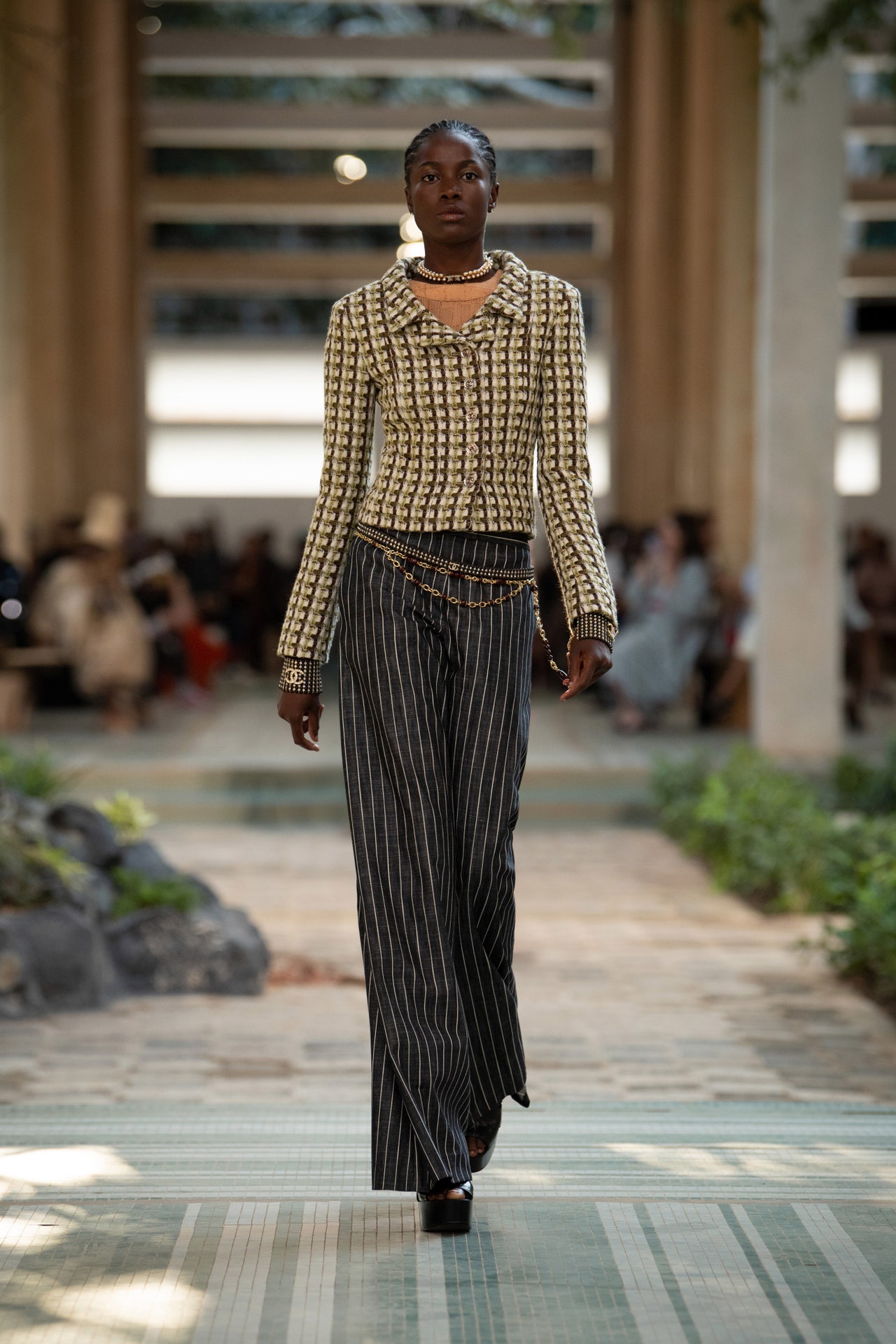
“Salam Alaikum Africa!” So sang Obree Daman, flanked by dancers from the École des Sables, at the start of what will surely go down as a milestone Chanel Métiers d’Art show both for the house that presented it and the country that hosted it.

For Chanel to choose to present its first-ever show in Africa—and simultaneously the first show to be presented by any European or US house anywhere in Sub-Saharan Africa—was an ambitious move indeed. At a fittings appointment pre-show, backstage in the Senegalese capital’s former Palais de Justice (now home to its art Biennale), Virginie Viard said that the idea first took hold three years ago. Two years of Covid-enforced hiatus followed, before scouting began. “When we first came to this place, Dakar, it was really incredible, and we knew.” she said.


As one of 800 guests you felt the experienced context of this show had been designed as precisely as the collection itself. The first stop post-arrival was on Gorée island, just offshore from the city, a place that was once a hub of the African slave trade under colonial rule and which is now a monument. There was a visit to the studio of sculptor Ousman Sowe, a tour of local artisan markets and an art-filled medina, and a “literary rendezvous” between Marie NDiaye, Charlotte Casiraghi, and Rokhaya Niang (alongside a performance by rapper Nix), plus a stop to see the beautiful furniture design of Ousmane Mbaye. Chanel’s President Bruno Pavlovsky announced a series of upcoming interactions between Chanel’s le19M and Dakar’s IFAN Museum of African Arts that will see exchanges of artisanal expertise between the two. As Pharrel Williams put it before the show: “There’s a serendipity in it being a French maison, and coming back to a place that was once colonized by the French, with a sense of equity… it’s a super-beautiful exercise in humanity.”

The best descriptor I could find for this exercise is “roofoo,” a word in the Wolof language—the lingua franca of Senegal—that was displayed and explained in an exhibition at the Atiss Gallery. According to the Atiss’s caption, roofoo is “the intimate mixture of threads, of fibers, [that] can be considered as a metaphor of weaving, which creates a fluid and welded matter, inseparable from the materials intrinsically linked. The absorption of the color in the fabric also reflects the intimacy that binds them. Textile art and its innumerable paths highlights the multitude of possible agreements between materials and techniques.” Added our guide, Olivia: “this is also a word that can be applied to people. It means a kind of chemistry.”


From inside the experience at least, this Métiers d’Art event felt like a well-considered exploration of cultural affinities—an interweaving of the pre-existing to create something entirely new. Much of that atmosphere was generated by all of the many Senegal-facing activities, but it was also inherent—albeit more discreetly—in the fabric of the collection itself. The lion motif that reappeared on jewelry and bags was a dual reference to the emblem of Senegal and the sign of Coco Chanel. Viard also looked beyond Senegal. The tailoring and menswear shapes were informed by Congo’s sartorialist Sapeur subculture, as were the heftily commando-soled shoes. Almost invisible after long and complex processes of fabric development, some of the beading materials and patterns were rooted in source material from Africa. Talking drums and surfboards were other talismanic symbols of place and connection integrated into the language of the pieces. The broader context was 1970s-inflected: casual, unpretentious, and free. Michel Gaubert’s soundtrack of freshly-released Sault tracks provided a dreamy dimension.

At the end of this show guests lingered and the hubbub of conversation steadily increased. Those guests included Senegal’s first lady, Madame Marième Sall, and four government ministers (three of them female). The models changed into their off-duty clothes and joined the party. Said Viard: “This conversation is not going to end here today. And it’s not a question that we have to continue it—we don’t. We are going to do it because we like it very much.”

Giorgio Armani’s Neve Show In The St Moritz Snow

On Saturday afternoon, Giorgio Armani took his runway to the slopes of St Moritz for the reboot of his 1985 skiwear line, Neve. British Vogue fashion critic Anders Christian Madsen reports.
 

The show took place in the snow

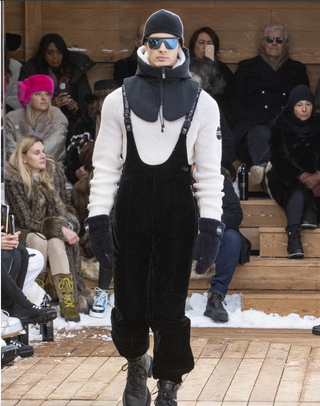
As far as exclusive fashion shows go, Giorgio Armani’s skiwear presentation in St Moritz this weekend takes the prize. Tucked away in the fairly remote grounds of the city’s Olympic stadium from 1928, the small wooden structure erected for the Neve show – the name of his skiwear label – was literally covered in snow, with just a small path cleared for the models to walk on. Wrapped in ski jackets, scarves and gloves, the just 300 guests invited for the event sipped hot apple juice from Armani-branded thermo flasks as the designer reminded them – and his vast global digital audience – who first saw the connection between skiwear and fashion now so prevalent in the street-style landscape.


Armani was a pioneer of fashion skiwear

Armani is no newcomer to the ski-inspired wardrobe that’s become big business in fashion, on sidewalks as well on slopes. He first created the Neve line in 1985 as a label “dedicated to moments in the mountains, with a focus on outerwear and sports and a stress on that understated elegance which is so essentially Armani,” as he explained before the show. After a hiatus, he brought it back in 2019 as an extension of his successful sports-focused line, EA7. Three years underway, the St Moritz show – hosted in collaboration with the city, MySwitzerland and Swiss Air – was meant to take place in 2020 but was delayed because of the pandemic.


The collection epitomised fashion’s current affinity for a ski-inspired wardrobe

“St Moritz is undoubtedly one of the most beautiful and popular mountain destinations in Europe, but it has kept its authenticity, which makes it so special. It is one of my winter retreats: I own a house here,” Armani said, referring to the Japanese-inspired chalet he and his family use for ski trips and occasional Christmas holidays. With its grand hotels and luxury stores, St Moritz served as the perfect setting for the Neve show, which captured the expensive but understated dress code you find on the city’s pistes and streets. Armani styled authentic ski suits, onesies and down jackets in black, navy and checks with fashion-statement faux fur coats, knitted leggings and sweaters that epitomised aprés-ski glamour.


Armani leaves skiing to his Neve customer

As a part-time St Moritz citizen with a huge skiwear business (in the two weeks before the Neve show, Armani sold ski jackets worth €500,000) it may come as a surprise that the designer doesn’t actually ski. He sticks to sledging and walking, or, as he quipped: “I prefer to swim.” Notably, the St Moritz house is Armani’s only cold-climate residence. Other homes include Milan, Broni, Forte dei Marmi, Pantelleria, Portofino, Paris, New York, Antigua and his super-yacht. When he’s not spending Christmas in St Moritz or Broni, “We fly to Antigua to have a little bit of summer right at the peak of winter,” Armani said. “I do love the sun and warm weather, but I also appreciate the different seasons throughout the year. Crisp sunny cold days on the snow are actually beautiful, and I enjoy them a lot.”


The Neve experience was pure alpine glamour

Armani’s guests in St Moritz weren’t just treated to the show in the snow, but the full alpine experience. Booked in the fabled Kulm Hotel, attendees including Emily in Paris’s Lucas Bravo, actor Pepe Barroso, actress Mélanie Laurent and socialite Naty Abascal hit the slopes in head-to-toe Neve skiwear and dined in the city’s classic chalet-style restaurant Salastrines on the eve of the show (where a World Cup-fuelled dinner soon turned into Italian pop music singalongs and a conga line through the wood-clad dining rooms). After the show, Armani took out the ballroom of the Badrutt’s Palace for a formal dinner which concluded in a performance by house favourite Alessandro Ristori and a night of dancing in the downstairs King nightclub. The morning after, guests were ski-lifted to mountain-top restaurant Paradiso for an al fresco luncheon in the alpine snow. As the Italian version of “My Way” that played during the Neve show’s finale reminded us, no one does it quite like Armani.

Monday, December 12, 2022

Polished, Posh And Punk: Jockum Hallin Of Our Legacy On Matchesfashion Capsule Collection

The cult Swedish brand Our Legacy has collaborated with luxury retailer Matchesfashion on a 12-piece capsule collection titled “Work Shop,” made from deadstock fabrics and highlighting British craftsmanship.

The brand has installed a workshop pop-up inside Matchesfashion’s London town house 5 Carlos Place until Sunday, where customers can get complimentary customization added to their Our Legacy pieces, old and new, by British-Indian designer Namita Khade and multidisciplinary artist Hank Grüner.

“We’ve always had an admiration for the British Isles, especially coming from Sweden and Scandinavia, where we romanticize it a little bit and so many pop cultural things came from here when we were young,” Jockum Hallin, one of the three founders of Our Legacy, told WWD on Wednesday afternoon at the town house.

The relationship, however, is deeper than that: it’s one of appreciation, especially as a fashion label that features craftsmanship techniques such as weaving, knitting and shoemaking.

Hallin wanted to emulate British style in the collection with the Harrington jacket; raincoat and the double-breasted suit — which he calls “classic diehards that will live forever.”

The brand found British fabrics in their warehouse by accident that it used on the pieces. The company used deadstock yarns for the knitwear and old Our Legacy suiting fabrics for the barracuda jackets.

“That’s what ‘Work Shop’ does, it’s repurposing and taking care of old things and conceptualizing, but with a British vibe,” added Hallin.


Hallin grew up ingrained with British hard-core punk, which he was introduced to by his father, who also listened to The Beatles and The Rolling Stones.

“I’m really into music and I think British post-punk is really blowing up again with indie guitar-based music,” said Hallin, who listens to High Vis, Chubby and the Gang and The Chisel.

What Hallin finds most fascinating about the British aesthetic is that it can be “so polished and posh, but have a punk attitude at the same time — that’s what we wanted to bring to this collection.

Our Legacy is experimenting with expanding its reach. The brand is deepening its work with Dover Street Market in Tokyo, Japan and is planning to open more locations in South Korea. Meanwhile, for Europe, a bigger space in London is in the cards.

“I haven’t been to London since the pandemic and coming back here, it feels like stuff is really happening and it’s a good energy,” said Hallin, whose brand has a dedicated community in every city around Europe.

He sees the stories as a family home, whether in London or Berlin — for the project with Matchesfashion, he has partnered with store staff who are already models or photographers, with the campaign shoot taking place in both cities.

The brand has enlisted the help of former employers Khade and Grüner for the London pop-up.

Khade has set up an embroidery station inside the town house, where she’s stitching intricate details and symbols onto the garments — and next to her, Grüner has his airbrushing and painting stall, decorating T-shirts and boots. On the opening day the demand was high with waiting times already reaching two hours.