Saturday, April 9, 2022

Monaco Is To Host A Major Christian Louboutin Exhibition This Summer

Not long after Christian Louboutin opened his first boutique on the Rue Jean-Jacques Rousseau in Paris in 1991, his window display caught the eye of Princess Caroline of Monaco, who had been visiting a gallery nearby. She ended up buying several pairs of his shoes that day.

As luck would have it, a journalist from WWD and W magazine, Heidi Lender, happened to be in the shop and mentioned the royal’s presence in her article rounding up a raft of notable new Paris boutiques.

Louboutin credits that stamp of approval for the rash of buying appointments that followed from American department stores. And Princess Caroline would remain a loyal client.

Suffice it to say, the designer’s connections with the Principality of Monaco go way back, and these will be exalted in a retrospective exhibition opening this summer at the Grimaldi Forum.

It’s billed as “Chapter II” of the footwear guru’s acclaimed 2020 exhibition at the Palais de la Porte Dorée in Paris, which endured multiple closures amid waves of pandemic-related lockdowns.

Titled “Christian Louboutin, L’Exhibition[niste],” the display recounts an eventful 30-year career and delves into the French designer’s processes and inspirations, including many from Monaco.

It will include the “Musée Imaginaire” from the Paris debut, an area dedicated to artworks and objects from Louboutin’s personal collection, alongside works loaned from major institutions, including from Monegasque museums.

During a press conference in Paris on Thursday, Louboutin recalled his visit as a child to Monaco’s Oceanographic Museum, which further fed his fascination with sea creatures.

Among his favorite artworks in all of Monaco is a giant chandelier that looks like a sea urchin conceived by Constant Roux and realized by the Maison Baguès in 1908.


The exhibition will sprawl over a much larger surface area than in Paris, spanning more than 20,000 square feet, and Louboutin said its soaring ceilings will allow him to include larger artworks, including a giant painting by Gilbert & George. Its open plan will also allow him to group “families” of signed artworks, found objects and hand-crafted wonders – giving them equal footing.

As in Paris, the Monaco exhibition will explore Louboutin’s love of dance and the legacy of the Ballets Russes, his passion for African art and Asia, the Pop influence of Warhol, and the nudes of Helmut Newton.

Louboutin collaborated with a host of artisans for the original exhibition, commissioning stained-glass windows from the Maison du Vitrail, a silver Sevillian palanquin and a cabaret sculpted in Bhutan. Also featured are photos by filmmaker David Lynch, a video work of Lisa Reihana and leather sculptures by Whitaker Malem.

New features include a large space dedicated to British sculptor and painter Allen Jones. One of Jones’ works, a life-sized nude mannequin, lit from inside with eerie green lights and shod in golden booties, stood next to Louboutin at the press conference.

The designer noted that he would add shoes from collections done since the Paris exhibition, and recently acquired pairs from the first five years of his career. By combing through the gold guest book at the Palais de la Porte Dorée, he discovered clients who had in their possession his early designs. (He kept no archives initially.)

Sponsors of the display include Monaco’s government, CMB Monaco, Mytheresa and Sotheby’s.

Sylvie Biancheri, general director of the Grimaldi Forum, noted that its summer exhibitions, due to their short duration and democratic entry fees, are never profitable, but help burnish Monaco’s reputation for cultural attractions.

Recent exhibitions at the Grimaldi Forum have been dedicated to the artists Francis Bacon and Alberto Giacometti, while next year Claude Monet will be featured, Biancheri noted.

Monaco is having something of a fashion moment: It is also the site of Chanel’s cruise 2023 show on May 5.

The Louboutin exhibition opens to the public on July 9 and runs until Aug. 28. It is understood it will next travel to a range of cities in China.

Abercrombie & Fitch’s Rebrand Brings Back Bad Memories

In grade school, my sense of style was entirely based on my desire to fit in. Back then, that meant wearing Ugg boots, skinny jeans and a t-shirt emblazoned with the name of a tween-approved brand. And if I was lucky, that brand would be Abercrombie & Fitch.

Entering an Abercrombie & Fitch store in 2010 was an attack on all your senses. First, you had to go past the half-naked models that sometimes guarded its doors. Inside, the dimmed lights made it hard to see, the music was loud and disorienting, and the perfume permeating the store was so potent you could almost taste it.

On special occasions like my birthday, I would pick out a few variations of Abercrombie tops for my adolescent wardrobe. As a sheepish tween shopping there with my mom, I felt out of place. But when walking through the mall, the store’s recognizable shopping bag — adorned by pictures of shirtless male models — felt like currency in my hands.

Known for its preppy aesthetic, it was no secret that Abercrombie & Fitch prioritized a certain demographic: the “cool” kids. This extended to its teen sales associates, who had to adhere to a physical appearance rulebook dubbed the “Look Policy.”

In 2013, a 2006 interview from then CEO Mike Jeffries resurfaced. In it, he said Abercrombie hired employees they deemed attractive because they only wanted “good-looking people” to shop at their stores.

“In every school, there are the cool and popular kids, and then there are the not-so-cool kids. Candidly, we go after the cool kids,” he continued. “We go after the attractive all-American kid with a great attitude and a lot of friends.” In other words, people who were young, thin and white.

“A lot of people don’t belong [in our clothes], and they can’t belong. Are we exclusionary? Absolutely,” he went on. That same year, Business Insider reported that Abercrombie & Fitch’s size range for women didn’t go beyond a large.


Throughout the 2000s and 2010s, Abercrombie faced multiple lawsuits around discrimination and labour violations. These controversies, plus a lost interest in its unimaginative supersized logos, led to the brand’s downfall. In 2014, Jeffries retired, and shortly thereafter, a re-brand began.

Nearly a decade later, Abercrombie & Fitch has completely reinvented itself. But on April 19, Netflix is releasing a documentary that will explore its infamous legacy as a cultural phenomenon. White Hot: The Rise & Fall of Abercrombie & Fitch will dive into the company’s culture during Jeffries’s tenure, including the brand’s racist looks-based hiring and firing policies.

After the trailer’s release on March 31, Abercrombie posted a statement on Instagram. “We want to be clear that [these] are actions, behaviours and decisions that would not be permitted or tolerated at the company now,” it read.

Scrolling through the brand’s e-commerce site in 2022 is a decidedly more inviting experience than the dimly lit stores of yore. On its homepage, a banner reads, “This is Abercrombie Today.” It leads to a page outlining the company’s social justice initiatives, with a quote from current CEO Fran Horowitz that says, “Abercrombie isn’t a brand where you need to fit in — it’s one where everyone truly belongs.”

Now marketed to young adults, Abercrombie traded in preppy attire for elevated casualwear. Clothes are shown on diverse models and are notably free of logos. The brand has nearly five million followers on Instagram, and on TikTok, videos with #AbercrombieHaul have over 56 million views. Abercrombie’s social revival has been somewhat of a success. But its rebrand doesn’t erase its legacy of racism and fatphobia.

Looking back, I can see how glorifying Abercrombie & Fitch stunted my relationship with style. My motives to blend in through my clothes continued on through high school, even after I stopped buying from the brand. Abercrombie taught me that fashion was about assimilation. Now, I know it’s actually the exact opposite. I just wish I could go back and tell my younger self that.

The Latest Barbie Is A Feminist Who Fights Against Racism

The toy manufacturer Mattel has taken the maxim “adapt or die” to heart and is radically changing its star product: the Barbie doll. The move is an effort to survive in a market that rejects everything the doll, which appeared in 1959, has stood for. The company is now focused on reflecting the lives of outstanding women, such as Sarah Gilbert, the British researcher who helped create the Oxford-AstraZeneca vaccine against Covid-19. Gilbert told The Guardian she initially felt “very strange” about having a Barbie doll made after her, but was later excited about the idea of inspiring a new generation of girls. “My wish is that my doll will show children careers they may not be aware of, like a vaccinologist,” she said. This doll is part of a Barbie collection that pays tribute to six women in science whose work played a key role in the fight against the pandemic.

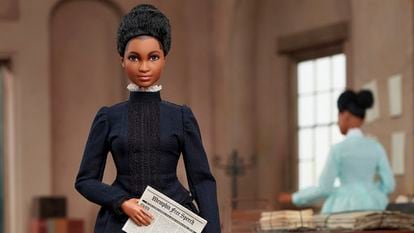
But Mattel has not stopped there. Its first Barbie of 2022 honors Ida B. Wells, who grew up as a slave in the United States and went on to become a famous journalist, and whose work on the lynchings of Black people won her a posthumous Pulitzer Prize in 2020. She was also a suffragist who helped further the Black feminist cause. The new Barbie is part of the “Inspiring Women Series,” which includes dolls of pioneering women in different fields, such as artist Frida Kahlo, the activist Rosa Parks, the singer Ella Fitzgerald and the tennis star Naomi Osaka.


The collection is growing and becoming increasingly more modern. Many of the new dolls are also part of a campaign in honor of Black History Month.

All of the Barbies come with information on how the woman the doll is based on inspired the world. But for many, it is still difficult to associate Barbie with a feminist initiative of this time. For decades the doll has been criticized as a tool of oppression, one that subjected women to unrealistic ideals of perfection, created harmful stereotypes and sexualized young girls. The doll has also been lambasted for its unhealthy dimensions. In 2016, Mattel tried to address these concerns by releasing a curvy Barbie, prompting the Time magazine headline: “Now can we stop talking about my body?”

Despite these efforts, the “classic” Barbie, with her extremely thin body, continues to be the best seller. The good news is that now the iconic doll is at least worried about racial injustice.

Saturday, April 2, 2022

Europe To Crack Down On Fast Fashion

The Europe Union wants to slow down the pace of fashion. By laying down a sustainable textile strategy the EU aims to tackle fashion’s environmental impact and labour abuses. The move was plainly summed up by Ursula von der Leyen, European Commission president, in a speech last year: “Fast fashion is poison for our planet,”

The strategy outlines that clothing garments should be easier to repair and more durable as part of a push to bolster environmental standards. Such standards would also require better quality fabrics and sewing to bolster garment longevity.

"It's time to end the model of 'take, make, break, and throw away' that is so harmful to our planet, our health and our economy," EU Commission Vice President Frans Timmermans said.

The 27-member bloc is specifically targeting the industry’s every stage of use, including sourcing, design, repair and recycling. By 2030 textiles sold in the EU should be crafted from recycled fibres and cut down on the amount of hazardous microplastics they contain as much as possible. Globablly less than 1 percent of clothing garments are recycled.

"Fast fashion should be out of fashion, and economically profitable re-use and repair services should be widely available," a statement said.

Figures published by the European Environment Agency state for every person in the EU, textile consumption requires 9 cubic metres of water, 400 square metres of land, 391kg of raw materials, and causes a carbon footprint of about 270 kg.


Each year Europeans buy 26 kg of clothing and household linen, 73 percent of which is imported, and thrown away, some 11 KG of textiles, or 5.8m tonnes in total, said the AFP.

Most clothing in the EU produced elsewhere

Textiles are the fourth highest-pressure category for the use of primary raw materials and water, after food, housing and transport, and fifth for GHG emissions. The EU textile sector, predominantly composed of SMEs, has started to recover after a long period of restructuring, while 60 percent by value of clothing in the EU is produced elsewhere.

Innovation

The EU is also calling for innovation in the sector, with producers taking responsibility for their products along the value chain with sufficient capacities for recycling and minimal incineration and landfilling.

Garments will be labelled so that clearer information on textiles and a digital product passport will inform consumers of each facet of the garments they purchase. It further empowers people to tackle greenwashing by ensuring the accuracy of companies’ green claims.

Ultimately the goal is to stop overproduction and overconsumption, and discourage the destruction of unsold or returned textiles.

Is Menswear The Queerest It's Ever Been?

Over the last decade or so, menswear has evolved from one trend to the next. It’s fallen in and out of love with tailoring, it’s embraced casual-cool through style icons like Kanye -- whose Haider Ackermann era is required reading -- A$AP Rocky, and Pharrell, and in more recent years it’s welcomed ‘soft boys’ and what has widely been dubbed a ‘new masculinity’. For SS22, though, this ‘softness’ has bloomed into something altogether more brazen: a no-holds-barred, ostensibly queer flamboyance. While previous trends — whether they started on the runways, social media, or through celebrity style — have migrated into stores and people’s wardrobes, the jury remains out on whether the man on the street is quite ready for the emboldened body-baring silhouettes we’ve recently seen on the runway.

Still, while the season’s collections were certainly less dictated by conventional menswear norms, they nonetheless tapped into an undercurrent of flamboyance that has always existed in men’s style -- you only need to look to Prince, Sir Elton John, or Dennis Rodman for proof.

At Fendi, this resulted in a departure from their usual codes, typically heavy on tailoring and focussed on classic men’s silhouettes with quirky twists, presenting ultra-cropped jackets and waist chains instead. Over at Alexander McQueen, Sarah Burton’s womenswear motifs were welcomed into the house’s menswear repertoire, with her signature ruffles exploding from the seams of tailored pieces and an embroidered tank dress thrown into the mix. At Saint Laurent, Anthony Vaccarello leaned into the flamboyant aesthetic of Monsieur Saint Laurent himself, while Acne Studios embraced on-trend Gen Z styling, and brands like GmbH continued to keep queerness at the core of their aesthetic. So there you have it -- the boom in the popularity of the trend is an undeniable fact. But what’s driving it?

The simple answer is that as our definitions of gender expand and evolve, so does fashion’s remit. As stylist Tabitha Sanchez notes, “menswear today is heavily inspired by queer people who have been using fashion to step out of gender binaries for as long as fashion has been around,” and as queer people continue to discover and express facets of their identities through fashion, people take notice and adopt these as aesthetics, ultimately turning them into mainstream trends — all the crop-tops and halter tops we’re currently seeing for hot-boy summer, for example.

For Iolo Edwards, founder of Facebook forum and publication High Fashion Talk (HFT), much of this can be attributed to the crumbling of certain boundaries in fashion over the past few years, many having “a lot to do with the re-calibration of dressing in relation to gender.”

Further proof of this cultural shift can be found in the renaissance in queer celebrities such as Lil Nas X and Troye Sivan, who are more overt and playful with their styling, as well as Gen Zers’ uptake of genderless style trends in the wake of a Y2K revival. As such, now feels like the ideal time for brands to embrace a similar approach in their menswear. Not only is there market appetite, but there’s also a real opportunity for brands to present more adventurous menswear in the same way they do womenswear for celebrity marketing. It’s something that brands like Giambattista Valli, Fendi, and Valentino are cashing in on by offering exuberant men’s couture looks that were all but made for a Harry Styles red carpet moment.


“It is well worth contemplating why queerness and flamboyance are the aesthetics brands lean into when deciding what their ‘free’ and ‘risk-taking’ modern man should be wearing.”

Beyond that, though, it also speaks to the overarching mood for freedom and risk-taking in post-pandemic dressing, something that also characterised the AW21 shows. From Iolo’s perspective, while comfort was the focus in the collections presented early on in the pandemic, there has been a “full 180”, with people now wanting to look their best after being cooped up for so long. This seems to have been on the mind of Silvia Venturini Fendi, who told Vogue that she wanted to “give a sense of freedom to this man” this season, and that “it’s the time to break boundaries.”

Still, it is well worth contemplating why queerness and flamboyance are the aesthetics brands lean into when deciding what their ‘free’ and ‘risk-taking’ modern man should be wearing. This is especially pertinent when we consider the very real risks that visibly queer-presenting people put themselves at when they choose to style themselves out of line with heteronormative expectations.

Nonetheless, that doesn’t detract from the fact that the shift we’re seeing take place on runways is an encouraging one. A question that begs asking, though, is: Are people actually buying it? The short answer is apparently yes. Federico Barassi, Vice President of Menswear Buying at SSENSE, says that while this trend is still “niche in comparison to core or commercial offerings, there’s momentum, opportunity, and openness to more experimentation within menswear.” Categories they’ve seen particular growth in include skirts, heeled footwear, and accessories like smaller handbags, all of which the Canadian e-commerce platform has offered for many seasons and is “happy to see being increasingly embraced.”

That Federico is able to offer such a confident endorsement of this open-minded turn in menswear makes sense. SSENSE is, after all, a favourite retail destination for Millennials and Gen Zers to find on-trend pieces often from smaller designers -- in fact, the demographic constitutes the majority of their business, with over 70% of their audience being between 18 and 34 years old. He also notes that, while larger brands are continuing to embrace a more liberated approach in their menswear, there’s a keen interest in “supporting emerging designers who have authentically and always embedded this aesthetic as a core part of their DNA,” offering Dion Lee, Phlemuns, Ludovic de Saint Sernin, and Telfar as examples.


Of course, even among names like these, what we see on runways and in editorials isn’t always what makes it down to store floors. Fashion has a habit of showing one thing and selling another, and while trends trickle down to social media –- or in cases like this one, trickle up from it -- what we see URL is not always what we get IRL. The ways in which we socialise have drastically altered over the past two years, with our interactions shifting to online spaces that naturally facilitate self-expression. “People aren’t [physically] entering spaces where toxic masculinity can restrict what they feel comfortable or, sad to say, safe wearing”, says Iolo, citing TikTok as a noteworthy example.

So how does this boom in the more daring takes on menswear seen on the runway and on our screens translate to what your average guy on the street wants to buy? Iolo argues that “only a small minority decide what to wear from a catwalk”, a fair fact -- but this is where influencers and celebrities come in. It is, after all, what we see on the runway that determines what we see them wear on red carpets and in media appearances, and “people want to buy the clothes they see on their faves. That has a huge impact. [On social media] you can find someone whose identity and gender you can identify with, which is often what a lot of people need to give themselves permission to self-actualise,” he continues, adding that “there’s always been play and distortion of gender in fashion, but what was once caveated with a tentative no homo is now much more self-assured and confident.”

It’s a shift he’s observed in the outfits shared on HFT. While not everyone is suddenly dressing “more flamboyant or femme”, those who want to certainly feel more comfortable doing so. In his opinion, however, this has a lot to do with the second-hand market's increase in popularity amongst Gen Zers and Millennials, as people who once felt priced out of fashion can now “make more adventurous purchases” and then resell them. It’s something he’s noticed among people with larger followings, who wear something and then sell it on to one of their influenced followers.

“There’s an undeniable cultural shift to embrace fluid approaches to gender and sexuality. It's important [that brands] acknowledge this shift — whether subtly or unapologetically.” — Federico Barassi, Vice President of Menswear Buying at SSENSE

Whether all of this will result in SS22’s more out-there collections being commercialised as they first appeared to us remains to be seen. As Federico notes, “some styles are presented solely for the purpose of runway shows or editorials and sometimes never make it into production” while “brands like Dion Lee that take what we see on the runway and ensure it’s part of their retail offering.” What he remains confident about, though, is that the trend will gain further traction and become more commonplace as customers become more familiar with the styles and silhouettes.

“There’s an undeniable cultural shift from both brands and customers to embrace fluid approaches to gender and sexuality,” he notes, adding that “as the Gen Z buying power grows, it's interesting to see if brands will adapt and dispel gender binaries through their collections. It's important they acknowledge this shift — whether subtly or unapologetically.” Of course, only time will determine whether or not the trend becomes the next menswear evolution, and as lockdowns and social distancing restrictions give way to IRL socialising, it will be interesting to see how this seemingly general interest in flamboyance affects the way men dress every day. The bottom line, though, speaks to one of fashion’s fundamental truths. “Regardless of gender and how you identify, clothing is for everyone,” Tabitha says. “Fashion is fun, getting dressed is fun.” Or in other words, fashion is all about having a gay old time.

Friday, April 1, 2022

Patrick Demarchelier, Fashion And Portrait Photographer, Has Died Aged 78

Fashion and portrait photographer Patrick Demarchelier, known for balancing elegance and natural ease in his work, has died. He was 78.

Born in Le Havre, France, Demarchelier was self-taught. “I didn’t think about a career. I didn’t plan it. It came to me,” he said in a 2015 interview. As a teenager Demarchelier received his first camera as a gift from his stepfather, and he put it to good use shooting weddings and passport photos. At 20, he moved to Paris where he eventually found a job working with the Swiss lensman and Vogue contributor Hans Feurer.

Demarchelier started shooting for American Vogue before he moved to New York, following a girlfriend, in 1975. His first cover credit came in 1977, but perhaps his most memorable one was for May 1989, featuring Madonna. That year was a big one for the photographer; not only was his work featured in the inaugural publication of the American Photographer Master Series, but he became the personal portraitist of Diana, Princess of Wales, who had discovered his work on a cover of Vogue. The Frenchman was the first non-Brit to become an official royal photographer.

The photographer credited his success to Grace Coddington, with whom he first had a close working relationship at British Vogue and which continued when she switched titles in 1988. Their 1990s shoots were sunlit and featured happy, active models wearing fancy clothes that looked relatable. “Surf’s Up” featured Cindy Crawford with a gaggle of beefy surfers, and they set sail with Naomi Campbell, Beverley Peele, and Tyra Banks for 1992’s “Summer’s Bare Necessities”.


The French Ministry of Culture named Demarchelier an officier dans l’ordre des arts et des lettres in 2007, the same year that he received the CFDA Founder’s Award in Honor of Eleanor Lambert. In the 2010s he worked frequently with the model Caroline Trentini, who was then dating his son Victor. Demarchelier appeared in the film The September Issue, and can be glimpsed in the Sex and the City movie.

Demarchelier had a monographic exhibition, “The Cult of Personality”, at the Petit Palais in Paris in 2009. Staley-Wise hosted his most recent show in 2019. In 2011 he published a lavish tome titled Dior Couture. “Photographers have to make the clothes look fantastic, that’s why we get paid,” he said in a 2012 interview. “And I have positive eyes.”

Despite a rich and deep legacy, in 2018 amidst the #MeToo reckoning, Demarchelier was among a number of photographers accused of sexual harassment. Condé Nast released the following response to the allegations: “We have informed Patrick we will not be working with him for the foreseeable future.” Demarchelier denied the allegations.

When his passing was announced on his Instagram account on Thursday 31 March, the notes of appreciation and condolences to his family flooded in. Amber Valletta said he was amongst the first photographers she worked with. “He is fashion history and legendary photography. We will miss him.” Demarchelier is survived by his wife Mia, his three sons, and three grandchildren.

Tom Ford’s Plastic Innovation Prize Announces Its Eight Finalists

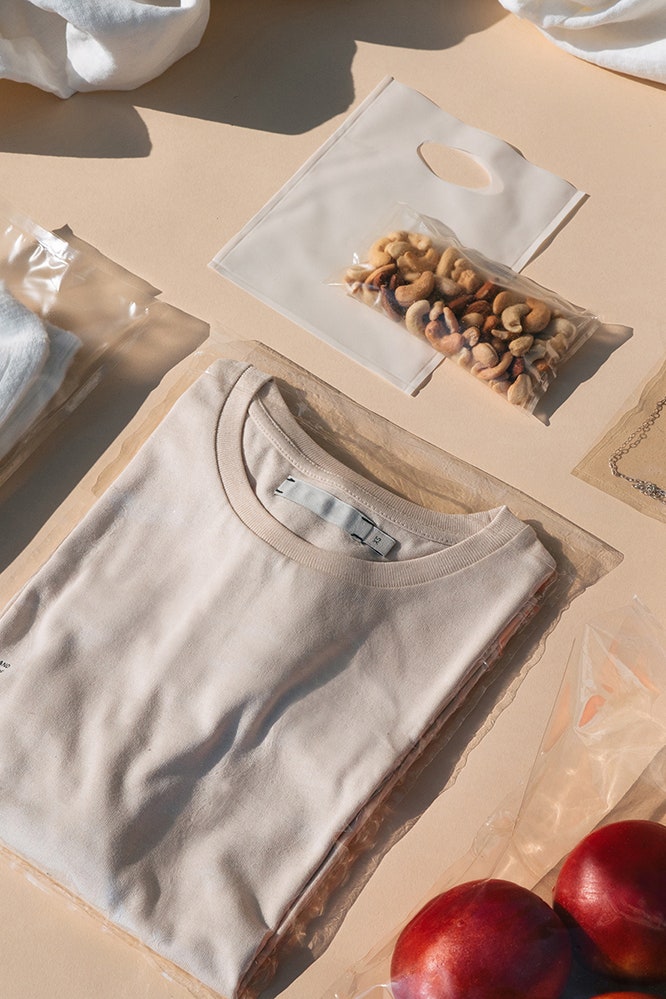
It’s hard to conceptualise every piece of cling film, discarded sheet of bubble wrap, and plastic bag adding up to tonnes and tonnes of waste. But pile up they do. It’s estimated that thin-film plastic – the lightweight material that’s often used as a barrier or wrapping of some kind – constitutes 46 per cent of the approximately 14 million tonnes of new plastic that enters the ocean annually. 180 billion thin film plastic polybags are used by the fashion industry a year alone. The Tom Ford Plastic Innovation Prize aims to change that, and it just got one step closer by revealing the eight finalists for its inaugural prize.

Selected from 64 applicants on six continents, the finalists presented the panel of judges with a working prototype to replace the polybags the fashion industry is currently reliant on. The finalists are Genecis, Kelpi, Lwanda Biotech, Marea, Notpla, Sway, Xampla, and Zero Circle. They include alternatives made from local algae in Iceland (Marea), organic waste and reprogrammed bacteria (Canada’s Genecis), and peas (the University of Cambridge-based Xampla). Seaweed emerged as the most frequently harnessed alternative, with four of the eight finalists using it as a material. “We’re trying to set a new standard,” says Dr. Dune Ives, the CEO of Lonely Whale, the non-profit that Ford partnered with for the Prize.

Ives explained that the entrants were judged not on merely making a biodegradable product, but one that “biologically degrades.” The difference is subtle to a non-scientist, but crucial. Biodegradable products can only decompose safely in certain environments, like an industrial composting facility. If, say, a compostable straw gets mixed in with trash headed for landfill, it will not biodegrade. “Biologically degradable means that it could degrade without harm to the environment on land and in the ocean, and if the unthinkable happens and it was ingested by a sea creature, we want to know that it would safely pass through,” she said.


That scenario is exactly what the finalists’s prototypes will be put through next. For a year, their products will be tested in Caribbean and Pacific Northwest waters as well as in a lab. The Seattle Aquarium will also model what would happen to the finalists’s materials should a marine mammal ingest them. On top of all that, the products will be evaluated to ensure that they “minimise negative social and environmental impacts, meet industry performance standards, and are also cost-competitive, scalable, and market-ready by 2025,” according to a press release.

They’ll be further put to the test by a host of early-adopter brands, including Nike, which is sponsoring the testing phase, J. Crew, Tom Ford and Tom Ford Beauty, and Stella McCartney. (McCartney sat on the judges panel alongside Eco-Age founder Livia Firth, MBE; actor Don Cheadle; and CFDA CEO Steven Kolb.) The focus on companies using the new materials further underscores the idea that it’s important to tackle this problem on a business level, not an individual one. Indeed, scalability was top of mind for the judges. “[The judges] were thinking about, ‘with a warming climate and increased population, are we sure that we’re doing more good than harm with these alternatives?’ That’s how these eight made it through,” Dr. Ives said.

Firth found the finalists, or “climate optimists,” as she calls them, downright inspiring. “It’s their attitude and determination that inspires progress,” she said. “Optimism has always had this power. Humanity has eradicated diseases, overcome great injustices, and even reached the moon because enough of us believed we could!” The winners, which will be announced in spring 2023, will collectively receive over $1.2 million (£910,000) in funding. Hopefully, that means in a few years we’ll be seeing more seaweed (or peas, or algae, or bacteria) in our packaging.