Saturday, November 4, 2017

Dsquared2 Launches The "Be Cool Be Nice" Collection In Support Of Anti-Bullying

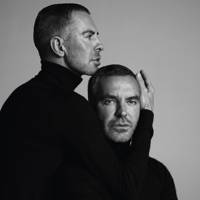
For designers Dean and Dan Caten, bullying is an issue that has long been close to their hearts. They speak to Vogue about why their own experiences compelled them to get involved in a major new anti-bullying campaign.

November is anti-bullying month and last night, at the House of Lords, royalty, celebrity and fashion came together to highlight a growing problem. Bullying has always existed, but the proliferation of online communications has made it all too easy for young people to be targeted. "Be Cool Be Nice" is a charitable foundation set up to tackle online bullying and support victims. Alongside Princess Beatrice, who hosted the event, DSquared2 designers Dean and Dan Caten also attended.

The Canadian twins' exuberant designs and large-scale fashion shows have built a thriving €200m business, but life wasn't always comfortable for Dean and Dan Caten. Born in Toronto in 1964, the identical twin brothers, the youngest of eight siblings, were targeted for being different. "As twin boys and being from an immigrant family growing up in a suburb outside of Toronto, we were bullied," they say. "When we were in school we weren’t the typical adolescent boys and had different interests and were bullied for that."

Unlike many victims, who go through it alone, the pair could turn to each other for support. "Having one another has always been a blessing, our bond has always been our strongest weapon," they say. Even today they are inseparable, sharing a large house in London and building a hugely successful international fashion business together.

Fashion, where difference is often celebrated as an asset, offered them a safe place. "Fashion has always been an outlet for our self-expression. We used it as a tool to create a material artifact of our feelings and ideas. It truly gave us a voice and helped us in finding a sense of belonging. Fashion has always reassured us and made us feel protected. Doing what you love gives you more self-confidence."

They've designed a "Be Cool Be Nice" fashion range to raise money and awareness and encourage people to think, before they comment online. "'Be Cool Be Nice' is a cause everyone can stand behind. If we did, it could change the world. It’s a matter of approaching everyone with the right attitude." But whilst clothes can help give confidence they can't do it all, explain the designers. "The most important thing is the confidence you have in yourself and the courage to be yourself."

To anyone who is experiencing bullying they say, "You are not alone! You are perfect the way you are. It is important to disengage and ignore bullies. Being strong and brave to be who you are is your biggest asset."

Maria Grazia Chiuri: "Dior Has To Be About Female Empowerment"

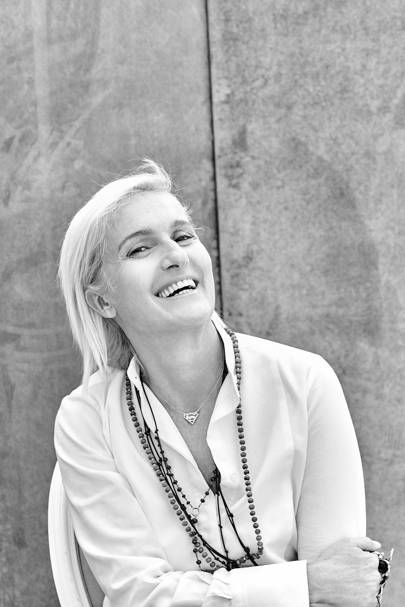
Maria Grazia Chiuri has been artistic director of Dior for just over a year. It’s a role she never dreamed she would have. “And why is that?” she asks. “Because there was never a woman in that position [before].” We’re seated in a spacious reception room in Dior’s Paris headquarters. Gilt mirrors line the walls. A pair of crystal-tipped chandeliers hang overhead. The rest has been cast in Dior’s signature pale grey: ceiling, walls, sofa, a pair of oval-backed Louis XVI chairs. Chiuri, 52, is all in black. Black trousers, black blouse, black heels and sooty black eyeliner. Her cropped, bleached hair is parted severely on one side. Like Gucci’s Alessandro Michele, her fingers are dressed in heavy rings – one a skull from Codognato, another of her own design.

It’s only been nine months since the former Valentino co-creative director made her debut at the Musée Rodin during Paris Couture Week, and her impact on the 70-year-old house has been nothing short of transformational. Under Chiuri, the catwalk has become a platform for an ongoing conversation about feminism and the arts. This season, she paid tribute to two powerful women, constructing a showspace in the style of artist and former Dior model Niki de Saint Phalle’s Tarot Garden in Tuscany, and sending Breton-striped shirts stamped with the title of art historian Linda Nochlin’s 1971 essay, “Why have there been no great women artists?” down the catwalk. (They’ve gotten more than just the fashion world talking.) Her efforts haven’t stopped there: She has proposed a new vision of the modern-day Dior woman, one that may still don a ball gown and stiletto on an occasional evening, but for day prefers long-sleeved shirts, boyfriend jeans and a pair of easy walking flats, a cross-body bag slung across one shoulder. Chiuri expands upon that vision below.


You have been described as an activist designer. How do you feel about that label?

I don’t think that I’m an activist. Dior is about femininity. When I arrived here, everybody told me that. Okay, I said, we have to speak about femininity, but what does that mean today? I try to speak about women now, and for the future. Dior has to be about female empowerment. Only with flowers? It’s not enough. I know that there are a lot of nostalgic people that want a world that references the past and [Dior in] the 1950s, and I think the references of the past are beautiful, and I really appreciate our heritage. But if I’m a modern woman who wants a vintage dress I go to Didier Ludot and I buy an authentic Dior dress. If I go to the [Dior] store, I want something that speaks about the heritage, but in a modern way, for contemporary life. I know there are other points of view, and I respect those, but that’s my point of view.

Marc Bohan was the head designer of Dior longer than anyone, but his influence is often overlooked in the archives. Have you been particularly inspired by his work?

Yes. If you look at [Yves] Saint Laurent, [his designs] are more similar to Mr. Dior’s. When Marc Bohan arrived, he completely changed the line. The shapes are Sixties, they are clean, short. And why? Because there was a revolution in women, a big change in women’s attitudes. It was not the designer who changed the line, but the woman changed and the designer understood that the woman was different. The designer has to understand the women. Sometimes we have this message that the designer was a revolutionary. No, sorry. It was the woman that changed, and the designer understood and changed the line. Now, we have to understand this new generation, and it’s not easy. The new generation are completely different to the past. They ask for more information, they are more personal in their point of view. My son looks to see if the T-shirt is cotton, where the cotton is from. There is a completely different audience with different values and ideas about what is good and not good. Now, they can buy fashion everywhere, also they can do the same look in a very cheap way. A luxury house has to maintain the value, the brand, the quality, the craftsmanship, but at the same time has to start a new dialogue with these guys. The new dialogue [has to be] about value. Not only about dress.

Your latest collection references the work of Niki de Saint Phalle. How did you discover her?

When I arrived at the company, I started immediately to work on the exhibition at Les Arts Décoratifs, which [immersed me] in the history of Dior. Dior has a huge story, with different creative directors who have maintained the values for such a long time. During this research I also found the images of Niki de Saint Phalle in Dior and a letter she wrote to Marc Bohan [asking for a dress]. So I started to read more about her. And step by step I tried to translate in the collection these different ideas about a woman who started as a model for Dior in the Fifties, who was really beautiful and [whom] everybody would ask to be an actress, and she decided to work in art in a moment that was not too easy to work in art for women.#SuzyPFW: Dior’s Modern Muse, Artist Niki de Saint Phalle

On the runway, you sent out T-shirts with the title of Linda Nochlin’s 1971 essay, "Why have there been no great women artists?" Why do you feel that question still needs to be posed today?

If you are not lucky, if you do not have the opportunity to go to a good school or to be born into a family that can support you, and if the society doesn’t help and support, I think it’s very difficult not only in art but also in other jobs. And I think that sometimes this idea is inside of women, that they know that it is very difficult and so they don’t try to make what they really like. Very often people ask me, ‘Have you ever imagined that you can arrive in Dior’s house?’ No. ‘But why?’ Because there was never a woman in that position. I believed that it could be possible to work in the fashion system, and honestly I was very lucky because I started at Fendi, where there were unbelievable women that supported me. But why did I have this kind of mentality inside me? Because this was in my DNA in some way, so the problem is not only outside, but also inside. You can’t believe that you can do something when your patriarchal idea is that women can’t do that. I don’t think there is a young girl that today believes that she can become Michelangelo. Probably she says, oh no it’s too difficult, it’s impossible. It’s inside us, we are a limit for ourselves.

You’re known for having a pragmatic approach to your role – you visit factories, you’re involved in the business side of things. Why is that important to you?

As a designer, creativity is the first part of our job, but I don’t think that creativity only has use on the runway. It’s very important that the message you have in the show you also have in the [store] window, also in the merchandise inside the store. I have a huge team around me that supports me, but if you only do the show you lose the message. Now fashion is another story, it’s not like in the past. Fashion [used to be] a big show to sell other products – if we speak about the Eighties, Nineties, there were the licences, you’d have a big show but after you sell other products. I want to sell it all – clothes, bags, shoes. We have to be honest. If we don’t speak about fashion as a system, in a real way, it’s a trick. We have to be honest with our consumer. We want to give very good quality, good creativity, but which you can also find in the store.

Cara And Matt Team Up For Burberry

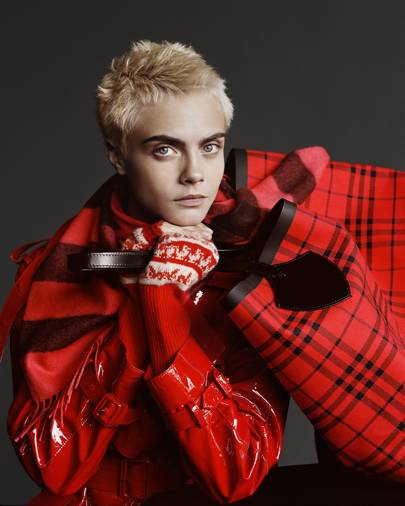
Following  the news that Christopher Bailey will leave Burberry at the end of 2018, the great British brand has released a collection of seasonal pieces, and a blockbuster campaign starring Cara Delevingne and Matt Smith to accompany it.


Captured by Alasdair McLellan, the portraits and accompanying 30-second video, feature Burberry veteran Delevingne and newcomer Smith larking about in laminated trench coats, Fair Isle knitwear and ornate jewellery – all to the soundtrack of "Always On My Mind" by Pet Shop Boys.


Of his campaign debut, the former Doctor Who star said: “Burberry has always been a brand that I have admired, from the football stands to the macs on the runway. Delevingne, whom Smith dubs a “fashion heavyweight”, thanked “the creative genius and my dear friend Christopher Bailey for involving me in this and all the incredible projects over the years.”

Lais Ribeiro To Wear Victoria's Secret Fantasy Bra

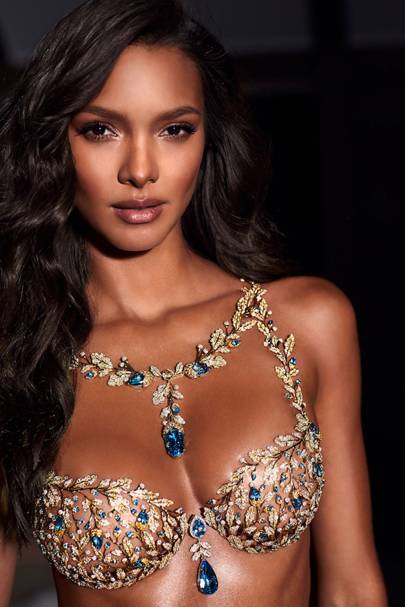
To be chosen as the model of the Fantasy Bra, which is seen as the show’s centerpiece, is a prestigious accolade among the Angels. Ribeiro follows in the glamorous footsteps of Jasmin Tookes, who wore an 18-carat gold piece worth $3 million last year, and Gisele Bündchen, Tyra Banks, Alessandra Ambrosio, Lily Aldridge, Adriana Lima and Candice Swanepoel before her.

“You just feel so powerful wearing it, like all the hard work has paid off,” the Brazilian beauty said of her appointment. The lingerie brand told Ribeiro that she would be wearing the $2 million Mouwad design, which is handset with diamonds, yellow sapphires and blue topaz in 18-karat gold, during fittings for the show: “I had no idea that [the fitting] was for the bra,” she shared. “I came in and when I tried it I cried, it was unbelievable.”


Ribeiro began her Victoria’s Secret career after giving birth to her son, Alexandre, in 2010, and has walked in every show except 2012, when she sprained her ankle during rehearsals. Her brother and father will be in the Shanghai audience to watch her wear the bra, which took almost 350 hours to make, come November 20-

The catwalk spectacular will air on CBS on November 28 at 10pm EST, and will include pink-carpet interviews, model profiles and a behind-the-scenes look at the making of the show. Tune in for a closer look at Ribeiro wearing the Fantasy Bra.

The Secret Behind Erdem x H&M's Success

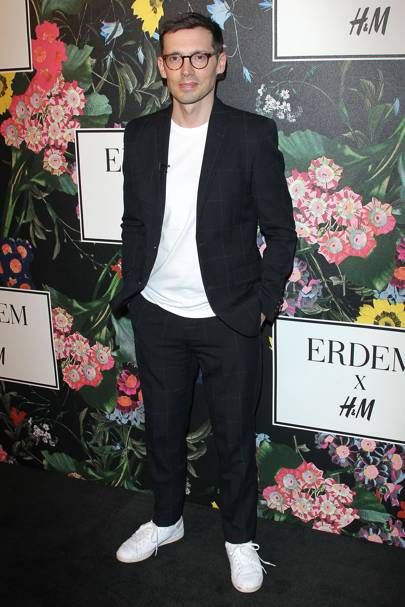
Erdem Moralıoğlu's highly anticipated collection lands in H&M this week - November 2, at selected stores and online; read everything you need to know about the Erdem x H&M launchhere - but what is the secret behind the success of the collaboration? Why do we all want it so much and how did Erdem and H&M make it so? Voguecaught up with the designer in Los Angeles ahead of the star-studded launch party to find out.

"I think the moment you get too caught up in thinking about how a collection will be perceived - there's no point; you really have to approach it as a new body of work," he said referring to the weight of expectation that accompanies a collaboration of such international stature.

A new body of work then, but destined for the the high street - and at a very different price point to his usual stock. Did that change his approach? "Erdem was very involved with everything from day one," said Ann-Sofie Johansson, H&M’s creative advisor. "He knows what he wants and is very engaged with the process. He also introduced us to a number of new producers; smaller Scottish mills and Italian mills he regularly works with," she explained, signalling a very different approach from the get-go.

"To me, this collection was not about taking archive pieces and making them more accessible at all," explained Erdem. "It was about creating the opposite of fast fashion; it was about creating these pieces that you want and desire because they are beautiful."

That, in a nutshell, is what has made this, H&M's 17th designer collaboration, such a hit. At its very core, it is a subversive collection that need not be radical to create change, nor indeed pushed to the point of parody to make a statement. Instead, it effortlessly celebrates the principles it was built upon: beauty, elegance, fluidity and strength.


"Growing up with a twin - with someone who was the same as me, but of the opposite sex - I never, ever, equated something that was feminine as something that was weak; it was always equal, or the same," Erdem said reflecting on his childhood and sister Sara, who wears his designs often and always provides honest feedback.

That idea of firsthand experience with a garment fed into his first menswear designs, where the designer turned model to understand what "felt right" and what didn't. "Once I figured out where he [the menswear collection] was going, I would take the blazer and put on the female fit model and allowed that silhouette to affect where the design would go. One very much affected the other."

That in-built fluidity between men's and women's means that rather than having a dedicated menswear collection, and separate womenswear collection, which drawing from similar codes, we the consumer have so much more to choose from. Expect to see the boys borrow from the girls and vice versa, as Kirsten Dunst did on the launch night when she wore the brown floral men's pyjama suit for her front-row appearance. (Expect that to be among the first pieces to sell out fast.)

If breaking down the dichotomies of fast fashion versus enduring style and masculine versus feminine isn't enough, there is one other boundary Erdem has readily revelled in: the mix of formal and informal. It is the unabashed combination of the high and low: the ballgown and the hoodie; the T-shirt and the tux. "Like the Pet Shop Boys video directed by Bruce Weber in the Nineties, I found that meeting of opposites really interesting to work with."

"To me, it just feels very British," reflects Erdem of the whole collection. And in times like these, we can't help but feel like we could all use a dose of his optimism and elegance too.

Tuesday, October 31, 2017

Christopher Bailey To Leave Burberry

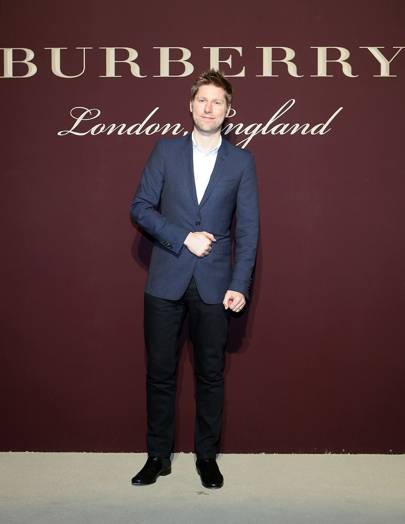
Christopher Bailey will leave Burberry at the end of 2018, the company has announced today.

"It has been the great privilege of my working life to be at Burberry, working alongside and learning from such an extraordinary group of people over the last 17 years. Burberry encapsulates so much of what is great about Britain. As an organisation, it is creative, innovative and outward looking. It celebrates diversity and challenges received wisdoms. It is over 160 years old, but it has a young spirit," Bailey said of the fashion house that he joined in 2001 and is currently president and chief creative officer of, in a statement released by the brand this morning. "It is part of the establishment, but it is always changing, and always learning. It has been a truly inspiring place to work and the decision to leave was not an easy one. I do truly believe, however, that Burberry’s best days are still ahead of her and that the company will go from strength to strength with the strategy we have developed and the exceptional talent we have in place led by Marco. I would like to thank all my colleagues as well as Sir John Peace and the Board for all their support and faith in me over the years. I am excited to pursue new creative projects but remain fully committed to the future success of this magnificent brand and to ensuring a smooth transition."


The brand confirmed that Bailey will remain in his roles until March 31 2018, when he will step down from the board. He will then continue to provide support to chief executive officer Marco Gobbetti and the team on the transition until the end of the year. Having joined the fashion house as design director, he was promoted to chief creative officer and CEO in 2014 but handed the reins of the latter position to Gobbetti last year. Prior to Burberry, Bailey - who graduated from the Royal College of Art in 1994 - worked at Donna Karan and Gucci.

Gobbetti said this morning of the departure: "Burberry has undergone an incredible transformation since 2001 and Christopher has been instrumental to the company’s success in that period. While I am sad not to have the opportunity to partner with him for longer, the legacy he leaves and the exceptional talent we have at Burberry give me enormous confidence in our future. We have a clear vision for the next chapter to accelerate the growth and success of the Burberry brand and I am excited about the opportunity ahead for our teams, our partners and our shareholders."

Five Designers To Know From Russia Fashion Week

Thanks to stars like Demna Gvasalia and Gosha Rubchinskiy, post-Soviet fashion is garnering more international attention than ever. But there’s much more to the region’s design scene than a few superstar names. At Mercedes-Benz Fashion Week Russia, which just wrapped up in Moscow, we saw collections from a handful of designers poised for global success. Here are the names to know.


Alexandr Rogov

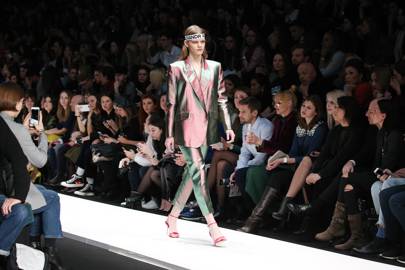
You may not have heard his name, but Alexandr Rogov is a big deal in Russia, with a successful career as a stylist and his very own TV show. Now, he’s trying his hand as a designer. Following a favorably reviewed catwalk collection last season, he’s back with a more finely-tuned and wearable sensibility. It was a quirky mix of athleisure separates (sweatshirts, tracksuit-inspired trousers), and feminine styles (mini skirts with ruffles, silk dresses, prim blazers) in a pink, teal and purple palette that felt particularly of the moment. No surprise, Rogov had fun with the styling, adding stretchy logo-ed bands to waists, hems and heads. While at times the show felt a little derivative (those logo-ed bands owe a little something to Dior, the ruffles to Saint Laurent), Rogov’s items will have undeniable appeal in stores - which is no small thing for an emerging designer with an eye on solvency. Particularly cool - and destined to sell out - were the sweatshirts and T-shirt emblazoned with the word “hate” in glitter, and the matching denim jacket and trousers stitched with sequins.

Alisa Kuzembaeva

Alisa Kuzembaeva studied architecture before switching her focus to fashion. A Central Saint Martins and Royal College of Art womenswear graduate, her designs hit that sweet spot between conceptual and covetable. Case in point: Her Spring 2018 collection was a meditation on a Russian phrase which can be translated to “packaged woman.” “On one hand, [it can refer to] a wealthy woman, so it’s kind of like flourishing capitalism,” she explained. “But on the other hand, it can also mean a traditional woman, it’s kind of like the woman as an object.” Kuzembaeva looked to food packaging for inspiration, rendering smock-like dresses and roomy anoraks in shiny, plastic-like materials. Some even came stamped with a barcode and nutritional information. “My collection is trying to make an ironic representation of the patriarchal society, to try to empower women,” she said. But for all the high-minded ethos behind it, the collection was plenty wearable, even practical.

Mach & Mach


For Georgian sisters Nina and Gvantsa Macharashvili, of the Katy Perry-endorsed label Mach & Mach, this collection was about much more than fashion. “It’s really an SOS for every human being that we need to change and protect our oceans,” said Gvantsa. The duo worked with crystals, glitter and shiny plastics to symbolize and celebrate water’s beauty. The looks - clingy net dresses that shimmered in black and red, and sheer dresses adorned with ruffles, embroidery and sequins - were well-crafted and appealing. Particularly attractive were the accessories, including statement purses in the shape of bombs and mules made out of iridescent plastic.

Turbo Yulia


Yulia Vorobieva got her big break in 2014 when Opening Ceremony picked up her futuristic helmets and caps. Since then, she’s expanded into ready-to-wear, releasing small capsule collections in drops throughout the year. Her latest fuses utility-wear with the Nineties-influenced aesthetic she’s already known for. Standouts included a bright yellow parka with reflective tape and an oversize concert t-shirt-cum-dress on which you can just make out the faces of the Backstreet Boys. “The collection is inspired by what I remember of the Nineties, the Russian underground raver scene,” she said. “There’s also been massive construction going on in Moscow for a few years so I got inspired by that as well.”

Artem Shumov


Menswear label Artem Shumov has been a mainstay - and highlight - of Mercedes-Benz Fashion Week Russia for some years now. And it shows: Amid many newcomers, Shumov’s label stands out for its well-developed point of view, consistent aesthetic and immaculate construction. He’s best known for tailored separates and suits with idiosyncratic details, like an elastic hem. This season, he mined Russia’s past and present for reference points. “Spring 2018 is a story about a young man, who has just got back home from some party,” he said. “He can be a modern fashionista or a lyceum student from Alexander Pushkin’s times. I was interested in how the idea of rich ‘trust fund’ kids evolved through history. The energy, curiosity, rules, sins and romances of adolescence are all very inspiring.”