Monday, October 9, 2017

Why DSM Has The Ultimate Pull For Designers

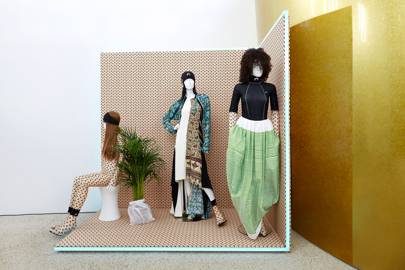
The fashion beat may well have moved on to Milan, but here in London, we'll always have Dover Street Market. Now settled nicely into its new home on Haymarket, the hallowed concept store unveiled its latest installations this weekend, adding to the gloriously unique environment is is famed for. From LVMH winner Marine Serre and DSM stalwart Judy Blame, to Adrian Joffe-favourite Roberts Wood and newcomers Jijibaba, we popped down to meet the designers beside their work, to find out how it feels to be one of Rei Kawakubo's chosen ones.


Marine Serre

"Adrian came to my tiny flat in Paris and I met him on my lunch break from Balenciaga - where I was working at the time – and he bought the entire collection. It was never meant to be sold, it was made with complete passion. Working for the likes of Dior, Margiela, Balenciaga, I learnt the hard side of fashion and as a result I really know how to make clothes, but it is important to desire the product you are making and not just tell a story. It’s important to feel close to the garments and to not know why you like something but you are still drawn to it. There was a lot of demand after the LVMH Prize, but I will always be loyal to DSM, because it is very important to me to keep working with the people I was working with before the win."


Judy Blame

"I was around the first time when Rei was setting everything up. She came to me and said, ‘Judy, I’m trying to do this thing, would you be interested in it?’ I was helping her in Paris on her own label and DSM was just an extension of that. She remembered the days of Kensington Market in the TK where everything had its corner and wanted DSM to be a bit like that but with the likes of Azzedine Alaïa. She changed retailing on the scene. ‘They are prolific,’ she would say, ‘They need their space so people can really see it.’ I will always appreciate that she thought of me. She is very good at supporting the designers she likes – she lets you have an idea, create it with complete freedom and then present it to her. That suits me as I follow my flow – I don’t feel I have to compete anymore which can be ruthless and doesn’t suit my personality at all."


Jijibaba

"Launching globally at DSM this week couldn’t be a better start from our point of view, we’re very excited. And there are surprising similarities. DSM is a collection of interesting brands under one roof and Jijibaba will be an interesting collection of designers, designing for the Jijibaba label. I expect that our background as designers rather than fashion designers will result in some differences with our DSM neighbours, but the first 38 items already have quite a distinct identity. But like DSM, we don’t have a rigid set of rules, I think things should be as natural in their surroundings as possible, I’m interested in function, detailing, material quality and a subtle expression of character in things."


Roberts Wood

"It’s a dream for a designer stating out for your first collection to be picked up by DSM in its three stores. We were immediately selling worldwide which was really special. It’s one of these special places where you can be creative and there aren’t that many stores that can support the avant garde. Adrian and Rei give you their trust, which is very brave of them – they believe in you enough to not put restrictions on your work which makes designers feel inspired. The installation also offers the luxury of putting something somewhere that the viewer has more time to take it all in, rather than trying to cram your ideas into a two-hour presentation or a five-minute show and lends the idea of ‘discovery’ which from feedback we know people find special. The installation shows all the construction techniques that we use, from integrating fabrics to the non-stitch process."

Five Things You'd Only Know About The Tommy Hilfiger Show If You Were There

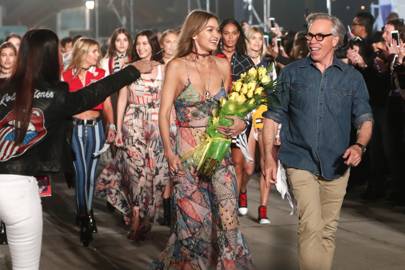
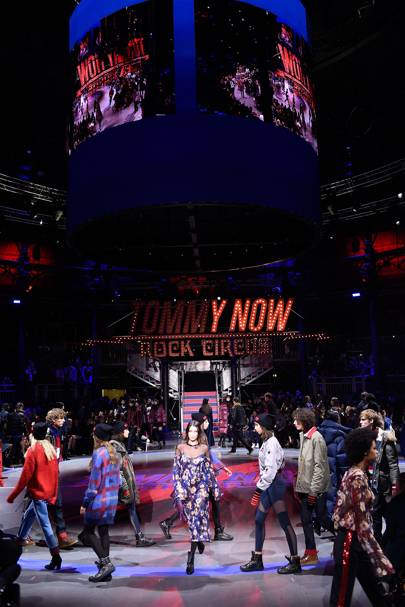
With an extravaganza the size of the Tommy Hilfiger x Gigi Hadid show at London's Roundhouse last night, there was bound to be moments that didn't make it onto your Instagram feed. Luckily, we were there to tell you what you might have missed if you weren't...


It Was Probably The Longest Catwalk At LFW

Down and out and across and up and around: this extensive catwalk must have been one of the most rehearsed in the capital so far, as models navigated their way around the ground floor of The Roundhouse (which FYI has a capacity of 1,700) before climbing to the first floor to parade the SS18 collection in front of members of the public.

Jourdan Broke Rank

The Brit model delighted showgoers on the upper tier when, encouraged by their cheers, broke into dance as she passed them. "What can I say, I was feelin' it,"

Gigi Was Feeling The Love

All eyes may have been on the star of the show, but the model-cum-designer only had eyes for Vogue editor-in-chief Edward Enninful, blowing him a kiss as she sashayed past him.

The Show Went On

As soon as Hilfiger and Hadid took their bows, The Roundhouse became a scene from Cirque de Soleil, with acrobats descending from the ceiling - all decked out in Hilfiger athleisurewear, of course - as technicians set up the stage in the background for a set by The Chainsmokers, which followed.

We Saw It, Then We Could Shop It

In true see-now, buy-now style, the collection was available at the venue - before the show had even commenced - and showgoers made the most of snapping up the styles modelled by Gigi, Bella, Anwar and co.

Thursday, September 21, 2017

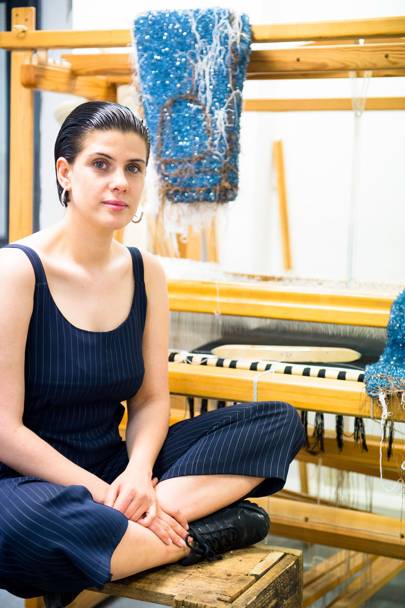
Faustine Steinmetz: The Weaving Maestro Doing Things Her Way

Three years ago Faustine Steinmetz was a girl who had taught herself to weave via YouTube tutorials. Now she’s hosting her first catwalk show at London Fashion Week.

“I thought I’d never do catwalk,” muses Faustine Steinmetz. The 31-year-old Paris-trained, east-London-based designer, who launched her eponymous brand at LFW in September 2014, has executed a series of thought-provoking exhibitions in recent seasons variously presenting her models in peep show-style Perspex cubes, in museum-like white alcoves covered with crystals and blue metallic body paint, or with disembodied limbs poking out of walls. For spring/summer 2018, however, she’s shedding the conceptual sets and instead placing the focus firmly back on her clothes.

“The last presentation, I didn’t enjoy on a personal level. I had to explain my work, and I thought, ‘I don’t want to be here’ – so it was time for a change, because otherwise it would show in the work,” Steinmetz says in her heavily accented tones, running her hands through her chin-length chocolate brown hair, in a preview days before her show at her east London studio. “I wasn’t overwhelmed – more bored. I needed another challenge, something more exciting. And the relief of being able to just take care of your clothes? I quite love that.”

This season she will focus on 10 items of clothing that she deems universal: a pair of jeans, a trench coat, a pair of tracksuit bottoms among them. She plans to reproduce these in different finishes and fabrications, for instance in hand-woven indigo from India which has been pulled apart; in denim fibres meshed onto tulle that’s been coated in little silicone waves with the texture of an artist’s palette; in hand-woven yarns that have been inspired by an old Burberry trench coat unearthed in a car boot sale. “It’s about repetition,” she says. “It explains what I want to do with my brand: I want to repeat just normal clothes and work on the textiles, and by the textiles, I can make them go beyond what they normally are.”

Steinmetz has always stuck to her guns - when she breezed through the reception of the LCF campus where I was waiting for her that morning, I had noted her purposeful walk. Also her natural rebelliousness: as we reached her studio, her pomerian, Buzz, hopped out of her canvas shoulder bag, seemingly out of nowhere. "He's not allowed in here, so I have to hide him," she giggled. Some of the strongest pieces in her spring collection continue what Steinmetz has set out to do ever since she bought a loom on a whim for £150 from the Handweavers Studio in Finsbury Park, and taught herself to weave from YouTube tutorials: they reenergise the artisan.


This season she’s excited about a technique whereby she has tweezered apart fibres from vintage pairs of jeans sourced from a shop in Whitechapel (“it’s closing! It’s the end of my business!” she jokes), refelted them and printed a pair of standard vintage jeans on top. “I love that it looks like it’s disappearing, as though it’s made in lace,” she says, delightedly.

It hasn’t all been plain sailing. Losing the LVMH prize in 2015 knocked her confidence significantly and forced her to question whether she was "even a fashion designer at all".

"I felt I'm not like the other designers - I take pieces that already exist and I remake them. It's quite a specific way of working for a designer. After I lost LVMH, I was so tired of the whole thing. And last season was the nail in the coffin. I tried for it to be commercial. I tried for it to be fashionable. I tried for it to be feminine. And in the end? I felt so unhappy. The clothes looked good, they were beautiful, I liked it - but is this what I envisioned when I was 15, imagining my brand? No."

Steinmetz's method doesn't negate a commercial model. In fact, she considers this collection her most commercial yet. "I think that’s why I’m so happy with this collection. What most people will wear is a normal pair of jeans. We’re making recycled denim – old pairs of jeans, reworked with a little twist. But when I do crazy fabrics, people want them too. So all my handwoven things, the silicone, I decided not to compromise any more and just do what I want."

She'll keep things in limited edition, because it's unsustainable not to, but that will just add to their cache. She barely pauses for breath. "Let's be radical. I'm not doing this for the money - although we do live from it. I'm doing this because it's a passion thing, since I was a kid. So I need to do it the way I want."

Faustine Steinmetz will show her spring/summer 2018 collection at LFW this Tuesday, September 19th.

Vogue Discusses: The Future of Fashion Shows

Vogue fashion news editor Julia Hobbs took over the British Vogue Facebook page alongside model activist Leomie Anderson and curator Shonagh Marshall to discuss the relevance, importance and future of fashion shows.Is the industry shifting towards new creative methods of premiering collections, or does thrill of the catwalk still hold strong? Can the runway even compete with social media anymore?


Watch the video from their exclusive London Fashion Week studio in Somerset House to find out the Vogue view on how the way we digest fashion is set to evolve, with or without the rigidity of a fashion week schedule.

Charting 15 Years Of On|Off

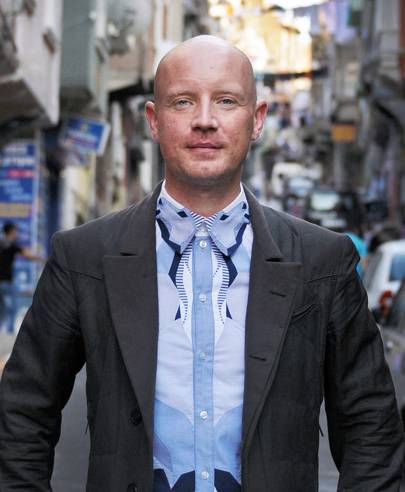
Supporting and showcasing emerging talent is a hallmark of London Fashion Week, and On|Off is one of its leading advocates. As the initiative celebrates its 15th anniversary this year, we spoke to its founder, Lee Lapthorne, to find out how things have changed, what designers should be doing now, and why sustainability is at the core of moving the industry on.


Congrats on your 15-year On|Off anniversary - what do you think are the platform's major accomplishments?

"15 years on, On|Off is thriving and this is a major achievement in its own right. It’s been a rollercoaster of a ride and I’m proud of our many successes and the designers we’ve supported along the way. The biggest accomplishment is watching them flourish, building brands and businesses, and gaining prestigious positions in global design houses."

Why is the LFW showcase so important to maintain?

"More than any other fashion capital, London offers emerging designers the chance to get noticed and to learn and earn their stripes. It’s a forgiving and supportive environment that enables new creatives to break through."

What changes have you seen?

"Now, more than ever, it’s a serious business and the industry expects designers to be totally professional from the off. They are also expected to consider sourcing their fabrics and manufacturing ethically. Fashion journalists want to know where designers are based and trading from, and their price ranges. 15 years ago the landscape was about experimentation, drama and freedom. London was known for its avant-garde approach to showcasing. The collections were sensational, dramatic art pieces with an underlining nod to our inherent dark London aesthetic. The only problem was that many of the designers were criticised for not being able to produce what they showcased on the catwalk due to lack of UK manufacturing support, but there was certainly an excitement to those shows. Now it seems focused on production and sales."

What challenges do you think emerging designers faced in 2002, and how are these challenges now?

"Many of the challenges of building a new business are the same: building a brand DNA; gaining financial support; and press recognition are all still key. Growing a social-media following is an obvious new challenge, but designers still seek affirmation from the press and need the media to help build followers. Another new challenge is the implications of Brexit on import and export duties, and of course immigration rules that are likely to affect the industry’s work force."

What do you think are the most important things for emerging designers to comprehend and learn?

"Write a business plan and then secure stockists or commissions, or consultancy work, to gain an income. It would be beneficial for graduates to have had lessons in business planning and to learn about the importance of strategic market research too."

How do you encourage emerging brands to be green and sustainable from the get go?

"Many of the designers I work with are sole traders and are working day to day on their own production. By its very nature, being a new designer requires them to be creative with limited resources. This often leads to sustainability. Obviously we all have a responsibility to care for how we are sourcing and as the company grows so does production. I understand that the BFC offers connections and introductions to companies able to support new designers in this area. They are also encouraging high-street brands to lead the way."

What pioneering ways can new brands break the mould?

"Many emerging designers have grown up using websites to sell their clothes, like eBay and The Marketplace on ASOS. The next generation is more savvy when selling items online directly to their followers. It also seems that many designers are trying out new ways of showcasing and are preferring to stay out of official, traditional events. Growing a label organically is definitely a more acceptable direction to take, building a social following, creating a small happening, and trying and testing samples. I would always recommend designers visit the Paris showrooms to research the global market place and find out what and how their contemporaries are doing. Paris will continue to be the selling capital for fashion and it’s important, if not to sell from there, to at least do your research there."

What would you like to see the BFC do more of to help emerging designers?

"The BFC does a great job with limited resources. There are also many of us that offer years of experience who could be better utilised. This knowledge could be pooled together to help designers build sustainable brands. The strength of LFW has always been our diversity, I am very excited about the mix of designers at On|Off this season, they perfectly demonstrate why On|Off - and indeed London - is still relevant. They are diverse and all have a very different point of view, this is what drives me. Our event always brings a London sensibility."

What initiatives is ON|OFF working on at the moment outside of Fashion Week?

"We have a long-term strategy for each of our designers and we keep in touch with them throughout the year. We also work with designers, helping to build their businesses via carefully curated business plans. I connect designers to business consultants, sales agents, photographers, stylists, hair and make-up teams and companies (it’s important to keep contacts loyal and connected, which often leads to mutually beneficial relationships). I also lecture at universities across the country, spotting the talent of tomorrow. Stay tuned for the launch of our clothing range celebrating 15 years of creative talent and we are also currently pulling together an exciting new mentoring program, which will help deliver even stronger support for our growing network of talent."

What do you think the consumer is looking for now and how can emerging designers rise to meet the challenge?

"Great quality at a great price that offers individuality, sustainability and lasting key pieces that have modernity."

On|Off Presents... will take place tomorrow, Tuesday September 19, as a part of the official London Fashion Week schedule.

Wednesday, September 20, 2017

The First Look At Topshop September 2017

A highlight on the London Fashion Week schedule, Topshop made fashion critics sit upright when they broke away from the show season mould as one of the first to go where few brand's have ventured: to trial the see-now, buy-now retail concept this time last year. Ahead of the catwalk show later today, we can share the latest in what to expect from the British high street store one year on.

"We are inspired by the heady days of London’s Soho and its contrasting characteristics,” outgoing creative director Kate Phelan told us.

The collection - known as Topshop September 2017 - follows the brand's see-now, buy-now principle allowing items to be directly shoppable immediately after the catwalk show, on Topshop.com and at selected outlets globally.

Fans can expect a nod to the party season ahead, featuring “vintage-feel coats, crystal accents, and metallics,” along with a revised price point for September - customers can snap up their own piece of the “show-girl-meets-party-girl” collection from £39, with the upper echelon reaching £395.


“Music nods to clubbing sounds from Heaven and Mud Club and the girls walking have sass, and a confidence reflective of the pre-selfie era,” the Voguecontributing fashion editor added. “The individuality of this underground world perfectly captures the spirit of the Topshop girl and reflects our British style heritage.”

The spring/summer 2018 collection will be Phelan’s last for Topshop after the high-street brand announced the appointment of a new co-ed creative director David Hagglund, replacing Phelan and Gordon Richardson in the newly created position.

Preview the Topshop September 2017 collection ahead of today’s show below, and watch the Topshop show live on at Topshop.com/LFW from 16:15 Sunday September 17th 2017.

Tommy Hilfiger Brings His See-Now, Buy-Now Show To London Fashion Week

Following stops in New York City and Venice Beach, California, Tommy Hilfiger’s travelling spectacle of a fashion show, “Tommynow,” will arrive in London on Tuesday just in time to close out Fashion Week. The show, inspired by Hilfiger’s love of rock and grunge styles of the Nineties, will feature women’s and men’s looks together for the first time since 2010. It will also unveil the third installment of Hilfiger’s ongoing - and highly successful - collaboration with model and ambassador Gigi Hadid.

Plenty of designers have shuffled back and forth in recent memory, switching from city to city in search of a fresh stage; but few, if any, seem to share aspirations as ambitious or as inclusive as Hilfiger, who will host both industry members and as many as 2,000 members of the public at the event. To see these events merely as profligate undertakings, where supermodels with eight-figure Instagram followings parade against a colourful backdrop, is to miss the point entirely.

“Tommynow continues to put the consumer at the heart of the event, fusing fashion, pop culture and entertainment, and connecting with our global fans in an authentic way,” Hilfiger told Vogue over e-mail ahead of his show. Last year, for the inaugural Tommynow event, Hilfiger transformed a New York pier into a carnival on the boardwalk, inviting participation from the press and consumers alike. Earlier this year, he rebranded Venice Beach as “Tommyland,” a theme park complete with flamethrowers, food stands and a performance by Fergie for the 3,000 guests in attendance.

While some brands have abandoned the see-now, buy-now model in recent months, Hilfiger says it “continu[es] to exceed expectations season after season.” He sees nothing wrong in giving his customers exactly what they want, when and how they want it. “Expectations are constantly changing, and our [show] format fulfils that demand for instant gratification,” he explains.“Every brand is different, and each needs to consider what’s best for them.”


The London show will mark Hilfiger’s third see-now, buy-now event so far, but it will also be the first to take place in Europe, where his business is booming. That the event is being held at the Roundhouse, the legendary concert venue in Camden, is telling - reflective of the ongoing cultural exchange between the designer and the world of music. But picking a stage is just the first of many steps Hilfiger has taken in preparation for this international debut. “We love to break conventions,” he tells Vogue. “Tommynow acts as an incubator for innovation.”

In some sense, Hilfiger sees the present moment as being on the course of a trajectory he set himself on several decades prior, when he first started designing clothes. “Our original brand DNA is the starting point of everything we do, and our designs are rooted in classic American cool,” he writes. “It’s about celebrating individuality, breaking conventions and keeping the relentless optimistic spirit that I founded the brand on.”

Although the Tommy Hilfiger brand might be less established as a cultural institution in some parts of the world when compared to his native America, Hilfiger has sustained his brand’s momentum beyond geographical borders, well into the new millennium, with the help of a few stars. In the Nineties, Hilfiger’s clothes could be seen on the backs of Aaliyah, and Snoop Dogg; today, it’s on the likes of A$AP Rocky and Zayn Malik.

At the end of the night, his gaze will inevitably shift forward - into the future. “Each season, we continue to select locations and times that complement the collections,” Hilfiger tells Vogue. Though there is no word on where the next Tommynow event will take place after its departure from London, “I’m always dreaming of what we could be doing tomorrow,” he continues. “And as I always say, the best is yet to come.”