Thursday, June 6, 2024

Virginie Viard Bows Out At Chanel

After 30 years, including the last five years as artistic director, Virginie Viard is exiting Chanel. The house confirmed her departure to Vogue Business on Wednesday. Viard was appointed artistic creative director in 2019 after Karl Lagerfeld passed away. The Haute Couture Autumn/Winter 2024/2025 collection will be presented as planned on 25 June at the Opéra Garnier.


“Chanel confirms the departure of Virginie Viard after a rich collaboration of five years as artistic director of fashion collections, during which she was able to renew the codes of the house while respecting the creative heritage of Chanel, and almost 30 years within the house,” the house said in a statement. “A new creative organisation will be announced in due course. Chanel would like to thank Virginie Viard for her remarkable contribution to Chanel’s fashion, creativity and vitality.”

Friday, May 31, 2024

Veronica Leoni Is The New Creative Director At Calvin Klein Collection

Veronica Leoni is the new creative director at Calvin Klein Collection, the PVH Corp-owned company announced today in a move that will see the brand return to the runway.

“We are proud to name Veronica as creative director of Collection, the pinnacle expression of the Calvin Klein brand,” said global brand president, Eva Serrano. “It was clear from our first conversations that Veronica’s life’s work had been preparing her for this moment and the opportunity to define a new era for Calvin Klein. I am confident that her purposeful approach to design and work ethic, combined with our shared values, will further enrich our iconic brand and result in a collection that resonates with our consumers around the world.”

Though she is little known, Leoni has quite the resumé. An Italian based in Rome, she is a veteran of Jil Sander, Phoebe Philo’s Céline, Moncler and The Row. She founded her own label Quira three years ago, and was an LVMH Prize finalist in 2023, at which time she described her style to Vogue as a “sharp point of view on femininity with an edge.”

Calvin Klein has been designer-less since Raf Simons exited the chief creative officer role in late 2018, but after several quiet years it’s been making headlines. Jeremy Allen White’s underwear campaign coincided with his awards show victory lap for The Bear, with both the actor and the company benefiting from the exposure, and the latter reclaiming some of the sexy heat that has long been a brand signifier. The K-pop stars Jennie Kim of Blackpink and Jungkook of BTS, meanwhile, are brand ambassador choices that are resonating with Gen-Z. And the company is also making inroads on the red carpet. Zendaya wore a custom Calvin Klein suit to the Rome premiere of Challengers, and a year ago the brand dressed the basketball player Brittney Griner, recently released from a Russian prison, for her first Met Gala.


In Veronica Leoni, Calvin Klein has put a woman in a top fashion job. That’s good optics at a time when a string of white male designer appointments has gotten the industry talking about a lack of diversity in design studios, and a dearth of women designers in leadership, in particular. And Leoni’s aesthetic could make her the right woman for Calvin Klein. Her taste for the classically minimal and her focus on tailoring are aligned with the brand codes honed by the house founder in his ’90s heyday.

“I’m thrilled and honoured to have the opportunity to write a new chapter of the Calvin Klein story,” said Leoni in a statement. “For decades, Calvin Klein interpreted the idea of bold self-expression, and I am willing to empower it with a strong accent on style and creativity. I’m deeply thankful to Eva Serrano for her vision and trust. My career has been marked by inspiring encounters with some of the most visionary women in fashion and she is one of them. I also want to thank PVH CEO Stefan Larsson for the amazing opportunity to celebrate one of the most influential brands of American fashion.”

According to the release, together with Serrano, Leoni will be also be responsible for taking inspiration from the Collection to the main line portfolio and the red carpet. Her first runway show will debut for autumn/winter 2025.

Sunday, May 26, 2024

La Vida Vuitton - Cruise 2025

Park Güell is a realm of enchantment, a dreamscape for any wanderer. Last evening, beneath a perfect sunset, it became the stage for Louis Vuitton's ethereal Cruise 2025 show. Nicolas Ghesquière continues his architectural pilgrimage, encouraging guests to explore or rediscover Barcelona's extraordinary Antoni Gaudí heritage, a singularly unique genius who embraced Art Nouveau, known in Spain as Modernisme, manipulating materials, particularly ceramics, to create undulating corners, edges, and columns. His structures seem almost alive, with colours that pulsate. "It's a utopia," the designer explains, "which I always find appealing! It blends nature with urban design. Gaudí represents a world unto himself, a singular and fascinating perspective, and particularly the distinctive way an architect has shaped the personality of a city." The occasion drew a distinguished crowd, including the likes of Léa Seydoux, Sophie Turner, Zaho de Sagazan, and Lous and the Yakuza.


The show began in the impressive hypostyle hall, featuring 86 massive columns and a ceiling adorned with mosaics. Jackets, seemingly simple, elegantly draped as if suspended on the models. A series of black outfits, from leather jumpsuits to full ensembles, were sharply tailored, highlighted by ‘cordobes,’ wide wicker hats that accentuated and dramatised the silhouette further. The dresses featuring a plumetis effect were truly beautiful. The boots, a hybrid between riding boots and cowboy boots, extended to the thigh and actively contributed to shaping the silhouette.

¨The sand and earth-toned outfits paired picador-inspired trousers with large stoles sweeping over the chest, ending in fringed leather booties, creating an aura of mysterious desert women. Occasionally, a harness of large dark ruffles and lace would wrap around the body, adding a dramatic touch.¨ - Charles Daniel McDonald

Among the bags, there were many, both familiar and new, including a series that echoed the columns of the venue. Additionally, there were some mesh pouches, likely a subtle tribute to Paco Rabanne, the renowned Spanish couturier, and a nod to Julien Dossena in the audience, the Artistic Director of the aforementioned house and Ghesquière's dear friend.


One of the most striking scenes came during the finale, with grand, voluminous skirts in billowing silk faille, vividly pigmented in royal blue, frenetic red, and regal green, evoking a sense of post-modern ceremonial elegance. Nicolas Ghesquière reflected, “What particularly intrigued me was the oxymoron of flamboyant austerity that is so palpable in this country. The chivalric spirit. The Moorish influences. And specifically Zurbaran, for his fantastic use of colour, the admirable drapery, the chiaroscuro, and this very luminous black.” That evening, against the dreamlike backdrop, colours took on a different kind of presence in the fading sunlight. They demanded to be spoken of long after, to be etched in memory like a painting.

Sunday, May 5, 2024

Chanel Cruise 2025

As the early tendrils of summer embrace us, heralded by the months of May and June, the fashion world embarks on its glamorous odyssey known as the Cruise shows. This annual pilgrimage sees esteemed fashion houses venture to exotic locales, showcasing their latest haute-summer creations - a tradition rooted in the opulent escapades of the jet set elite of the early 20th century.

While previous seasons took us on a transcontinental journey to Mexico City, Los Angeles, and Seoul, this year's spectacle unfolds closer to home, with European destinations serving as the picturesque backdrop for sartorial splendor. Chanel kicked off the festivities in Marseille, France, with a breathtaking display on May 2, 2024. Meanwhile, the illustrious Gucci prepares to grace the iconic Tate Modern in London, Dior sets its sights on Drummond Castle in Scotland, Louis Vuitton teases an undisclosed location in Barcelona, Spain, and Max Mara promises an enchanting showcase in Venice, Italy.


For Chanel's latest Cruise extravaganza, the maison turned its gaze southward, casting a spotlight on Marseille—a storied port city, brimming with raw charm amidst the polished allure of its Riviera counterparts. Virginie Viard, the visionary creative director, expressed a deliberate intent to broaden Chanel's cultural footprint beyond the hallowed precincts of Rue Cambon in Paris and the affluent locales it typically frequents. This ethos was previously evident in the house's choice of Manchester's vibrant streets for its Métiers d'Art spectacle in December 2023, inspired by the city's pulsating underground music scene.


The stage was set atop Cité Radieuse, Le Corbusier's architectural masterpiece—a vertical oasis of concrete, adorned with bursts of vibrant hues adorning its balconies, now a revered UNESCO World Heritage site. Against this iconic backdrop, Viard unveiled a collection imbued with youthful exuberance, a testament to her creative stewardship. Airy white blouses adorned with delicate broderie anglaise motifs floated alongside whimsical crochet mini dresses and cushioned flip-flops, exuding an effortless charm. Nautical motifs danced across the runway, from charming anchor-charm jewelry to whimsical hand-drawn fish, invoking the spirit of maritime adventure.

True to the house's heritage, Chanel's signature tweed made a resplendent appearance, reimagined through the lens of Le Corbusier's vibrant palette. Grid-like patterns adorned cropped jackets and matching skirts, while bold pinafore-style blazers in hues of crimson, ochre, and pristine white made a striking statement. "Marseille is a city that ignites my senses. I sought to capture its magnetic allure, its invigorating essence, and channel the pulsating energy that permeates its streets," remarked Viard. "And what better canvas for a runway spectacle than the awe-inspiring Cité Radieuse?"

Wednesday, April 24, 2024

Here Are The Eight Finalists For The 2024 LVMH Prize

The LVMH Prize has announced its list of finalists for the 2024 edition. They are: Aubero by Julian Louie from the United States, Duran Lantink from the Netherlands, Hodakova by Ellen Hodakova Larsson from Sweden, Marie Adam-Leenaerdt from Belgium, Niccolò Pasqualetti from Italy, Paolo Carzana from the United Kingdom, Pauline Dujancourt from France, and Standing Ground by Michael Stewart from Ireland.

“The semi-final of the 11th LVMH Prize highlighted the diversity and richness of the candidates’ creative approaches,” said Delphine Arnault, CEO of Christian Dior, who noted the designers’ commitment to both craftsmanship and sustainability. “I’m also delighted that two former semi-finalists of the Prize, Duran Lantink and Niccolò Pasqualetti, have reached the final,” added the executive. Lantink was first shortlisted for the 2019 edition of the Prize, which came prior to the wave of popularity and critical acclaim the designer has encountered since his Paris debut in March 2023. Pasqualetti was first a semi-finalist in 2022. Both designers are a testament to the importance of resilience, and also of how essential it is for designers to continue to hone their skills and refine their aesthetic.

The Prize has returned to eight finalists after last year’s nine, though this year they will compete for three prizes rather than the usual two. LVMH has added a Savoir-Faire Prize, which will reward excellence in craftsmanship, sustainability and technical innovation, in addition to the Grand Prize and the Karl Lagerfeld Prize.


Louie and Larsson, as well as Lantink, are known for the distinct ways in which they upcycle deadstock material and vintage or discarded items in their collections, while Stewart and Dujancourt have each developed considerate and sustainable approaches to producing and scaling their collections. The inaugural round of the Savoir-Faire Prize could be anyone’s game.

This list of finalists includes four men, three women and one non-binary individual. While it is one of the Prize’s most gender-inclusive finalists line-ups in recent memory, it is not the most ethnically diverse. None of the Asian, Black or Latin American designers in the semi-finalist round made the final cut this year. This year’s finalists represent only the US and seven European countries.

This year’s jury will include Jonathan Anderson, Maria Grazia Chiuri, Nicolas Ghesquière, Marc Jacobs, Kim Jones, Stella McCartney, Nigo, and Silvia Venturini Fendi, as well as Delphine Arnault, Jean-Paul Claverie, and Sidney Toledano. Pharrell Williams has been added to the roster, and Phoebe Philo, who served as a juror during her Celine years, will return this year.

The eight finalists will meet the jury on 10 September at the Louis Vuitton Fondation in Paris. The winner of the LVMH Prize will receive €400,000 (£344,000) and a one-year custom mentorship, the winner of the Karl Lagerfeld Prize €200,000 (£172,000) and a one-year mentorship, and the winner of the Savoir-Faire Prize €200,000 (£172,000) and a one-year specific mentoring program.

Monday, April 22, 2024

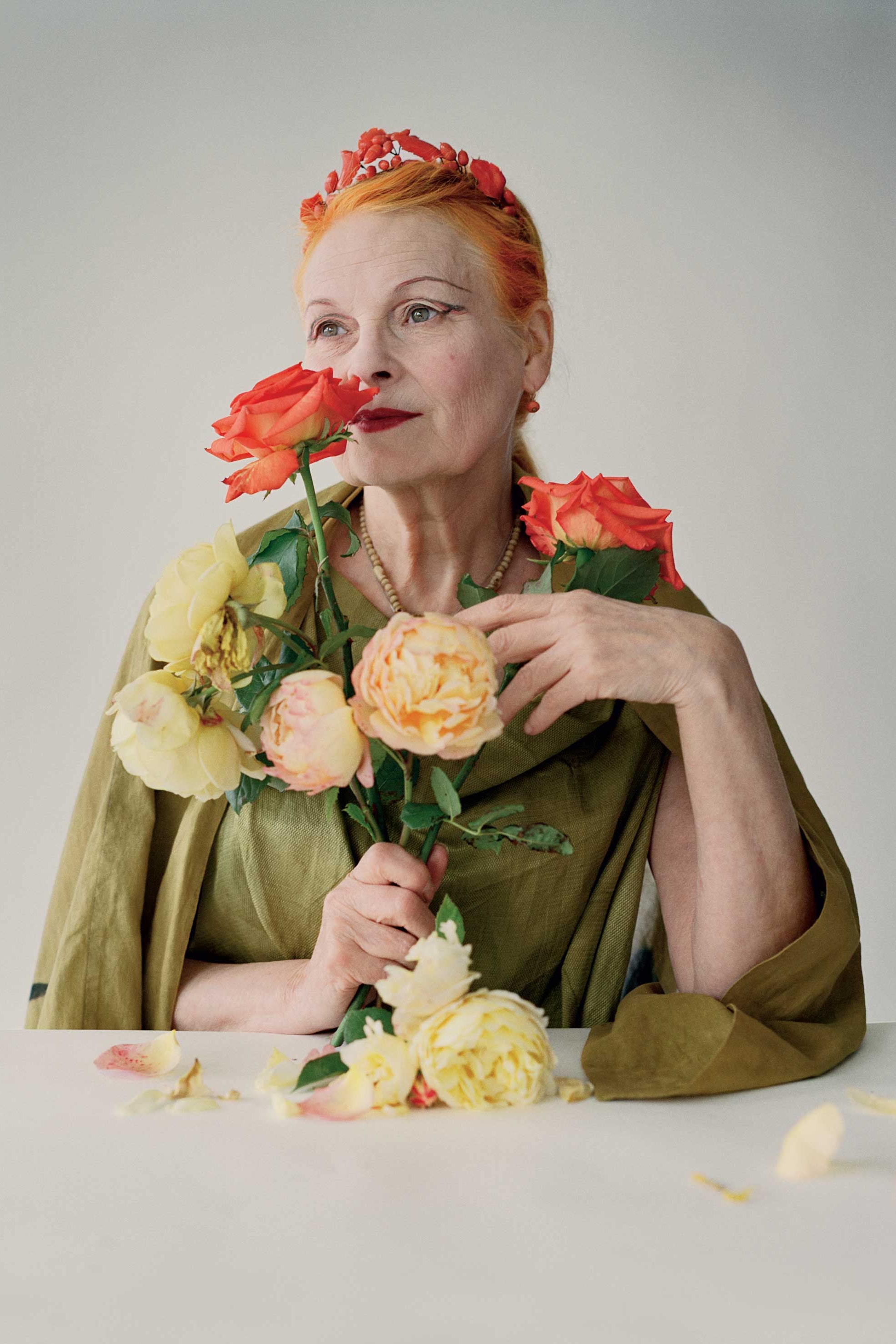
You Can Now Shop Vivienne Westwood’s Personal Wardrobe

It’s been less than two years since Dame Vivienne Westwood died and the chasm she left in the industry that she sought to change for the better is felt as keenly as ever. To put it plainly, there is no one who does what Westwood – an anarchic force who created fashion “to destroy the word conformity” – did. Nor dresses the way she decked herself out in radical, punkish tailoring.

Today: a ray of light for Westwood acolytes mourning the provocateur’s unapologetically bold personal image and everything she stood for. More than 200 items from Vivienne’s wardrobe, as selected by her partner in life and work Andreas Kronthaler, will go on sale at Christie’s via two auctions: a live sale in London on 25 June, and an online equivalent from 14 to 28 June. Even better? Those who perhaps don’t have the pocket money required to purchase pieces from Westwood’s Witches (autumn/winter 1983), Dressed to Scale (autumn/winter 1998) or Propaganda (autumn/winter 2005) collections will be available to view the pieces at a free public exhibition, entitled Vivienne Westwood: The Personal Collection, at Christie’s, London, from 14 to 24 June. Expect even the street style outside to be a brilliant homage to the straight-talking creative and campaigner.


“Vivienne was our heroine,” says Kronthaler, who has decreed that the proceeds of all fashion, jewellery and accessory sales will go to The Vivienne Foundation, Amnesty International, Médecins Sans Frontières and a Greenpeace project called The Big Picture – Vivienne’s Playing Cards. “This will be a unique opportunity for audiences to encounter both the public and the private world of the great Dame Vivienne Westwood and to raise funds for the causes in which she so ardently believed,” adds head of the sale Adrian Hume-Sayer. Her mission, as Kronthaler notes now, “to be different and to explode the system” continues in earnest – a true testament to Westwood’s unwavering commitment, which continues to inspire so many.

Saturday, April 13, 2024

Italian Fashion Designer Roberto Cavalli Has Died At 83

Roberto Cavalli, the Italian designer who infused the print-led boho look with sex appeal, has died at 83. His passing was confirmed by the brand. “The Roberto Cavalli company shares condolences with Mr Cavalli’s family. His legacy remains a constant source of inspiration,” said Roberto Cavalli’s CEO, Sergio Azzolari.

By the time shows started to go digital (circa 2000), Cavalli was a well-established golden name in fashion; an elder, even, enjoying a second round of renown. He exuded Hefner vibes (minus the robe) when he took his fall 2001 bow smoking a pipe. (The designer was in fact asked to redesign the Playboy bunny costume in 2005.) By then the leonine Cavalli was living the good life, something that he achieved with braggadocio and brain power – and against the odds. In the context of Cavalli’s life story, the body worship and forthright sexiness of his work could be seen more broadly as an affirmation of life itself, which, from a young age he understood to be fragile.

Born in Florence in 1940, Cavalli’s maternal grandfather was a member of the Macchiaioli group of Italian Impressionists. His father, an anti-fascist who is thought to have been a mine surveyor, was shot by the Nazi forces when Cavalli was just three years old. The psychological impact was expressed physically through a stutter. “It was not easy for me to speak, the shock,” the designer told Luke Leitch in a 2011 interview. To support the family, his mother started sewing at home, taking in seamstresses to help her. At 17, a confident Cavalli enrolled at the Academy of Art in Florence to study art and architecture. There he met and fell in love with his first wife and the mother of two of his children, Silvanella Giannoni.

In 1960, after hand-painting some sweaters for a friend in the knitwear business, Cavalli was spurred to do something of his own with rather traditional floral prints, and started applying them to existing garments. It wasn’t long before the designer, wrote Leitch in a 2011 article for Panorama, “had graduated from teaching himself textile printing techniques on a borrowed ping-pong table to working on his own six-metre printing table (bought by his mother) in a rented garage, to building his first factory,” with some financing from a friend. That factory was flooded away in November 1966, not long before the Summer of Love, which Cavalli would extend ad infinitum in fashion and his personal life.


The designer’s next breakthrough came about while trying to make good on a lie used while girl-chasing. Cavalli related the following anecdote in that Panorama interview. In September 1970, the young divorcé crashed a party at leather designer Mario Valentino’s house. Trying to impress a beautiful woman who had asked what he did, Cavalli replied that he did prints on leather. She then introduced him to the host, who asked to see them. The designer rose to the challenge, by applying his printing technique to the thinnest glove leather. (Hippie florals in a dusty Cacharel palette were all the rage at the time.) Valentino wasn’t the only one impressed; Hermès wanted to acquire the exclusive rights to the technique. “I was flying back from Paris and in that aeroplane I was thinking. I thought, ‘maybe now, if I design one collection, I could meet a lot of models!’ That was always a principle of my life!” the designer told Leitch.

And so Cavalli placed himself at the pleasure centre of the jet set, opening a boutique called Limbo in 1970 in Saint-Tropez, where he made what he called “young, crazy, summer fashion” – and where sex symbol Brigitte Bardot naturally became a client. The boy of summer took his act to Paris in the fall; he’d soon expand his repertoire by patchworking denim. Cavalli showed his womenswear in Florence in 1972. He’d join the Milan fashion week schedule in 1994 after a business slump in the ’80s, spurred on, it is said, by his then-wife, Eva, whom he married in 1977 after meeting her at the Miss Universe beauty contest for which he had been tapped as a judge (she was Miss Austria).

Thirty years into his career, Cavalli had another breakthrough in 1993 when he elasticised denim for a second-skin fit. “Slowly, slowly, I go from the jeans to the red carpet,” said Cavalli, a go-to red-carpet source for the likes of Jennifer Lopez and Victoria Beckham in the ’00s. “I was in America when Roberto was at the top of his career,” Fausto Puglisi, the creative director of the house tells Vogue Runway. “It was the Sex and the City time, it was all about Cavalli, Cavalli, Cavalli. Roberto invited me to Florence, we met in his villa, with his beloved dog Lupo and the magnificent parrots….” The designer, who became a byword for glamour, was even written into the popular series’ script. As reported by the Encyclopedia.com when, “Sarah Jessica Parker’s Carrie character was forced to clean out her overstuffed closet to make room for her boyfriend’s clothes. Their battle over space later escalates, and she tells him, ‘It’s Roberto Cavalli! I threw it out and I love it. What more do you want?’ 

More, more, more! That is the exuberant Cavalli ethos which has been carried on by the house founder’s successors, including Peter Dundas and the current creative lead, Puglisi. “Roberto was a lion, his life was larger than life,” Puglisi says. “He definitely wrote a beautiful chapter in fashion; Cavalli was the epitome of the bold, the beautiful, the print – freedom.” Adds Dundas: “Roberto’s fashion was exactly how he lived his life: colourfully, joyously and usually [in a way] impossible to ignore. His Florence house, in which he had me live the first year working with him, was a wonderful menagerie of exotic animals, colourful brocade furniture, prints, and religious icons everywhere!” Cavalli lived in a technicolour world in which there was room for neither grey, nor subtlety. His life is for the living, and his pleasure-for-the-taking attitude was infectious, just as his bright, bold, body-confident approach to dressing remains relevant today.